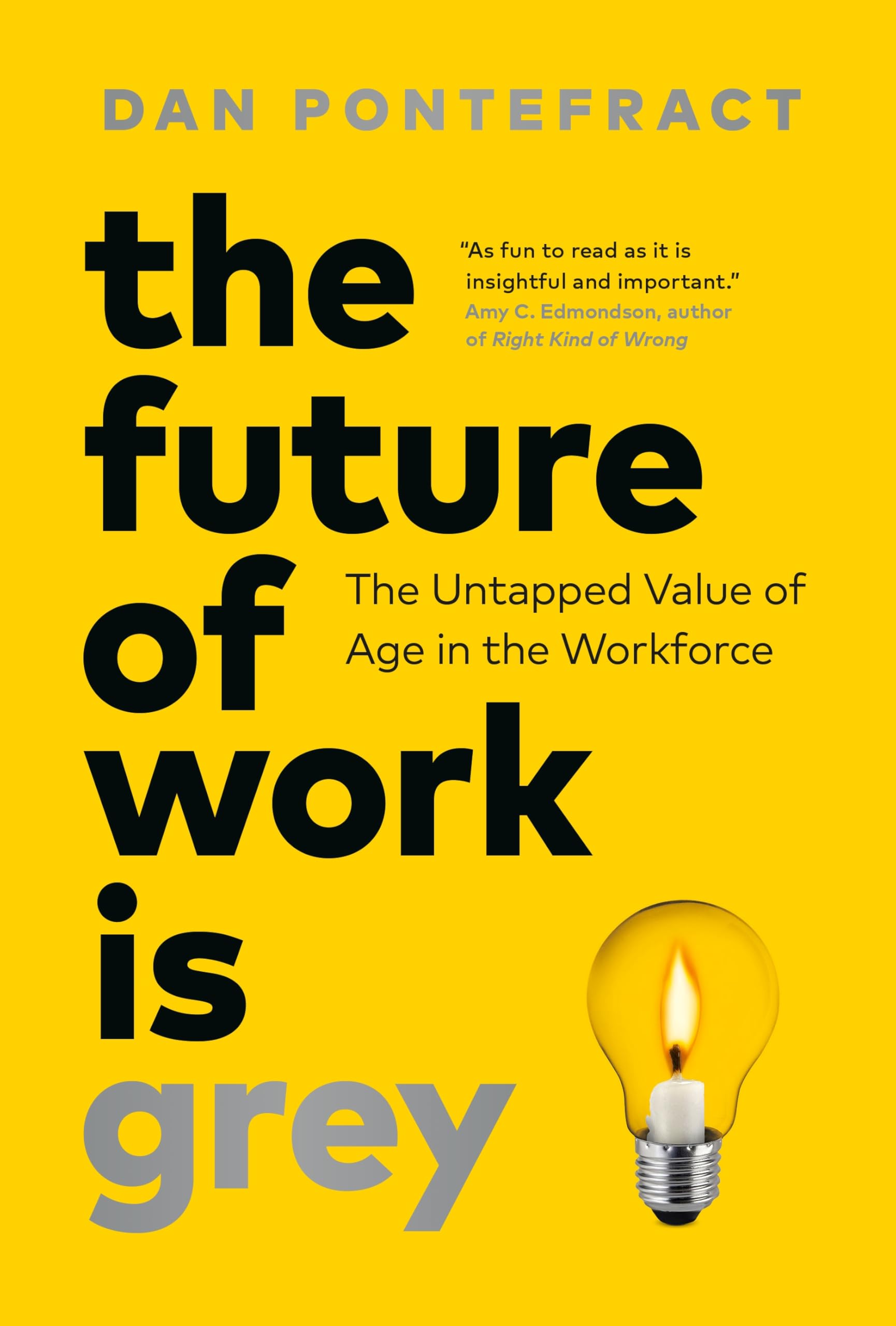
Book cover of The Future of Work Is Grey: The Untapped Value of Age in the Workforce

The Future of Work Is Grey: The Untapped Value of Age in the Workforce Summary

Business & Career

By Dan Pontefract

Page Two · May 5, 2026

Summary

The book delves into the idea that the so-called "grey-haired" workers possess unique skills and experiences that are invaluable to the workforce. Pontefract points out that these older employees can provide stability, wisdom, and a different way of thinking. He also discusses how companies can better utilize the potential of older workers by creating inclusive workplaces. Through real-life examples and in-depth analysis, the author shows that a multi-generational workforce can drive innovation and success. Whether you're an employer looking to optimize your team or an older worker seeking recognition, this book offers practical insights and strategies for a more harmonious and productive work environment.

About the Author

Dan Pontefract is an author and thought-leader in the field of workplace and leadership. He focuses on work-related topics. His writing style is practical and insightful, as seen in "The Future of Work Is Grey".

Chapters

1

The Changing Landscape of the Workforce

The modern workforce is undergoing a significant transformation. Demographic shifts are leading to an aging population in many countries. This means that there are more older workers in the workplace than ever before. In the past, age was often seen as a disadvantage in the job market. Younger workers were considered more innovative, adaptable, and tech-savvy. However, this view is changing.The concept of a "grey workforce" is emerging. Older workers bring a wealth of experience, knowledge, and wisdom to the table. They have weathered different economic cycles, dealt with various challenges, and developed unique problem-solving skills. In contrast, younger workers are often more in tune with the latest technologies and trends. A balanced workforce that combines the strengths of both age groups can be highly effective.Companies are starting to recognize the untapped potential of older workers. As the cost of training new employees can be high, retaining experienced older workers can be a cost-effective strategy. Moreover, older workers can serve as mentors to younger colleagues, passing on their knowledge and expertise. This inter-generational exchange can lead to a more productive and harmonious work environment.
2

The Value of Experience

Experience is one of the most valuable assets that older workers possess. They have spent years in their fields, dealing with different situations and challenges. This hands-on experience allows them to make informed decisions quickly. For example, in a manufacturing setting, an older worker may have encountered various production issues over the years and know the most efficient ways to solve them.Older workers also tend to have a better understanding of the long-term implications of business decisions. They have witnessed the rise and fall of different business models and can offer valuable insights into market trends. In a sales role, an experienced salesperson may be able to anticipate customer needs based on past interactions and industry knowledge.Another aspect of experience is the ability to build relationships. Older workers have had more time to develop a wide network of contacts. These relationships can be beneficial for the company in terms of partnerships, sales, and market expansion. For instance, an older executive may have connections with key industry players that can open up new business opportunities.

3

Adaptability and Learning in the Grey Workforce

Contrary to the common belief that older workers are less adaptable, many are quite capable of learning new skills and adapting to new work environments. In fact, the experience they have gained over the years can make them more resilient and better able to handle change.With the rapid advancement of technology, companies are constantly looking for employees who can keep up. Older workers are increasingly taking the initiative to learn new digital skills. For example, many are enrolling in online courses to learn about data analytics, digital marketing, or new software applications.Companies can play a crucial role in facilitating the learning process for older workers. They can provide training programs tailored to the needs of this age group. These programs can focus on both technical skills and soft skills, such as communication and teamwork. By investing in the development of older workers, companies can ensure that they remain valuable assets in the changing workplace.

4

Inter-generational Collaboration

Inter-generational collaboration is essential for the success of the modern workforce. When younger and older workers work together, they can combine their unique strengths. Younger workers can bring fresh perspectives, creativity, and technological know-how, while older workers can offer experience, stability, and wisdom.In a project-based setting, younger workers may come up with innovative ideas, while older workers can provide practical guidance on how to implement those ideas effectively. For example, in a software development project, younger developers may propose new algorithms, and older developers can help ensure that the code is reliable and scalable.To promote inter-generational collaboration, companies need to create a culture that values diversity and mutual respect. This can be achieved through team-building activities, cross-training programs, and open communication channels. By encouraging interaction between different age groups, companies can foster a more inclusive and productive work environment.

5

Challenges Faced by the Grey Workforce

Despite the many benefits of having an older workforce, there are also several challenges that need to be addressed. One of the main challenges is age-based discrimination. Some employers may have unconscious biases against older workers, believing that they are less productive or less adaptable. This can lead to older workers being passed over for promotions or new job opportunities.Another challenge is the physical and mental health of older workers. As people age, they may face more health issues, which can affect their ability to perform certain tasks. Companies need to provide support and accommodations to help older workers stay healthy and productive. This can include flexible work arrangements, ergonomic workstations, and access to health and wellness programs.The rapid pace of technological change can also be a challenge for older workers. Keeping up with new technologies can be difficult, especially for those who did not grow up in a digital age. Companies need to provide appropriate training and support to help older workers bridge the technology gap.

5 more chapters available

Continue listening in the Spickor app — free download on the App Store.

Listen in App

Why Spickor?

At Spickor, we believe knowledge should have no paywalls. Every book summary can be unlocked for free by watching a short ad — or you can choose an ad-free subscription. Unlike other apps, there's no "1 book per day" free limit. Learn at your own pace, on your own terms.

FeatureSpickorBlinkistHeadway
Free accessAll books free via ad unlock1 book/day only1 book/day only
Book library2,200+ across 8 categories9,000+ (non-fiction only)2,000+ (personal growth focus)
Paid subscriptionNo forced subscription; ad-supportedRequired; from $99.99/yrRequired; from $89.99/yr
Audio for all summariesYesPremium onlyPremium only
Novels & fictionYesNoNo
PlatformsiOS (Android & Web in dev)iOS / Android / WebiOS / Android only

All Books, Truly Free

Unlock any book with a short ad. No daily limits, no hidden fees.

Listen for Free

Every summary includes high-quality audio. No "premium only" labels.

Beyond Self-Help

8 categories including business, technology, and novels.

Listen in App
9 m 59 s