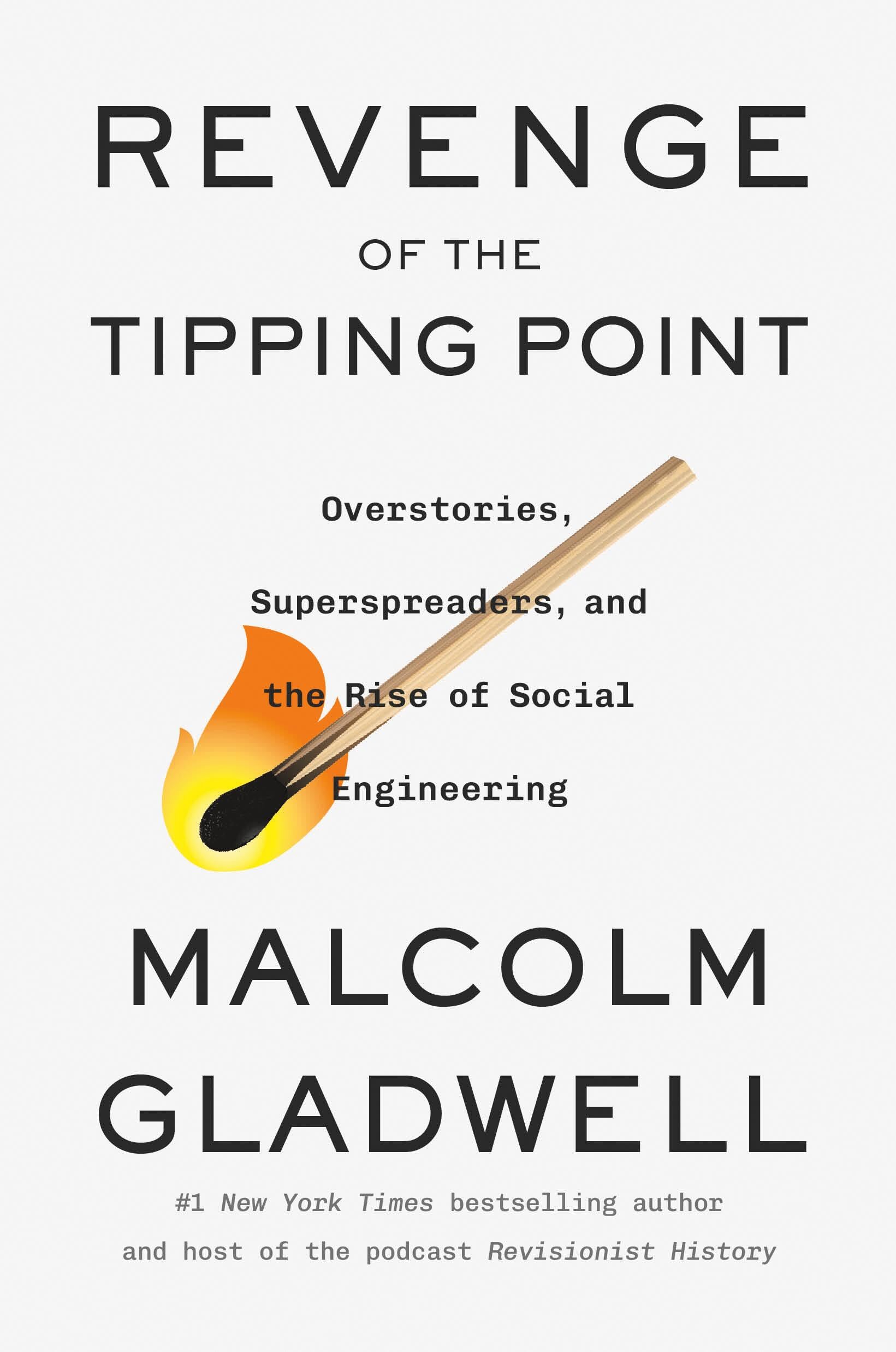
Book cover of Revenge of the Tipping Point

Revenge of the Tipping Point Summary

Business & Career

By Malcolm Gladwell

Summary

Revenge of the Tipping Point by Malcolm Gladwell is a captivating exploration of the power of small actions and their far-reaching consequences. Gladwell, who is well-known for his ability to make complex social and psychological concepts accessible to the general public, revisits the idea of the tipping point. In this book, he examines how seemingly insignificant events or trends can suddenly reach a critical mass and cause major changes. Through a series of real-life examples from different fields such as business, culture, and social movements, Gladwell shows how to recognize these tipping points and even influence them. His engaging writing style keeps the reader hooked from the beginning to the end, as he presents both fascinating stories and thought-provoking ideas. Whether you're interested in understanding social change, marketing strategies, or just want an interesting read, this book offers a wealth of knowledge and entertainment.

About the Author

Malcolm Gladwell is a renowned author. He specializes in writing about social phenomena and human behavior. His style is engaging, blending research with real-life examples, as seen in "Revenge of the Tipping Point".

Chapters

1

Introduction to the Tipping Point Phenomenon

The concept of the tipping point is at the heart of this book. A tipping point is that magic moment when an idea, trend, or social behavior crosses a threshold, tips, and spreads like wildfire. It's the point at which small changes can lead to big effects. Think about how a few early adopters of a new fashion style can start a trend that eventually becomes mainstream. Or how a single rumor can quickly spread through an entire community. These are examples of the tipping point in action. Understanding the tipping point is crucial because it allows us to predict and influence social change. It helps us figure out how to make an idea or product go viral. In today's fast-paced world, where information spreads at an unprecedented speed, the concept of the tipping point has even greater significance. It can be applied in various fields such as marketing, public health, and social activism. By identifying the factors that contribute to a tipping point, we can design strategies to push a particular idea over the edge and create a large-scale impact.
2

The Law of the Few

The Law of the Few states that a small number of key people can have a disproportionate impact on the spread of an idea or trend. There are three types of people who play crucial roles in this process: Connectors, Mavens, and Salesmen.Connectors are individuals with a vast network of contacts. They know a lot of people from different walks of life. They are like social hubs, constantly introducing people to one another. For example, someone who attends multiple social events, has friends from different industries, and is always making new connections. Connectors are essential because they can quickly spread information across different groups.Mavens are information-gatherers. They are experts in a particular area and love to share their knowledge. They are the ones who know all the latest trends, deals, and news. For instance, a tech maven might be constantly researching new gadgets and sharing reviews with their friends. Mavens can influence others' decisions because people trust their expertise.Salesmen are those with the ability to persuade others. They have a charisma and a way with words that can convince people to take action. They can turn a skeptical person into a believer. A good salesman can sell an idea as effectively as a product.These three types of people work together to create a tipping point. Connectors spread the word, Mavens provide the knowledge, and Salesmen convince others to adopt the idea.

3

The Stickiness Factor

The Stickiness Factor refers to the quality of an idea or message that makes it memorable and likely to be passed on. An idea that is sticky has a lasting impact on people's minds. Take children's television shows like Sesame Street as an example. Sesame Street is sticky because it uses a combination of bright colors, catchy songs, and engaging characters. These elements make the show easy to remember and appealing to children. The show's creators also use repetition and simple language to ensure that the educational messages stick with the viewers.In marketing, a sticky product or service is one that customers keep coming back to. For example, a mobile app with a simple and intuitive interface, useful features, and regular updates is more likely to be sticky. It will stay in the users' minds and they will recommend it to others.To create a sticky idea, it's important to focus on the details. The message should be clear, simple, and relevant. It should also have an emotional appeal. People are more likely to remember something that makes them feel a certain way, whether it's happiness, sadness, or excitement.

4

The Power of Context

The Power of Context emphasizes that the environment in which an idea or behavior occurs can have a significant impact on its spread. Small changes in the context can lead to big changes in behavior.One famous example is the New York City subway crime reduction in the 1990s. The police focused on fixing small problems like graffiti and fare-jumping. By cleaning up the subway environment, they created a context where criminal behavior was less likely to occur. This small change in the context had a big impact on reducing serious crimes.In a social setting, the context can also influence how people interact. For example, a well-designed office space with open areas and comfortable seating can encourage collaboration and communication among employees. On the other hand, a cramped and noisy environment may lead to less interaction and lower productivity.Understanding the power of context allows us to design environments that are conducive to the spread of positive ideas and behaviors. We can create contexts that make it easier for people to adopt new habits or embrace new trends.

5

Case Studies of Tipping Points

There are numerous real-world examples of tipping points that illustrate the concepts discussed in the book.One case is the Hush Puppies shoe revival. In the 1990s, Hush Puppies were on the verge of extinction. However, a small group of young fashion-conscious people in New York City started wearing the shoes. These early adopters were Connectors and they spread the word about the shoes to their friends. Mavens in the fashion industry also took notice and started writing about Hush Puppies. The combination of the efforts of Connectors, Mavens, and the stickiness of the shoes' unique look led to a tipping point. Soon, Hush Puppies became a trendy shoe brand again.Another example is the spread of the AIDS prevention message in the gay community in the 1980s. A group of activists used the Law of the Few. They identified Connectors within the community who could spread the message quickly. Mavens provided accurate information about safe sex. The message was made sticky through the use of simple and direct language. The context was also important, as the community was facing a serious health crisis. All these factors combined to create a tipping point in the spread of the AIDS prevention message.

5 more chapters available

Continue listening in the Spickor app — free download on the App Store.

Listen in App

Why Spickor?

At Spickor, we believe knowledge should have no paywalls. Every book summary can be unlocked for free by watching a short ad — or you can choose an ad-free subscription. Unlike other apps, there's no "1 book per day" free limit. Learn at your own pace, on your own terms.

FeatureSpickorBlinkistHeadway
Free accessAll books free via ad unlock1 book/day only1 book/day only
Book library2,200+ across 8 categories9,000+ (non-fiction only)2,000+ (personal growth focus)
Paid subscriptionNo forced subscription; ad-supportedRequired; from $99.99/yrRequired; from $89.99/yr
Audio for all summariesYesPremium onlyPremium only
Novels & fictionYesNoNo
PlatformsiOS (Android & Web in dev)iOS / Android / WebiOS / Android only

All Books, Truly Free

Unlock any book with a short ad. No daily limits, no hidden fees.

Listen for Free

Every summary includes high-quality audio. No "premium only" labels.

Beyond Self-Help

8 categories including business, technology, and novels.

Listen in App
11 m 07 s