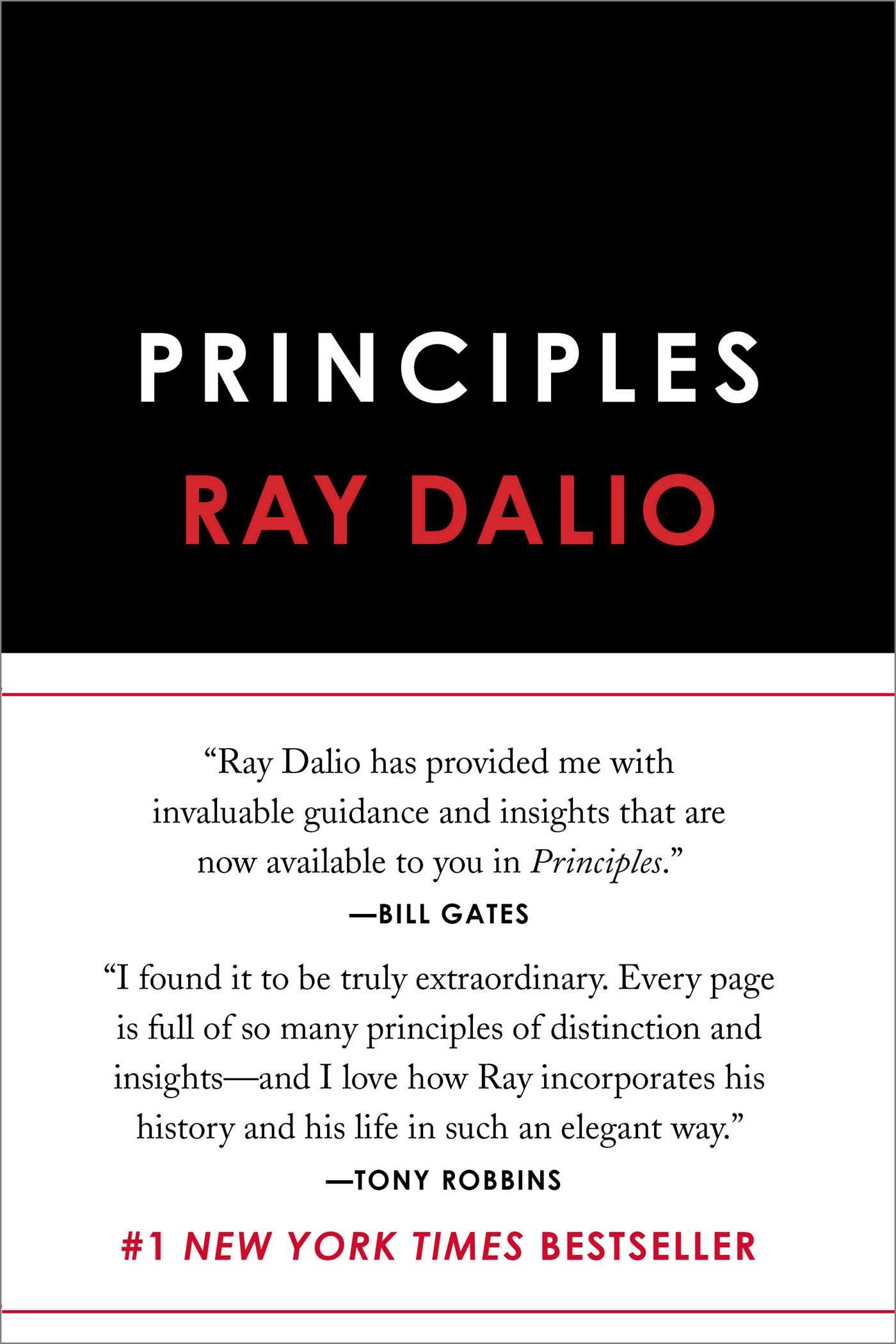
Book cover of Principles

Principles Summary

Business & Career

By Ray Dalio

Avid Reader Press / Simon & Schuster · September 19, 2017

Summary

Ray Dalio's Principles is a remarkable book that delves deep into the principles that have shaped his highly successful career and personal life. Dalio, the founder of Bridgewater Associates, has amassed a wealth of knowledge through decades of making decisions in the complex world of finance. In this book, he lays out a set of principles that are not only applicable to the business world but also to everyday life. He starts by sharing his own journey, including the challenges and setbacks he faced, and how he learned from them. These real-life stories make the principles more relatable and easier to understand. The principles cover a wide range of areas, such as decision-making, problem-solving, and building effective teams. They are presented in a clear and straightforward manner, allowing readers to quickly grasp the essence and start applying them. Whether you're a business professional aiming to improve your leadership skills, a student looking for a framework to make better choices, or someone simply seeking to live a more purposeful life, Principles provides a roadmap that can lead to greater success and fulfillment. It's a must-read for anyone who wants to learn from one of the most successful investors and thinkers of our time.

About the Author

Ray Dalio is a renowned investor and author. He specializes in financial and self-improvement writing. His style in "Principles" is practical, presenting clear and actionable guidelines for success.

Chapters

1

Introduction to Principles

In "Principles," Ray Dalio shares the fundamental rules he's developed over a lifetime of learning and experience. These principles have been the cornerstone of his success in both business and life. Dalio believes that having a set of well-thought-out principles can help individuals and organizations navigate the complexities of the world more effectively. He argues that by following these principles, one can make better decisions, achieve goals, and lead a more fulfilling life.Dalio's journey in formulating these principles began with his own mistakes and learnings. He faced significant setbacks in his career, such as the collapse of his first hedge fund. These experiences taught him the importance of self-reflection and learning from failures. He started documenting his principles as a way to organize his thoughts and share them with his team at Bridgewater Associates, the investment firm he founded.The principles in this book are not just theoretical concepts but are based on real-world applications. They cover a wide range of areas, including decision-making, management, and personal development. Whether you're an entrepreneur, an investor, or someone looking to improve their life, these principles offer valuable insights.
2

The Importance of Principles

Principles are essential because they provide a framework for making decisions. In a world full of uncertainties, having a set of guiding rules can help us stay on track. When we face difficult choices, our principles act as a compass, pointing us in the right direction.For example, in business, principles can help a company determine its long-term strategy. A company that values integrity as a principle will make decisions that are honest and ethical, even if it means sacrificing short-term profits. This can build trust with customers, employees, and partners, leading to long-term success.On a personal level, principles can shape our character and guide our actions. If we believe in the principle of hard work, we are more likely to put in the effort required to achieve our goals. Principles also help us deal with challenges and setbacks. When we face difficulties, our principles can give us the strength and motivation to persevere.Dalio emphasizes that principles should be based on reality. We need to observe the world around us, learn from our experiences, and then formulate principles that are in line with the facts. This way, our principles will be practical and effective.

3

Understanding Reality

To make good decisions, we need to have a clear understanding of reality. Reality is often complex and full of uncertainties, but by observing and analyzing it, we can gain valuable insights.Dalio encourages us to be radically open-minded. This means being willing to consider different perspectives and ideas, even if they challenge our existing beliefs. When we are open-minded, we can learn from others and avoid making mistakes based on our own biases.One way to understand reality is through data and evidence. In the business world, data can provide valuable information about market trends, customer behavior, and competitive landscapes. By analyzing data, we can make more informed decisions.Another important aspect of understanding reality is accepting the truth, even if it's unpleasant. For example, if a business is facing financial difficulties, it's important to acknowledge the problem and take appropriate actions. Ignoring the truth can lead to more significant problems in the long run.We also need to understand the cause-and-effect relationships in reality. By identifying the causes of certain events, we can predict future outcomes and take preventive measures. For instance, if we understand that a particular marketing strategy led to an increase in sales, we can replicate that strategy in the future.

4

Decision-Making Principles

Effective decision-making is a crucial skill in both business and life. Dalio presents several principles to help us make better decisions.First, we should use a systematic approach. This involves breaking down complex problems into smaller, more manageable parts. By analyzing each part separately, we can gain a better understanding of the problem and develop more effective solutions.Second, we need to consider the probabilities. In many situations, we don't have all the information, and there is always some level of uncertainty. By estimating the probabilities of different outcomes, we can make more rational decisions. For example, when investing, we need to consider the probability of a particular stock increasing or decreasing in value.Third, we should seek diverse perspectives. Different people have different experiences and knowledge, and by getting input from others, we can avoid making decisions based on our own limited views. This is especially important in a team environment, where collaboration can lead to better decisions.Fourth, we need to be willing to make mistakes. Making mistakes is a part of the learning process. When we make a mistake, we should analyze what went wrong and learn from it. This way, we can improve our decision-making skills over time.

5

Management Principles

In the context of an organization, management principles are essential for achieving success. Dalio's management principles focus on creating a culture of transparency, meritocracy, and continuous learning.Transparency is crucial because it allows everyone in the organization to have access to information. When employees are aware of the company's goals, strategies, and performance, they can make better-informed decisions. It also helps build trust among team members.Meritocracy means that decisions are based on merit, not on factors like seniority or personal relationships. In a meritocratic organization, the best ideas and the most capable individuals rise to the top. This encourages employees to work hard and develop their skills.Continuous learning is another key management principle. The business world is constantly changing, and organizations need to adapt. By promoting a culture of learning, employees can stay updated with the latest trends and technologies, and the organization can remain competitive.For example, at Bridgewater Associates, Dalio implemented a system called "believability-weighted decision-making." This system gives more weight to the opinions of individuals who have a proven track record in a particular area. This way, decisions are more likely to be based on expertise and knowledge.

5 more chapters available

Continue listening in the Spickor app — free download on the App Store.

Listen in App

Why Spickor?

At Spickor, we believe knowledge should have no paywalls. Every book summary can be unlocked for free by watching a short ad — or you can choose an ad-free subscription. Unlike other apps, there's no "1 book per day" free limit. Learn at your own pace, on your own terms.

FeatureSpickorBlinkistHeadway
Free accessAll books free via ad unlock1 book/day only1 book/day only
Book library2,200+ across 8 categories9,000+ (non-fiction only)2,000+ (personal growth focus)
Paid subscriptionNo forced subscription; ad-supportedRequired; from $99.99/yrRequired; from $89.99/yr
Audio for all summariesYesPremium onlyPremium only
Novels & fictionYesNoNo
PlatformsiOS (Android & Web in dev)iOS / Android / WebiOS / Android only

All Books, Truly Free

Unlock any book with a short ad. No daily limits, no hidden fees.

Listen for Free

Every summary includes high-quality audio. No "premium only" labels.

Beyond Self-Help

8 categories including business, technology, and novels.

Listen in App
12 m 45 s