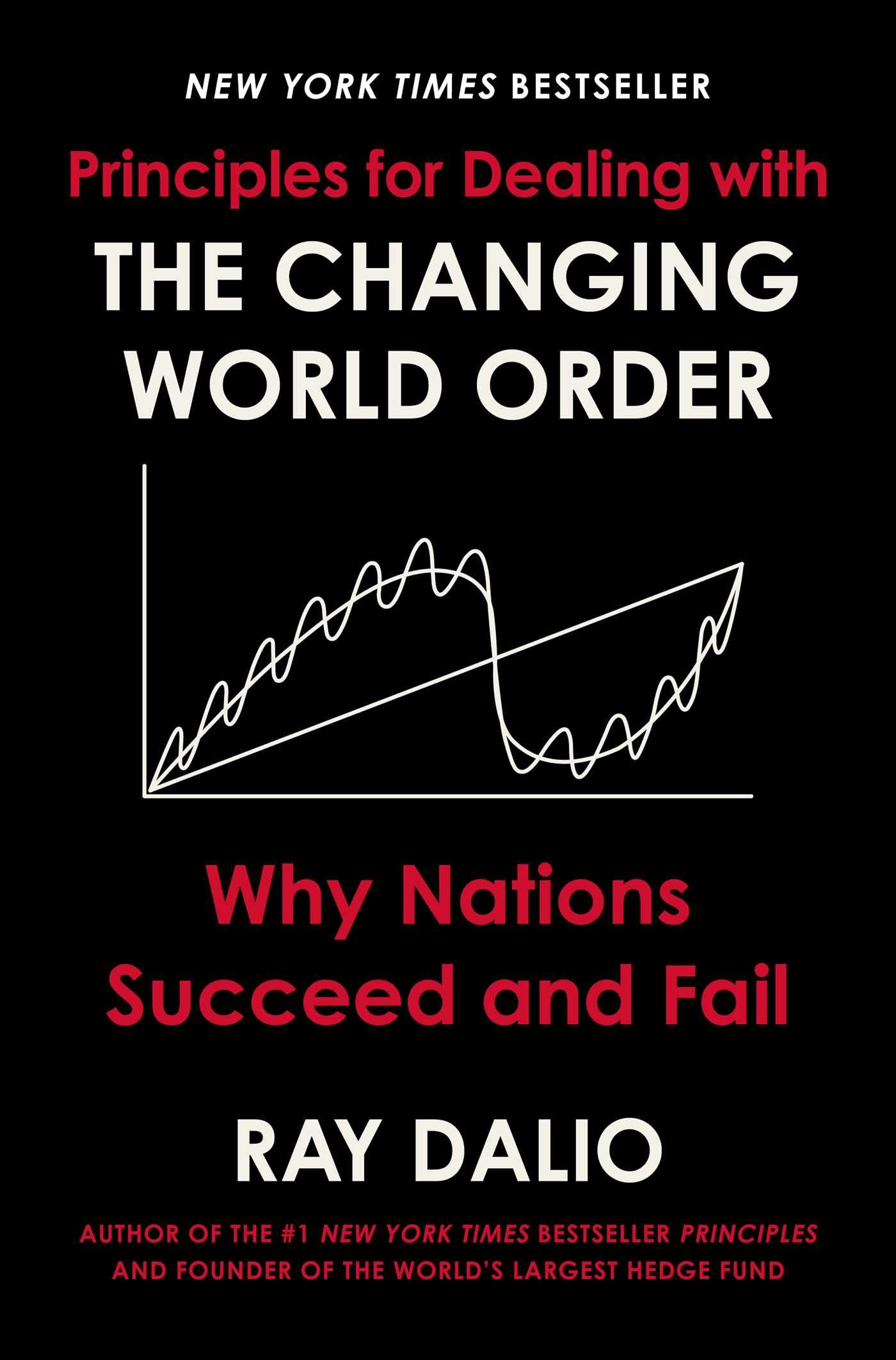
Book cover of Principles for Dealing with the Changing World Order

Principles for Dealing with the Changing World Order Summary

Economics & Money

By Ray Dalio

Avid Reader Press / Simon & Schuster · November 30, 2021

Summary

In Principles for Dealing with the Changing World Order, renowned investor Ray Dalio delves into the intricate web of global power shifts and economic cycles. Drawing on his extensive experience and in-depth research, Dalio takes readers on a journey through history to identify patterns that have shaped the world order. He examines how empires rise and fall, how different economic systems evolve, and how these changes impact countries and individuals. The book is not just a theoretical exploration; it offers practical principles that can help readers make sense of the current global situation and prepare for future changes. Dalio's approach is both comprehensive and accessible, making it suitable for those with a general interest in world affairs as well as those with a more in-depth understanding of economics and geopolitics. Through real-world examples and clear explanations, Dalio equips readers with the tools to better navigate the uncertainties of the changing world order. Whether it's understanding the balance of power between nations or predicting economic trends, this book provides a framework for informed decision-making in an ever-changing world.

About the Author

Ray Dalio is a renowned investor and author. He focuses on economic and investment-related writing. His style in "Principles for Dealing with the Changing World Order" is logical, data-driven, and offers practical insights.

Chapters

1

Introduction to the Changing World Order

In today's globalized world, the international order is in a state of constant flux. The book "Principles for Dealing with the Changing World Order" by Ray Dalio delves deep into the patterns and principles that govern these changes. Understanding these patterns is crucial as it allows us to anticipate future trends and make informed decisions.Throughout history, there have been numerous shifts in the world order. Empires rise and fall, and economic and political power centers change. These transitions are not random but follow certain underlying principles. By studying these principles, we can gain valuable insights into the current state of the world and what the future might hold.The changing world order affects various aspects of our lives, from the economy to geopolitics. For example, changes in trade policies, technological advancements, and demographic shifts can all have a significant impact on global markets and international relations. Therefore, having a clear understanding of the principles behind these changes is essential for individuals, businesses, and governments alike.
2

The Big Cycle of Empires

Empires throughout history have followed a predictable cycle. It starts with the rise of a dominant power. This usually occurs when a nation has a combination of factors working in its favor, such as a strong economy, advanced technology, and a well-organized military.During the rise phase, the empire expands its influence both economically and politically. It may establish colonies, form alliances, and become a major player in international trade. For instance, the British Empire in the 19th century was a global superpower, with colonies all over the world and a powerful navy to protect its interests.As the empire reaches its peak, it faces various challenges. These can include internal political strife, economic over-extension, and competition from emerging powers. The peak is often characterized by a high level of prosperity, but also by growing inequalities and inefficiencies within the system.After the peak, the empire enters a phase of decline. This can be due to a variety of reasons, such as military defeats, economic recessions, or social unrest. The decline is often accompanied by a loss of international influence and a weakening of the empire's institutions.Finally, the empire collapses, and a new power or set of powers emerges to take its place. This cycle has repeated itself throughout history, from the Roman Empire to the British Empire. Understanding this cycle can help us analyze the current state of global powers and predict future changes.

3

Economic and Financial Principles

The economy and finance are at the heart of the changing world order. One of the key principles is the relationship between debt and growth. When a country takes on debt, it can use the funds to invest in infrastructure, education, and other areas that can drive economic growth. However, if the debt becomes too large relative to the country's income, it can lead to financial instability.Another important principle is the role of currency. The dominant currency in the world has a significant impact on global trade and finance. For example, the US dollar has been the world's reserve currency for many years, giving the United States a unique position in the global economy. Changes in the status of the reserve currency can have far-reaching consequences for international trade and investment.Inflation and deflation are also crucial economic factors. Inflation can erode the value of money and reduce the purchasing power of consumers. On the other hand, deflation can lead to a decrease in economic activity as consumers and businesses delay spending in anticipation of lower prices.Central banks play a vital role in managing these economic and financial factors. They use monetary policy tools, such as interest rate adjustments and quantitative easing, to stabilize the economy and control inflation. However, the effectiveness of these policies can vary depending on the economic situation.

4

Geopolitical Dynamics

Geopolitics refers to the relationship between geography and politics. In the context of the changing world order, geopolitical dynamics play a significant role in shaping international relations.The distribution of natural resources is an important geopolitical factor. Countries with abundant natural resources, such as oil, gas, and minerals, have a strategic advantage. They can use these resources to strengthen their economies and increase their influence on the global stage. For example, the Middle East is a region rich in oil, which has made the countries in this region important players in the global energy market.Territorial disputes also have a major impact on geopolitics. Disputes over land, islands, and maritime boundaries can lead to tensions between countries and even military conflicts. These disputes often involve historical, cultural, and economic factors.Alliances and partnerships are another aspect of geopolitical dynamics. Countries form alliances to enhance their security, promote economic cooperation, and increase their influence. For example, NATO is a military alliance that aims to protect the member countries from external threats.The balance of power between different countries and regions is constantly changing. As emerging powers rise, the traditional balance of power is disrupted, leading to new geopolitical challenges and opportunities.

5

Technological Advancements

Technology is a major driver of the changing world order. Over the past few decades, there have been significant technological advancements in areas such as information technology, biotechnology, and renewable energy.Information technology has revolutionized the way we live and work. The internet has made it possible for people to communicate and access information from all over the world. It has also transformed industries such as media, commerce, and education. For example, e-commerce has disrupted traditional retail models, and online learning has made education more accessible.Biotechnology has the potential to improve human health and address global challenges such as food security. Advances in gene editing and personalized medicine are opening up new possibilities for treating diseases and improving the quality of life.Renewable energy technologies, such as solar and wind power, are becoming increasingly important as the world looks for ways to reduce its dependence on fossil fuels. These technologies not only help to mitigate climate change but also have the potential to transform the energy sector.However, technological advancements also bring challenges. For example, the rapid pace of technological change can lead to job displacement and social inequality. There are also concerns about data privacy and security in the digital age.

5 more chapters available

Continue listening in the Spickor app — free download on the App Store.

Listen in App

Why Spickor?

At Spickor, we believe knowledge should have no paywalls. Every book summary can be unlocked for free by watching a short ad — or you can choose an ad-free subscription. Unlike other apps, there's no "1 book per day" free limit. Learn at your own pace, on your own terms.

FeatureSpickorBlinkistHeadway
Free accessAll books free via ad unlock1 book/day only1 book/day only
Book library2,200+ across 8 categories9,000+ (non-fiction only)2,000+ (personal growth focus)
Paid subscriptionNo forced subscription; ad-supportedRequired; from $99.99/yrRequired; from $89.99/yr
Audio for all summariesYesPremium onlyPremium only
Novels & fictionYesNoNo
PlatformsiOS (Android & Web in dev)iOS / Android / WebiOS / Android only

All Books, Truly Free

Unlock any book with a short ad. No daily limits, no hidden fees.

Listen for Free

Every summary includes high-quality audio. No "premium only" labels.

Beyond Self-Help

8 categories including business, technology, and novels.

Listen in App
13 m 14 s