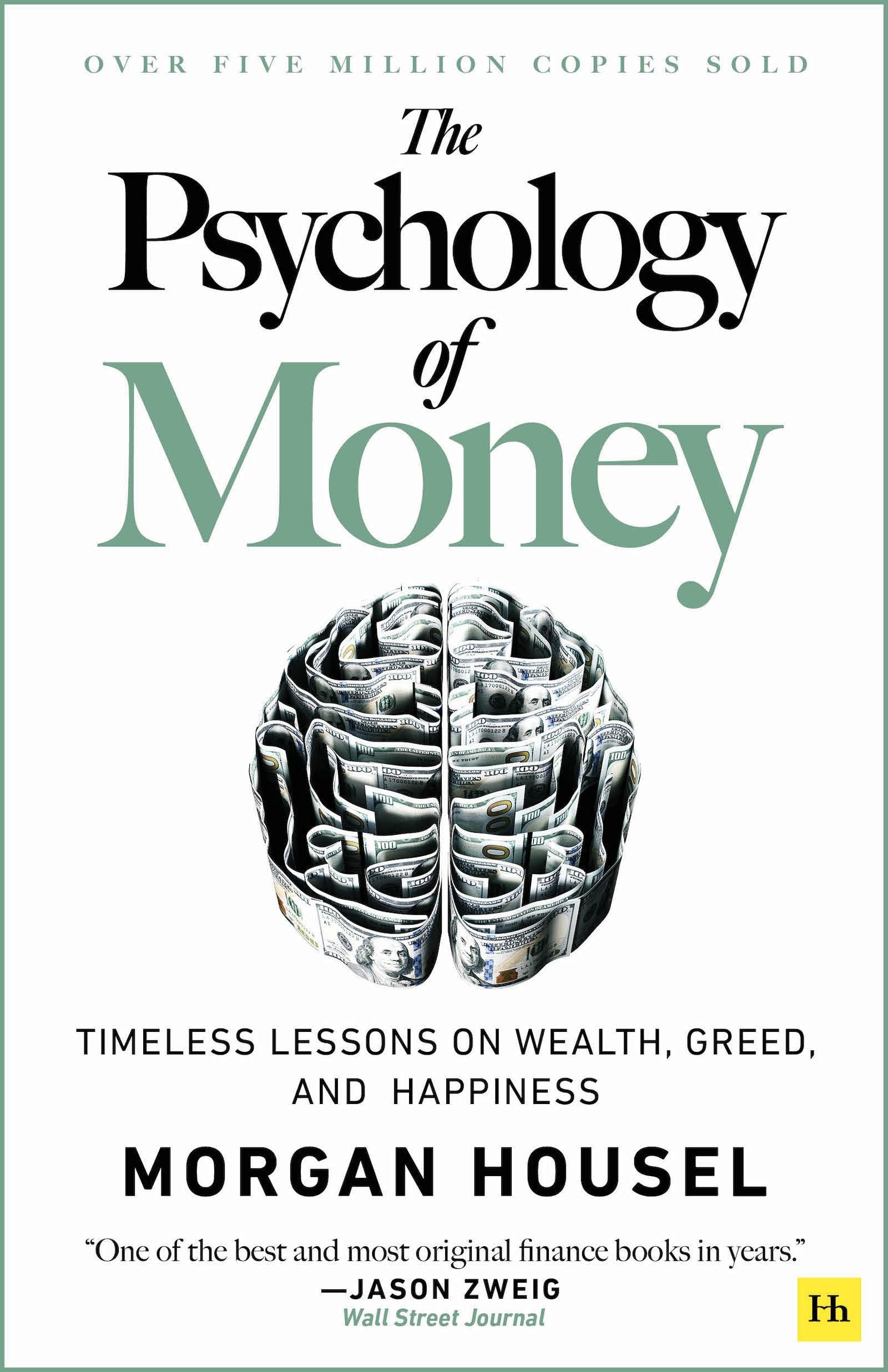
Book cover of The Psychology of Money

The Psychology of Money Summary

Economics & Money

By Morgan Housel

Harriman House · September 8, 2020

Summary

The Psychology of Money by Morgan Housel is a captivating exploration of the psychological factors that influence our financial behaviors. In a world where financial advice often focuses solely on numbers and strategies, Housel brings to light the human element in money management. He shares a collection of engaging stories that illustrate how our upbringing, social environment, and personal beliefs impact the way we earn, save, and invest. Whether it's the allure of get-rich-quick schemes or the fear of missing out, Housel dissects these common emotions and shows how they can either lead us to financial ruin or success. By understanding the psychology behind money, readers can make more informed decisions, build better financial habits, and achieve long-term financial well-being. This book is not just for finance experts but for anyone who wants to gain a deeper understanding of their own financial mindset and take control of their financial future.

About the Author

Morgan Housel is a partner at The Collaborative Fund. He is a two-time winner of the Best in Business Award from the Society of American Business Editors and Writers, winner of the New York Times Sidney Award, and a two-time finalist for the Gerald Loeb Award for Distinguished Business and Financial Journalism. He lives in Seattle with his wife and two kids.

Chapters

1

Introduction

"The Psychology of Money" by Morgan Housel delves into the intricate relationship between human behavior and financial decision-making. It argues that financial success is not solely about mastering complex economic theories or having in-depth knowledge of the stock market. Instead, it is significantly influenced by our psychological biases, life experiences, and long-term perspectives. This book aims to help readers understand these psychological factors and use them to make better financial choices, build wealth, and achieve financial well-being.
2

The Role of Luck and Risk

In the world of finance, luck and risk play crucial roles that are often underestimated. Luck can have a profound impact on an individual's financial situation. For example, someone who invests in a startup just before it becomes a huge success may seem like a genius, but a large part of that success could be due to chance. Similarly, those who lose money in the market might not be bad investors; they could have just been unlucky.Risk, on the other hand, is an inherent part of any financial decision. People often misjudge risk, either overestimating or underestimating it. Some may take on excessive risk in the hope of high returns, while others may be so afraid of risk that they miss out on good investment opportunities. Understanding the balance between luck and risk is essential for making rational financial decisions. We need to accept that luck is a factor we can't control, but we can manage risk through diversification, proper asset allocation, and having a long-term investment strategy.

3

The Power of Compounding

Compounding is one of the most powerful concepts in finance. It refers to the process where the earnings on an investment generate their own earnings over time. For instance, if you invest a certain amount of money and earn interest on it, in the next period, you earn interest not only on the original investment but also on the accumulated interest.The key to leveraging the power of compounding is time. The earlier you start investing, the more time your money has to grow. Even small, regular investments can turn into a large sum over a long period. For example, if you start saving and investing a small amount in your 20s, by the time you reach retirement, you could have a substantial nest egg. However, many people delay investing, missing out on the long-term benefits of compounding. To make the most of compounding, it's important to start early, be consistent with your investments, and let your money grow over time.

4

Saving and Frugality

Saving money is the foundation of financial stability. It provides a safety net for unexpected expenses and gives you the capital to invest. Frugality, which is the practice of being economical with money, is an effective way to increase your savings.However, frugality doesn't mean living a miserable life. It's about making smart choices and distinguishing between needs and wants. For example, instead of buying the most expensive brand of a product, you can look for a more affordable alternative that still meets your requirements. By being frugal, you can free up more money to save and invest.Moreover, saving is not just about the amount of money you put aside; it's also about the habit. Developing a regular saving habit, such as setting aside a fixed percentage of your income each month, can have a significant impact on your financial future. Even if the amount is small at first, it can grow over time and provide you with financial security.

5

The Influence of Social Comparison

Social comparison has a strong influence on our financial decisions. We often compare ourselves to others in terms of wealth, possessions, and lifestyle. This can lead to a phenomenon known as "keeping up with the Joneses." When we see our neighbors or friends buying new cars, big houses, or expensive gadgets, we may feel pressured to do the same, even if it's not financially prudent.This kind of comparison can cause us to overspend and take on debt. We may sacrifice our long-term financial goals for short-term social status. To avoid the negative effects of social comparison, we need to focus on our own financial situation and goals. We should define our own version of success and not let the standards set by others drive our spending and investment decisions. By being content with what we have and making decisions based on our own needs and circumstances, we can make more rational financial choices.

5 more chapters available

Continue listening in the Spickor app — free download on the App Store.

Listen in App

Why Spickor?

At Spickor, we believe knowledge should have no paywalls. Every book summary can be unlocked for free by watching a short ad — or you can choose an ad-free subscription. Unlike other apps, there's no "1 book per day" free limit. Learn at your own pace, on your own terms.

FeatureSpickorBlinkistHeadway
Free accessAll books free via ad unlock1 book/day only1 book/day only
Book library2,200+ across 8 categories9,000+ (non-fiction only)2,000+ (personal growth focus)
Paid subscriptionNo forced subscription; ad-supportedRequired; from $99.99/yrRequired; from $89.99/yr
Audio for all summariesYesPremium onlyPremium only
Novels & fictionYesNoNo
PlatformsiOS (Android & Web in dev)iOS / Android / WebiOS / Android only

All Books, Truly Free

Unlock any book with a short ad. No daily limits, no hidden fees.

Listen for Free

Every summary includes high-quality audio. No "premium only" labels.

Beyond Self-Help

8 categories including business, technology, and novels.

Listen in App
9 m 47 s