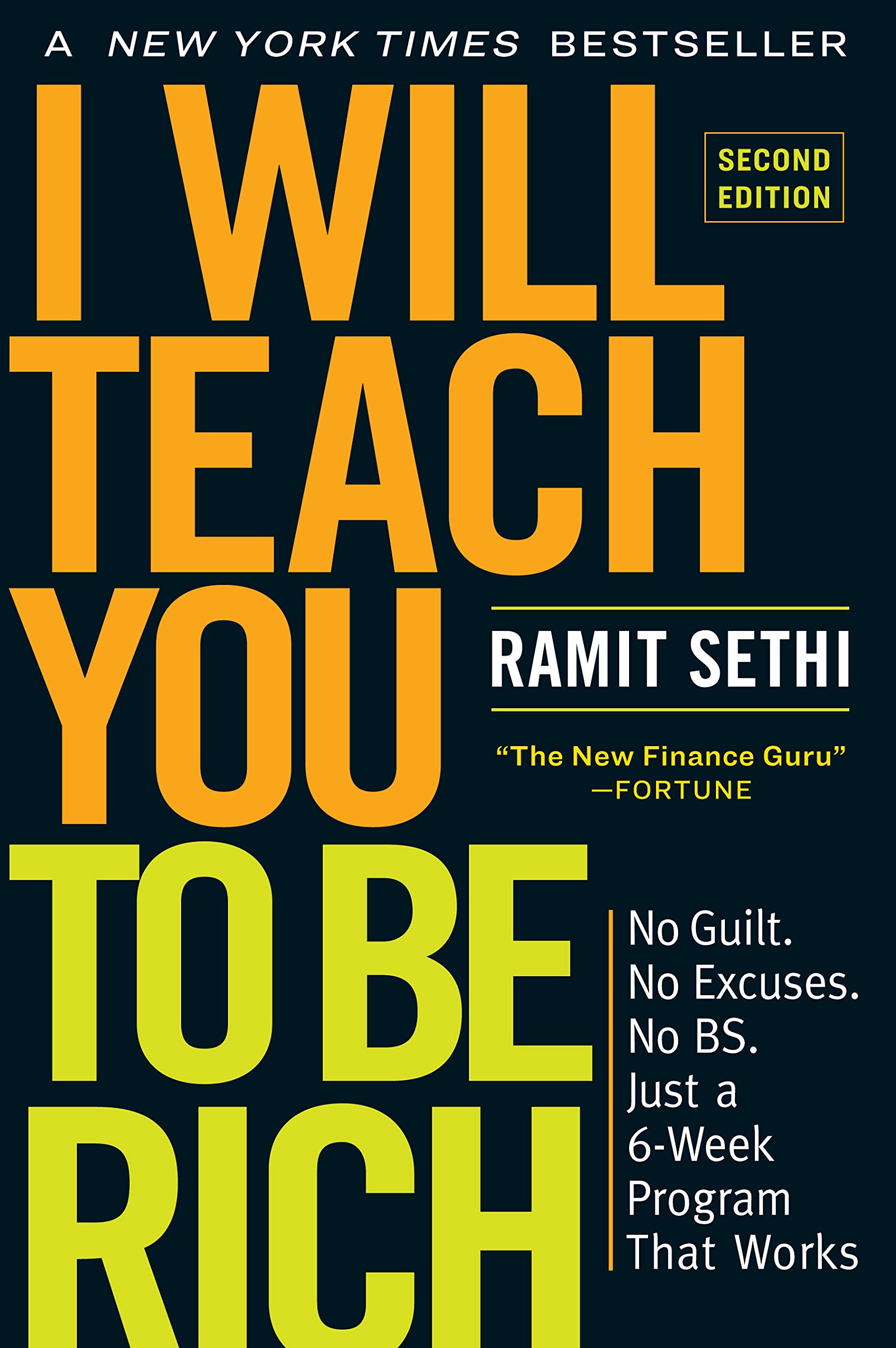
Book cover of I Will Teach You to Be Rich

I Will Teach You to Be Rich Summary

Economics & Money

By Ramit Sethi

Workman Publishing Company · May 14, 2019

Summary

"I Will Teach You to Be Rich" by Ramit Sethi is a game-changing guide to personal finance. It cuts through the jargon and offers straightforward, easy-to-follow strategies for managing money. Sethi starts by debunking common financial myths, showing readers that getting rich isn't just about earning a high income, but also about smart spending, saving, and investing. The book covers a wide range of topics, from creating a budget that actually works to choosing the right credit cards and investing in the stock market. It provides real-world examples and step-by-step instructions, so readers can implement the advice immediately. With his engaging writing style, Sethi makes the often-dry subject of finance fun and accessible. Whether you're just starting your financial journey or want to take your wealth to the next level, this book is a must-read. It empowers readers to take control of their finances and build a secure future.

About the Author

Ramit Sethi is a personal finance expert and author. He focuses on writing about financial self-improvement. His style in "I Will Teach You to Be Rich" is practical and accessible, offering actionable advice for readers.

Chapters

1

Introduction: The Path to Financial Freedom

Embarking on the journey to financial freedom is a goal many aspire to, yet few truly achieve. "I Will Teach You to Be Rich" by Ramit Sethi offers a comprehensive and practical guide to transform your financial life. This book is not about get-rich-quick schemes; instead, it focuses on long-term strategies that anyone can implement.The author emphasizes that financial success is not just about making a lot of money but also about managing it effectively. The key is to take control of your finances, make informed decisions, and develop good financial habits. By following the principles in this book, you can build a solid financial foundation, achieve your financial goals, and live a rich and fulfilling life.One of the core ideas is that you don't need to be a financial expert to be rich. With the right approach and a bit of discipline, you can make smart financial choices. This book provides a step-by-step plan that simplifies the process of managing money, from budgeting to investing.

2

Understanding Your Financial Situation

Before you can start making significant changes to your finances, you need to have a clear understanding of your current situation. This involves taking stock of your income, expenses, debts, and assets.First, calculate your net worth. This is done by subtracting your total liabilities (such as credit card debt, student loans, and mortgage) from your total assets (like savings, investments, and property). Your net worth gives you a snapshot of your overall financial health.Next, track your spending. This can be done using a spreadsheet or a financial app. Categorize your expenses into fixed (such as rent or mortgage payments) and variable (like dining out or entertainment). By analyzing your spending patterns, you can identify areas where you can cut back and save more money.It's also important to understand your income sources. Whether you have a regular job, a side hustle, or investment income, knowing how much money is coming in each month is crucial for effective financial planning.

3

Creating a Budget That Works

A budget is a powerful tool for managing your money. It helps you allocate your income towards your goals and ensures that you are not overspending.The 60% Solution is a simple yet effective budgeting method presented in the book. Allocate 60% of your income to your "Must-Haves," which include housing, utilities, groceries, and transportation. This ensures that your basic needs are met.The remaining 40% is divided into four categories. 10% goes to Retirement, which is essential for long-term financial security. Another 10% is for Long-Term Savings, such as saving for a down payment on a house or for a child's education. 10% is for "Fun Money," which allows you to enjoy life without feeling guilty. And the last 10% is for Debt Repayment, if you have any outstanding debts.When creating a budget, it's important to be realistic. Don't set overly strict limits that you won't be able to stick to. Instead, find a balance that allows you to meet your financial goals while still enjoying your life.

4

Managing Credit Cards Wisely

Credit cards can be a useful financial tool if used correctly, but they can also lead to debt if mismanaged.The first step is to choose the right credit card. Look for cards with low interest rates, no annual fees, and rewards programs that suit your spending habits. For example, if you travel frequently, a travel rewards credit card might be a good choice.Once you have a credit card, use it responsibly. Pay your balance in full every month to avoid interest charges. If you can't pay the full amount, at least make the minimum payment on time to avoid late fees and damage to your credit score.It's also important to understand the terms and conditions of your credit card. Know the interest rate, grace period, and any fees associated with the card. By being informed, you can make the most of your credit card while avoiding common pitfalls.

5

Saving for the Future

Saving money is a crucial part of financial planning. It provides a safety net for unexpected expenses and helps you achieve your long-term goals.One of the best ways to save is to automate your savings. Set up automatic transfers from your checking account to your savings account each month. This way, you don't have to think about it, and you're more likely to save consistently.Another strategy is to pay yourself first. Before you pay your bills or make any other purchases, set aside a portion of your income for savings. Treat savings as a non-negotiable expense.You can also look for ways to increase your savings. For example, you can reduce your expenses by cutting back on non-essential items, or you can increase your income by taking on a side job or asking for a raise at work.

5 more chapters available

Continue listening in the Spickor app — free download on the App Store.

Listen in App

Why Spickor?

At Spickor, we believe knowledge should have no paywalls. Every book summary can be unlocked for free by watching a short ad — or you can choose an ad-free subscription. Unlike other apps, there's no "1 book per day" free limit. Learn at your own pace, on your own terms.

FeatureSpickorBlinkistHeadway
Free accessAll books free via ad unlock1 book/day only1 book/day only
Book library2,200+ across 8 categories9,000+ (non-fiction only)2,000+ (personal growth focus)
Paid subscriptionNo forced subscription; ad-supportedRequired; from $99.99/yrRequired; from $89.99/yr
Audio for all summariesYesPremium onlyPremium only
Novels & fictionYesNoNo
PlatformsiOS (Android & Web in dev)iOS / Android / WebiOS / Android only

All Books, Truly Free

Unlock any book with a short ad. No daily limits, no hidden fees.

Listen for Free

Every summary includes high-quality audio. No "premium only" labels.

Beyond Self-Help

8 categories including business, technology, and novels.

Listen in App
9 m 18 s