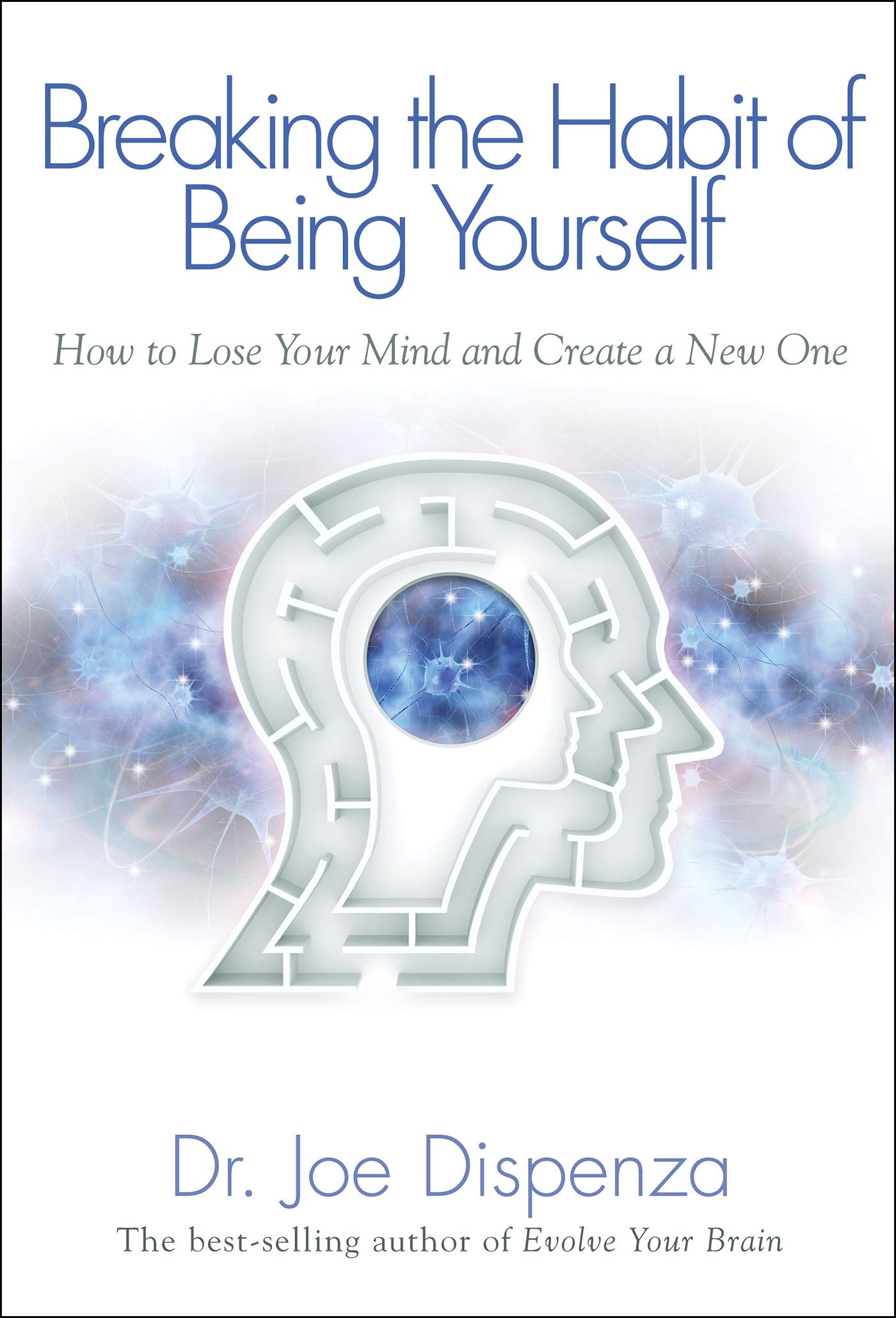
Book cover of Breaking the Habit of Being Yourself

Breaking the Habit of Being Yourself Summary

Meditation & Health

By Dr Joe Dispenza

Hay House LLC · February 15, 2012

Summary

In the book 'Breaking the Habit of Being Yourself', author Joe Dispenza delves into the fascinating intersection of neuroscience and personal growth. He contends that many of us are trapped in self-limiting habits and thought patterns that prevent us from reaching our full potential. Dispenza provides a roadmap for breaking these cycles. Drawing on scientific research, he explains how the brain can be rewired. Through practical exercises and real-life examples, he guides readers on a journey of self-discovery. By learning to change our beliefs and behaviors, we can transform our lives. Whether you're looking to improve your relationships, achieve career success, or enhance your overall well-being, this book offers valuable insights and actionable steps. It challenges us to step out of our comfort zones and embrace a new way of being. With its engaging writing style and profound message, 'Breaking the Habit of Being Yourself' is a powerful tool for anyone on the path to self-improvement.

About the Author

Joe Dispenza is a renowned author and speaker. He specializes in self-help and personal development. His writing in "Breaking the Habit of Being Yourself" is engaging, blending science with practical advice to inspire transformation.

Chapters

1

Introduction to Self-Transformation

In "Breaking the Habit of Being Yourself," Joe Dispenza delves into the profound concept of self-transformation. Our current state of being is often a result of ingrained habits, both physical and mental. These habits are like well-worn paths in our brains. We wake up, follow the same routines, think the same thoughts, and react in predictable ways. But the key idea is that we have the power to break free from these patterns. Our body has a memory, and it's used to a certain way of being. For example, if we're used to being stressed, our body is in a constant state of alert, releasing stress hormones. However, by changing our thoughts and beliefs, we can start to rewire our brains and transform our bodies. This is not just about positive thinking; it's about a deep-seated change at the neurological and physiological levels.

2

The Science of the Brain

The brain is an incredibly complex organ. It's made up of billions of neurons that communicate with each other through electrical and chemical signals. Our thoughts are like electrical impulses that travel through these neural networks. When we have the same thoughts over and over again, these neural pathways become stronger. Neuroplasticity is a crucial concept here. It means that the brain has the ability to change and adapt. Just as a muscle gets stronger with exercise, the brain can form new neural connections and break old ones. For instance, if we're constantly dwelling on negative thoughts, we're strengthening the neural pathways associated with negativity. But if we start to think positive, empowering thoughts, we can create new pathways that lead to a more positive state of being. Moreover, the brain is also influenced by our environment. Our senses take in information from the outside world, and this information shapes our thoughts and emotions. However, we can learn to control how we respond to this input and use our brain's plasticity to our advantage.

3

The Role of Emotions

Emotions play a significant role in our lives. They are not just fleeting feelings; they are powerful forces that can either hold us back or propel us forward. When we experience an emotion, it's a chemical reaction in our body. For example, when we're happy, our body releases endorphins, and when we're sad, it releases different hormones. Our emotions are often tied to our past experiences. We carry emotional baggage from past traumas, failures, or disappointments. These emotions can become part of our identity. If we're constantly feeling angry or sad, it's like we're wearing an emotional suit that we can't take off. But we can change our emotional state. By becoming aware of our emotions and learning to manage them, we can break free from the cycle of negative emotions. For example, if we're feeling anxious, we can use techniques like deep breathing or meditation to calm our bodies and change our emotional state.

4

Consciousness and the Mind

Consciousness is the awareness of our thoughts, feelings, and surroundings. It's the part of us that can observe and make choices. Our mind, on the other hand, is a collection of thoughts, beliefs, and memories. When we operate from a state of unconsciousness, we're on autopilot. We're reacting to the world based on our past conditioning. But when we become conscious, we can start to take control of our lives. We can question our beliefs, challenge our assumptions, and make new choices. For example, if we have a belief that we're not good enough, this belief is running in the background of our mind. By bringing this belief into our consciousness, we can start to examine it and decide if it's really true. We can then replace it with a more positive and empowering belief.

5

The Power of Meditation

Meditation is a powerful tool for self-transformation. It allows us to quiet the mind and enter a state of deep relaxation. When we meditate, we're not just sitting still; we're actively engaging with our inner self. During meditation, we can focus on our breath, our thoughts, or a specific intention. By focusing on our breath, we can calm our nervous system and reduce stress. By observing our thoughts without judgment, we can become more aware of our mental patterns. Meditation also helps us to connect with a higher state of consciousness. It allows us to access a part of ourselves that is beyond our everyday thoughts and emotions. This higher state of consciousness is where we can find inspiration, creativity, and a sense of purpose.

5 more chapters available

Continue listening in the Spickor app — free download on the App Store.

Listen in App

Why Spickor?

At Spickor, we believe knowledge should have no paywalls. Every book summary can be unlocked for free by watching a short ad — or you can choose an ad-free subscription. Unlike other apps, there's no "1 book per day" free limit. Learn at your own pace, on your own terms.

FeatureSpickorBlinkistHeadway
Free accessAll books free via ad unlock1 book/day only1 book/day only
Book library2,200+ across 8 categories9,000+ (non-fiction only)2,000+ (personal growth focus)
Paid subscriptionNo forced subscription; ad-supportedRequired; from $99.99/yrRequired; from $89.99/yr
Audio for all summariesYesPremium onlyPremium only
Novels & fictionYesNoNo
PlatformsiOS (Android & Web in dev)iOS / Android / WebiOS / Android only

All Books, Truly Free

Unlock any book with a short ad. No daily limits, no hidden fees.

Listen for Free

Every summary includes high-quality audio. No "premium only" labels.

Beyond Self-Help

8 categories including business, technology, and novels.

Listen in App
8 m 52 s