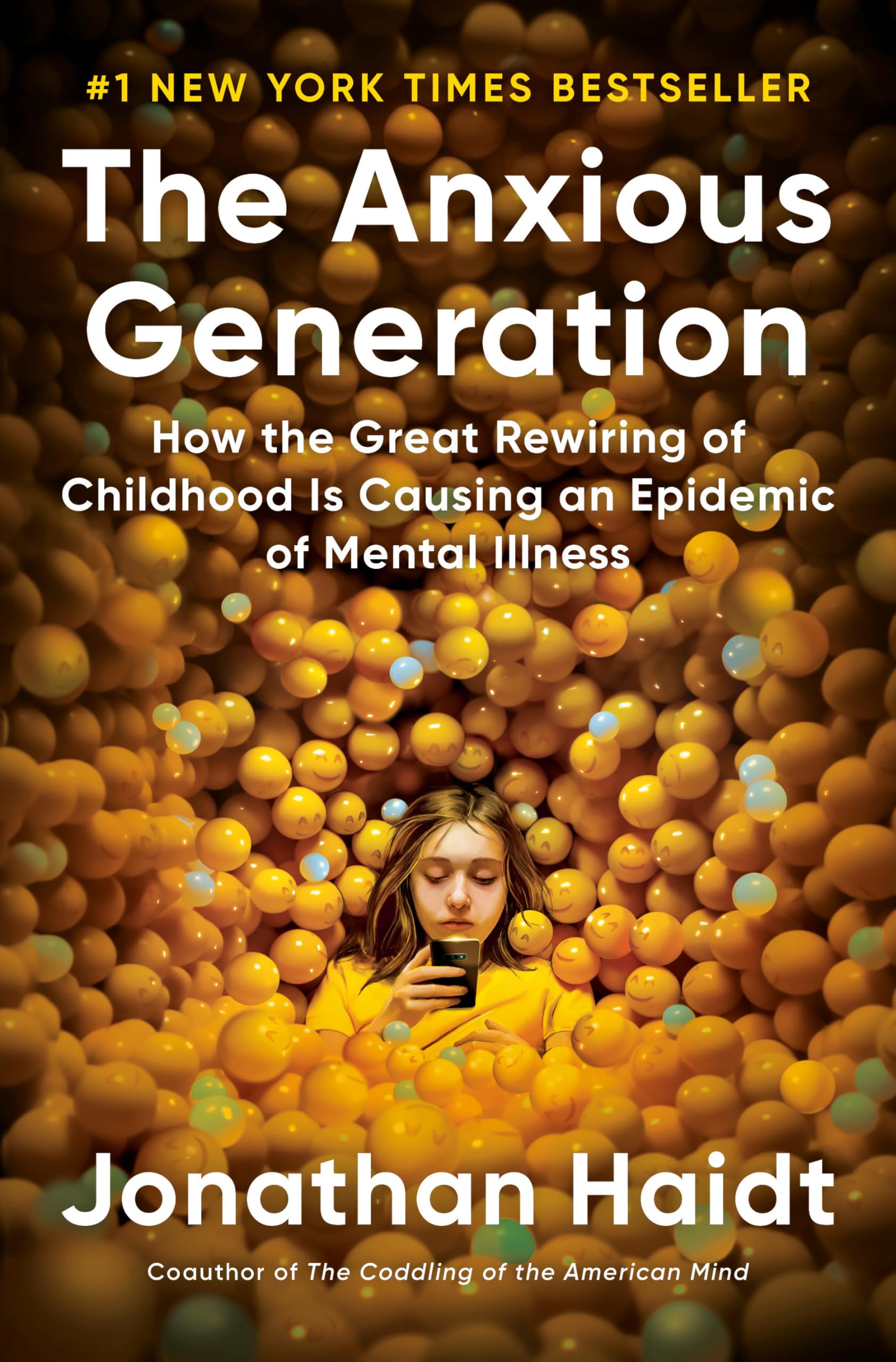
Book cover of The Anxious Generation

The Anxious Generation Summary

Meditation & Health

By Jonathan Haidt

Penguin Press · March 26, 2024

Summary

The Anxious Generation by Jonathan Haidt is a thought-provoking exploration of the mental health challenges faced by the current generation of young people. In today's fast-paced and digital world, young individuals are grappling with unprecedented levels of anxiety. Haidt takes a comprehensive approach, looking at various aspects such as the influence of social media, the changing educational landscape, and the pressure to succeed. He presents real-life examples and research findings to illustrate the root causes of this anxiety epidemic. By understanding these factors, readers can gain a better perspective on how to support the younger generation. Whether you're a parent, educator, or simply interested in the well-being of the youth, this book provides valuable insights into the complex issues facing the anxious generation. It's a call to action to address these problems and create a more supportive environment for the next generation.

About the Author

Jonathan Haidt is the Thomas Cooley Professor of Ethical Leadership at New York University's Stern School of Business. He received his Ph.D. in social psychology from the University of Pennsylvania in 1992 and then did post-doctoral research at the University of Chicago and in Orissa, India. He taught at the University of Virginia for 16 years before moving to NYU-Stern in 2011. He was named one of the "top global thinkers" by Foreign Policy magazine, and one of the "top world thinkers" by Prospect magazine. His research focuses on morality-its emotional foundations, cultural variations, and developmental course. He began his career studying the negative moral emotions, such as disgust, shame, and vengeance, but then moved on to the understudied positive moral emotions, such as admiration, awe, and moral elevation. He is the co-developer of Moral Foundations theory, and of the research site YourMorals.org. He is a co-founder of HeterodoxAcademy.org, which advocates for viewpoint diversity in higher education. He uses his research to help people understand and respect the moral motives of their enemies (see CivilPolitics.org, and see his TED talks). He is the author of The Happiness Hypothesis: Finding Modern Truth in Ancient Wisdom; The Righteous Mind: Why Good People are Divided by Politics and Religion; and (with Greg Lukianoff) The Coddling of the American Mind: How good intentions and bad ideas are setting a generation up for failure. For more information see www.JonathanHaidt.com.

Chapters

1

Introduction: The Anxious Generation Phenomenon

In modern society, a concerning trend has emerged-the rise of an anxious generation. Young people today seem to be more anxious than ever before. This phenomenon is not just a passing phase but has far-reaching implications for individuals, families, and society as a whole. The increased anxiety levels among the younger population are evident in various aspects of their lives. In schools, students are constantly under pressure to achieve high grades, participate in numerous extracurricular activities, and build a perfect resume for college admissions. Socially, the influence of social media adds another layer of stress. Young people are bombarded with images of seemingly perfect lives, which can lead to feelings of inadequacy and self-doubt. This anxiety is not only a mental health issue but also affects physical health. High levels of stress can lead to problems such as sleep disorders, weakened immune systems, and even long-term health complications. It also impacts social relationships, as anxious individuals may find it difficult to form and maintain healthy connections with others.
2

The Role of Social Media

Social media has become an integral part of the lives of the younger generation. Platforms like Instagram, TikTok, and Snapchat allow people to share their lives, connect with friends, and discover new content. However, these platforms also have a dark side. One of the main problems is the curated nature of social media. People tend to post only the best parts of their lives, creating an unrealistic image. Young people compare themselves to these idealized versions, which can lead to feelings of envy, low self-esteem, and anxiety. For example, a teenager might see a friend's post about a great party and feel left out, even if the party wasn't really as perfect as it seemed. Social media also exposes young people to cyberbullying. Bullies can hide behind the anonymity of the internet and send hurtful messages, which can have a profound impact on the victim's mental health. Moreover, the constant need to check social media notifications can lead to a sense of restlessness and distraction. Young people may feel compelled to be online all the time, fearing they might miss out on something important.

3

Academic Pressure

Academic pressure is another significant factor contributing to the anxiety of the younger generation. In today's competitive world, getting into a good college or university is often seen as the key to a successful future. As a result, students are pushed to perform at their best from a young age. Schools assign a large amount of homework, and students are expected to participate in multiple advanced courses. Standardized tests like the SAT and ACT add even more stress. The fear of failure in these tests can be overwhelming, as a poor score can limit a student's college options. Parents also play a role in this academic pressure. Many parents have high expectations for their children's academic achievements and may put additional pressure on them. This can create a high-stress environment at home, where students feel they are constantly being judged based on their grades.

4

The Impact of Parenting Styles

Parenting styles have a significant influence on the anxiety levels of children. Overprotective parenting, also known as helicopter parenting, is becoming more common. Helicopter parents closely monitor their children's every move, intervening in their lives to prevent any potential problems. While this may seem like a way to protect children, it can actually have negative effects. Children raised by helicopter parents may not develop the necessary skills to handle challenges on their own. They may become overly dependent on their parents and have difficulty making decisions independently. This lack of self-confidence can lead to anxiety when faced with new situations. On the other hand, permissive parenting, where parents set few rules and boundaries, can also contribute to anxiety. Without clear guidelines, children may feel insecure and unsure of what is expected of them. They may engage in risky behaviors, which can lead to negative consequences and further anxiety.

5

Mental Health Awareness and Stigma

In recent years, there has been an increased awareness of mental health issues among the younger generation. More people are talking about anxiety, depression, and other mental health problems. However, despite this increased awareness, there is still a significant stigma associated with mental illness. Many young people are afraid to seek help for their anxiety because they worry about being labeled as "crazy" or "weak." This stigma can prevent them from getting the treatment they need. Schools and communities need to do more to reduce this stigma and encourage young people to seek help when they are struggling. There are also limited resources available for young people with mental health issues. Mental health services can be expensive, and there may not be enough trained professionals to meet the demand. This lack of access to care can exacerbate the problem, as untreated anxiety can lead to more severe mental health issues over time.

5 more chapters available

Continue listening in the Spickor app — free download on the App Store.

Listen in App

Why Spickor?

At Spickor, we believe knowledge should have no paywalls. Every book summary can be unlocked for free by watching a short ad — or you can choose an ad-free subscription. Unlike other apps, there's no "1 book per day" free limit. Learn at your own pace, on your own terms.

FeatureSpickorBlinkistHeadway
Free accessAll books free via ad unlock1 book/day only1 book/day only
Book library2,200+ across 8 categories9,000+ (non-fiction only)2,000+ (personal growth focus)
Paid subscriptionNo forced subscription; ad-supportedRequired; from $99.99/yrRequired; from $89.99/yr
Audio for all summariesYesPremium onlyPremium only
Novels & fictionYesNoNo
PlatformsiOS (Android & Web in dev)iOS / Android / WebiOS / Android only

All Books, Truly Free

Unlock any book with a short ad. No daily limits, no hidden fees.

Listen for Free

Every summary includes high-quality audio. No "premium only" labels.

Beyond Self-Help

8 categories including business, technology, and novels.

Listen in App
10 m 08 s