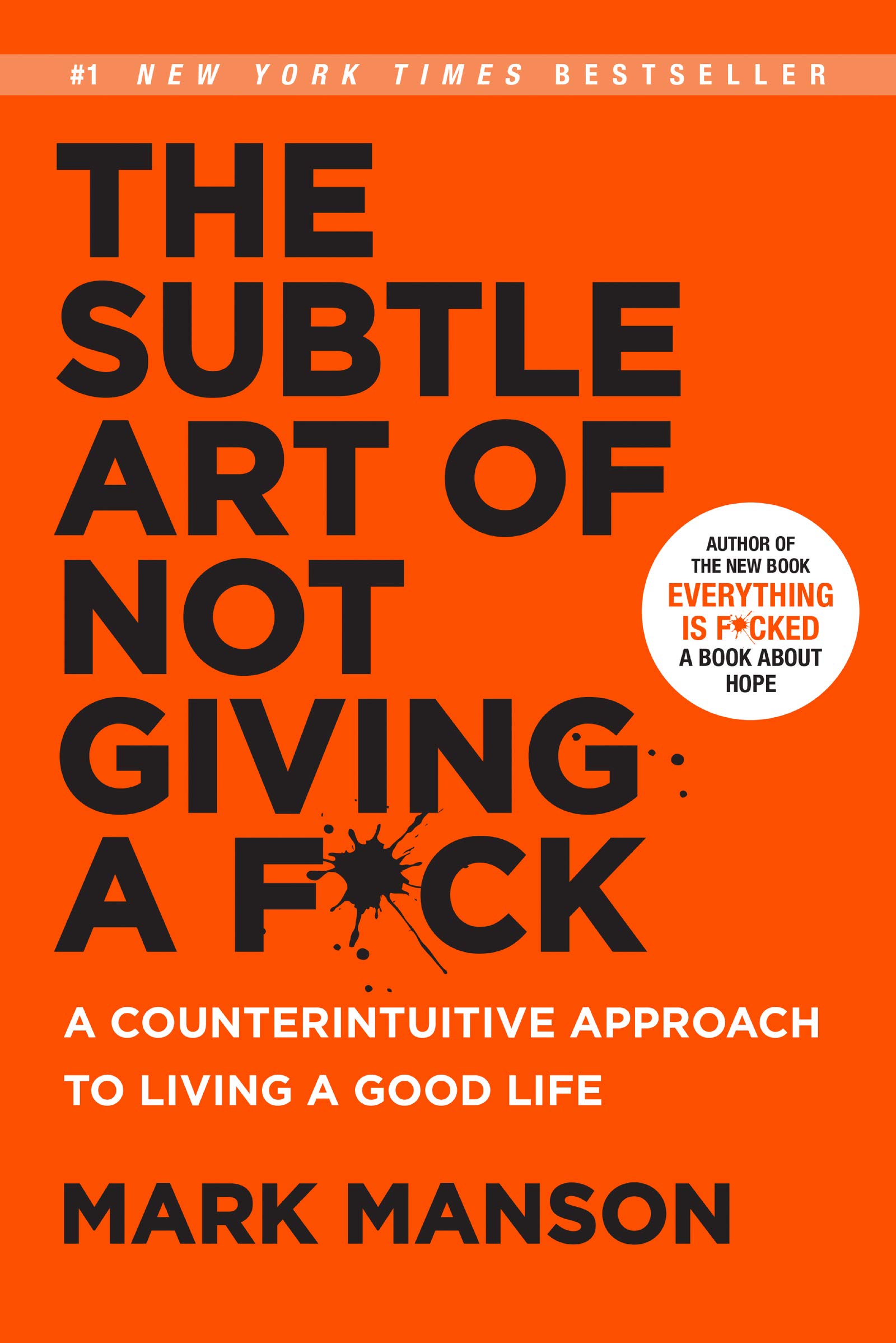
Book cover of The Subtle Art of Not Giving a F*ck

The Subtle Art of Not Giving a F*ck Summary

Meditation & Health

By Mark Manson

Harper · September 13, 2016

Summary

In the modern world, we're constantly bombarded with messages that tell us we need to be happy, successful, and popular all the time. Mark Manson's 'The Subtle Art of Not Giving a F*ck' flips this idea on its head. It's not about being apathetic but about choosing what to care about and what to ignore. Manson uses real-life stories and practical examples to illustrate his points. He argues that by accepting our limitations and the harsh realities of life, we can find greater fulfillment. The book is filled with honest and thought-provoking insights that can help readers break free from the cycle of constant self-improvement and focus on what brings them genuine satisfaction. It's a guide for those who are tired of the pressure to be perfect and want to live a more authentic life.

About the Author

Mark Manson is a renowned author. He specializes in self-help and personal development writing. His style is straightforward, candid, and unfiltered, as seen in his best-seller *The Subtle Art of Not Giving a F*ck*.

Chapters

1

Introduction: The Paradox of Happiness

In a world bombarded with messages of constant positivity and the pursuit of endless pleasure, we often find ourselves trapped in a cycle of dissatisfaction. The idea that we should always be happy, successful, and have it all is not only unrealistic but also counterproductive. This book challenges the conventional wisdom of positive thinking and introduces the concept of "not giving a f*ck" in a more strategic way.We live in an era where social media showcases only the highlights of people's lives, creating a false sense of comparison. We're told that we need to achieve certain goals, acquire material possessions, and maintain a perfect image to be happy. However, this constant striving often leads to stress, anxiety, and a feeling of never being good enough.The key to a more fulfilling life is not to constantly chase after what society tells us we should want but to focus on what truly matters to us. By learning to say no to the things that don't align with our values, we can free up our time and energy for the things that do. This is the essence of the "subtle art" of not giving a f*ck.

2

The Value of Negative Thinking

Negative thinking is often seen as a bad thing, but it actually has its benefits. When we allow ourselves to face the negative aspects of life, we become more resilient. Instead of avoiding problems, we can confront them head-on.For example, when we acknowledge our limitations, we can set more realistic goals. If we're not naturally good at a certain skill, instead of pretending we can be the best at it overnight, we can focus on improving at a reasonable pace. This kind of self-awareness helps us avoid the disappointment that comes from setting unattainable goals.Negative thinking also helps us appreciate the good things in life. When we experience hardship, we can better understand and value the moments of joy and success. It's like the contrast between light and dark; without the dark, we wouldn't fully appreciate the light.Moreover, negative thinking can protect us from the delusions of positive thinking. Positive thinking often encourages us to ignore the harsh realities of life, which can lead to poor decision-making. By being realistic about the challenges we face, we can make more informed choices.

3

Accepting Imperfection

We all have flaws and make mistakes. Accepting this fact is crucial for our well-being. When we try to be perfect, we put an enormous amount of pressure on ourselves. This pressure can lead to burnout and a sense of inadequacy.For instance, in relationships, we often expect our partners to be perfect. But when we accept that they, like us, have their own flaws, we can build more meaningful and lasting connections. Instead of constantly criticizing and trying to change them, we can focus on the things we love about them.In our personal and professional lives, accepting imperfection allows us to take risks. We're not afraid to fail because we know that failure is a part of the learning process. When we make a mistake, we can learn from it and grow.Rather than striving for an impossible standard of perfection, we should aim for progress. Progress is achievable and sustainable. It's about making small, consistent improvements over time. By accepting our imperfections, we can focus on the journey of self-improvement rather than the destination of perfection.

4

Choosing Your Struggles

Life is full of struggles, and we can't avoid them. However, we have the power to choose which struggles we want to face. Instead of trying to avoid all problems, we should focus on the ones that are meaningful to us.For example, if you're passionate about a particular career, you might choose to struggle through long hours of study and hard work to achieve your goals. This struggle is worth it because it aligns with your values. On the other hand, if you're constantly worrying about what others think of you, this is a struggle that may not be worth your time and energy.When we choose our struggles, we take control of our lives. We're no longer at the mercy of external circumstances. We can decide what we're willing to endure to achieve what we want. This sense of control gives us a greater sense of purpose and fulfillment.It's important to note that choosing struggles doesn't mean seeking out pain for the sake of it. It means being intentional about the challenges we face and understanding that they are a necessary part of growth.

5

The Importance of Values

Our values are the guiding principles of our lives. They determine what we consider important, what we're willing to fight for, and how we make decisions. When our actions are in line with our values, we feel a sense of purpose and fulfillment.For example, if your value is honesty, you'll make choices that reflect this. You'll be truthful in your relationships, at work, and in all aspects of your life. This consistency between your values and your actions gives you a sense of integrity.However, many people don't take the time to define their values. They follow the values of society or their parents without really thinking about what they truly believe in. This can lead to a sense of emptiness and confusion.To live a meaningful life, we need to identify our core values. We can do this by reflecting on the things that make us happy, the things we're passionate about, and the things that we're willing to sacrifice for. Once we have a clear understanding of our values, we can make decisions that are in line with them.

5 more chapters available

Continue listening in the Spickor app — free download on the App Store.

Listen in App

Why Spickor?

At Spickor, we believe knowledge should have no paywalls. Every book summary can be unlocked for free by watching a short ad — or you can choose an ad-free subscription. Unlike other apps, there's no "1 book per day" free limit. Learn at your own pace, on your own terms.

FeatureSpickorBlinkistHeadway
Free accessAll books free via ad unlock1 book/day only1 book/day only
Book library2,200+ across 8 categories9,000+ (non-fiction only)2,000+ (personal growth focus)
Paid subscriptionNo forced subscription; ad-supportedRequired; from $99.99/yrRequired; from $89.99/yr
Audio for all summariesYesPremium onlyPremium only
Novels & fictionYesNoNo
PlatformsiOS (Android & Web in dev)iOS / Android / WebiOS / Android only

All Books, Truly Free

Unlock any book with a short ad. No daily limits, no hidden fees.

Listen for Free

Every summary includes high-quality audio. No "premium only" labels.

Beyond Self-Help

8 categories including business, technology, and novels.

Listen in App
10 m 27 s