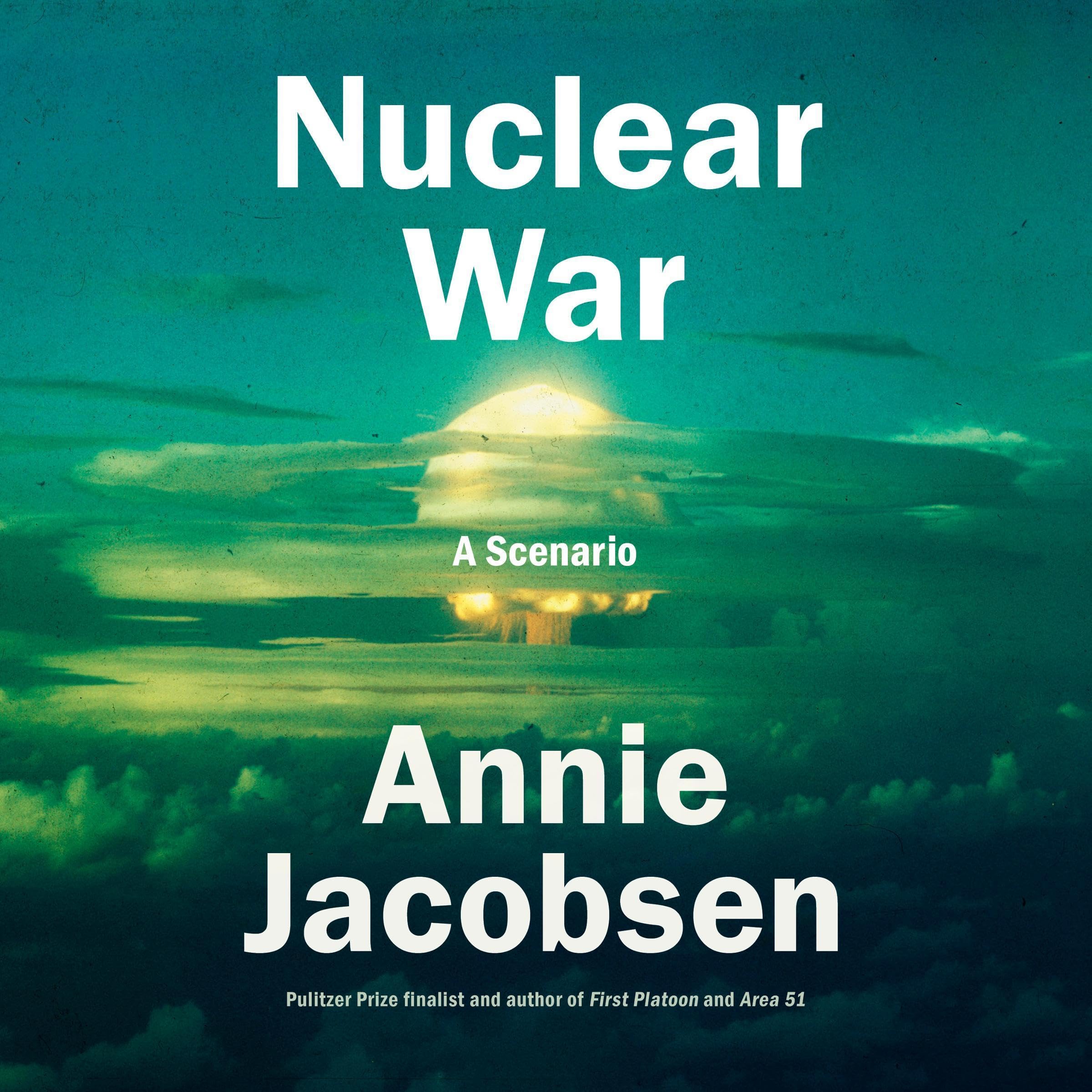
Book cover of Nuclear War

Nuclear War Summary

Technology & Science

By Annie Jacobsen

Penguin Audio · March 26, 2024

Summary

In the book "Nuclear War," author Annie Jacobsen takes readers on a journey into the shadowy realm of nuclear conflict. With her signature investigative journalism style, she peels back the layers of secrecy that have long surrounded the topic. The book explores the development of nuclear weapons, the political and military strategies behind their use, and the potential consequences of a nuclear war. Jacobsen draws on a wide range of sources, including declassified documents and interviews with insiders, to present a comprehensive and engaging account. It's not just about the technical details; it also examines the human element, the decisions made by leaders, and the impact on ordinary people. Whether you're a history buff or simply curious about the threats that have shaped our world, this book provides valuable insights into a subject that continues to be of utmost importance.

About the Author

Annie Jacobsen is an American author. She specializes in non-fiction, especially on topics like national security and military affairs. Her style in "Nuclear War" is fact-based, detailed and engaging.

Chapters

1

Introduction to Nuclear War

Nuclear war is one of the most catastrophic events that could occur in human history. It has the potential to cause widespread destruction, loss of life, and long-term environmental damage. Annie Jacobsen's book "Nuclear War" delves deep into the various aspects of nuclear war, from its history to the potential consequences.In the early days of nuclear technology, the world was thrust into a new era of warfare. The development of nuclear weapons was a race between major powers. The United States and the Soviet Union were at the forefront of this race during the Cold War. The first nuclear bomb was detonated in 1945, and this event changed the course of history. It showed the world the incredible power that could be harnessed from nuclear reactions.The threat of nuclear war loomed large during the Cold War. Tensions between the two superpowers led to a constant state of fear and uncertainty. Both countries stockpiled nuclear weapons, creating a situation known as mutually assured destruction. This meant that if one country launched a nuclear attack, the other would retaliate, resulting in the destruction of both nations.The book also explores the different types of nuclear weapons. There are fission bombs, which work by splitting atomic nuclei, and fusion bombs, which involve the merging of atomic nuclei. These weapons vary in their destructive power, with fusion bombs being much more powerful than fission bombs. The design and development of these weapons have been the result of extensive scientific research and technological advancements.
2

Historical Context of Nuclear War

The roots of nuclear war can be traced back to the early 20th century. Scientists were making significant discoveries in the field of nuclear physics. The discovery of radioactivity by Henri Becquerel in 1896 was a major milestone. This led to further research on atomic nuclei and the development of the concept of nuclear fission.In the 1930s, scientists in Europe and the United States were actively researching nuclear reactions. The discovery of nuclear fission by Otto Hahn and Fritz Strassmann in 1938 was a turning point. This discovery showed that a large amount of energy could be released by splitting the nucleus of an atom.During World War II, the United States launched the Manhattan Project. This was a top-secret research project aimed at developing the first nuclear weapon. Scientists from various fields, including physics, chemistry, and engineering, worked together to achieve this goal. The project was a massive undertaking, involving thousands of people and significant financial resources.The first nuclear test, code-named Trinity, took place in New Mexico in 1945. The success of this test led to the use of nuclear weapons in warfare. The United States dropped atomic bombs on the Japanese cities of Hiroshima and Nagasaki in August 1945. These bombings had a profound impact on the course of the war and the world. They led to Japan's surrender and marked the beginning of the nuclear age.After World War II, the Cold War began. The United States and the Soviet Union became rivals, and the arms race for nuclear weapons intensified. Both countries developed more powerful and sophisticated nuclear weapons. The development of intercontinental ballistic missiles (ICBMs) allowed for the delivery of nuclear warheads over long distances, increasing the threat of a global nuclear conflict.

3

Nuclear Weapons and Their Technology

Nuclear weapons are based on the principles of nuclear physics. Fission weapons, also known as atomic bombs, work by splitting the nucleus of a heavy atom, such as uranium-235 or plutonium-239. When a neutron collides with the nucleus of one of these atoms, it causes the nucleus to split into two smaller nuclei, releasing a large amount of energy in the form of heat, light, and radiation.Fusion weapons, or hydrogen bombs, are even more powerful. They work by fusing the nuclei of light atoms, such as hydrogen isotopes. This process releases an even greater amount of energy than fission. The development of fusion weapons required advanced technology and a deep understanding of nuclear reactions.The design of nuclear weapons is a complex process. It involves the careful selection of materials, the engineering of the weapon's components, and the development of a reliable detonation system. The size and shape of the weapon also play a crucial role in its effectiveness.The delivery systems for nuclear weapons are also an important aspect. ICBMs are long-range missiles that can carry nuclear warheads across continents. Submarine-launched ballistic missiles (SLBMs) provide a stealthy and mobile means of delivering nuclear weapons. Bombers can also be used to carry nuclear bombs and drop them on targets.The maintenance and safety of nuclear weapons are of utmost importance. Nuclear weapons require regular maintenance to ensure their reliability. Safety mechanisms are in place to prevent accidental detonations. These mechanisms include multiple levels of security and control systems.

4

The Cold War and Nuclear Tensions

The Cold War was a period of intense political and military rivalry between the United States and the Soviet Union. The two countries engaged in a nuclear arms race, constantly developing and stockpiling more powerful weapons.One of the most tense moments during the Cold War was the Cuban Missile Crisis in 1962. The Soviet Union had placed nuclear missiles in Cuba, just 90 miles from the United States. This move was seen as a direct threat to the United States. President John F. Kennedy demanded the removal of the missiles, and a stand-off ensued.For 13 days, the world was on the brink of nuclear war. Both sides were prepared to use their nuclear weapons if necessary. However, through diplomatic negotiations, a deal was reached. The Soviet Union agreed to remove the missiles from Cuba, and the United States agreed not to invade Cuba and to remove its missiles from Turkey.The Cuban Missile Crisis was a wake-up call for the world. It showed the extreme danger of nuclear war and the need for better communication and diplomacy between the superpowers. After the crisis, both the United States and the Soviet Union took steps to reduce the risk of nuclear conflict.The Strategic Arms Limitation Talks (SALT) were initiated in the 1970s. These talks aimed to limit the number of nuclear weapons and delivery systems. The SALT agreements were an important step in reducing the nuclear arms race and promoting stability.

5

Nuclear Proliferation

Nuclear proliferation refers to the spread of nuclear weapons and related technology to other countries. After the United States and the Soviet Union developed nuclear weapons, other countries also sought to acquire them.The Non-Proliferation Treaty (NPT) was established in 1968 to prevent the spread of nuclear weapons. The treaty has three main pillars: non-proliferation, disarmament, and the peaceful use of nuclear energy. Most countries in the world have signed the NPT, but there are still some countries that have either developed nuclear weapons outside the treaty or are suspected of trying to do so.North Korea is one such country. It has conducted several nuclear tests, which have raised concerns in the international community. Iran has also been a subject of controversy. There have been suspicions that Iran has been working on a nuclear weapons program, although Iran claims that its nuclear program is for peaceful purposes.The issue of nuclear proliferation is a complex one. It involves political, economic, and security considerations. The international community has been working to prevent the spread of nuclear weapons through diplomacy, sanctions, and international cooperation.The development of nuclear technology for peaceful purposes, such as nuclear power generation, also poses a risk of proliferation. If countries that have nuclear power plants are not properly monitored, they could potentially divert nuclear materials for weapons production.

5 more chapters available

Continue listening in the Spickor app — free download on the App Store.

Listen in App

Why Spickor?

At Spickor, we believe knowledge should have no paywalls. Every book summary can be unlocked for free by watching a short ad — or you can choose an ad-free subscription. Unlike other apps, there's no "1 book per day" free limit. Learn at your own pace, on your own terms.

FeatureSpickorBlinkistHeadway
Free accessAll books free via ad unlock1 book/day only1 book/day only
Book library2,200+ across 8 categories9,000+ (non-fiction only)2,000+ (personal growth focus)
Paid subscriptionNo forced subscription; ad-supportedRequired; from $99.99/yrRequired; from $89.99/yr
Audio for all summariesYesPremium onlyPremium only
Novels & fictionYesNoNo
PlatformsiOS (Android & Web in dev)iOS / Android / WebiOS / Android only

All Books, Truly Free

Unlock any book with a short ad. No daily limits, no hidden fees.

Listen for Free

Every summary includes high-quality audio. No "premium only" labels.

Beyond Self-Help

8 categories including business, technology, and novels.

Listen in App
14 m 49 s