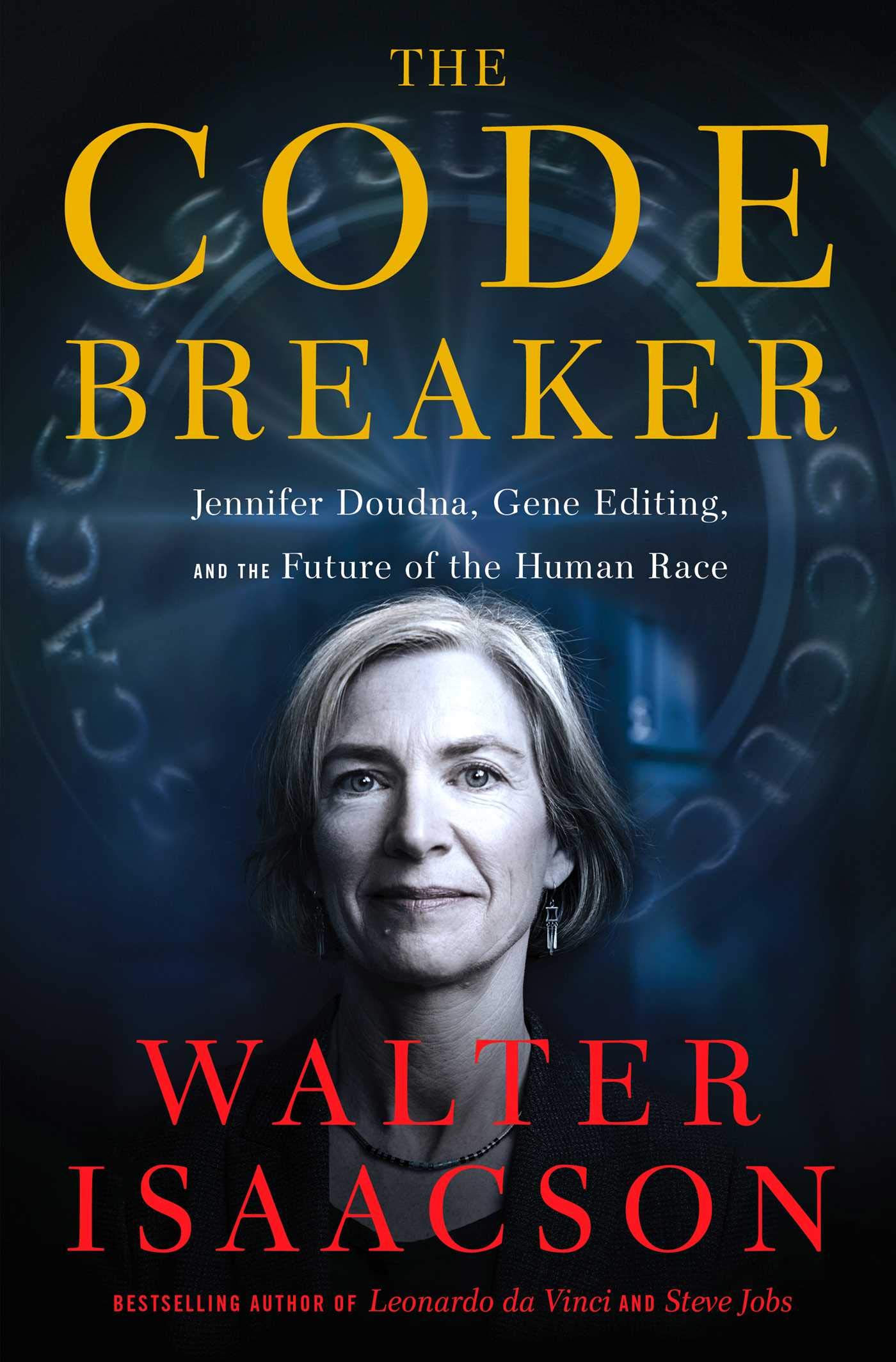
Book cover of The Code Breaker

The Code Breaker Summary

Technology & Science

By Walter Isaacson

Simon & Schuster · March 9, 2021

Summary

The Code Breaker, written by the renowned biographer Walter Isaacson, is a captivating exploration of the gene-editing technology CRISPR. Isaacson takes readers through the development of this groundbreaking discovery, introducing the key scientists and their stories. CRISPR has the potential to cure genetic diseases, transform agriculture, and even reshape the course of evolution. The book not only explains the science but also delves into the ethical, social, and legal implications of this powerful tool. It shows how a small group of dedicated researchers have changed the world with their work. Through interviews and in-depth research, Isaacson brings the story of CRISPR to life, making it a must-read for anyone interested in the future of science and technology.

About the Author

Walter Isaacson is a well-known American author. He specializes in biographies and science-related writing. His style is accessible, blending in-depth research with engaging storytelling, as seen in "The Code Breaker".

Chapters

1

Introduction to CRISPR and Its Significance

CRISPR, or Clustered Regularly Interspaced Short Palindromic Repeats, is a revolutionary gene-editing technology. It has the potential to transform medicine, agriculture, and many other fields. This technology allows scientists to precisely cut and modify DNA, offering solutions to previously incurable genetic diseases and enabling the creation of more resilient crops. The discovery of CRISPR has opened up new frontiers in genetic research, challenging our understanding of biology and ethics. The development of CRISPR is not just a scientific achievement but also a story of human curiosity, collaboration, and competition. It involves a diverse group of scientists from different backgrounds, each contributing unique perspectives and expertise. In the following chapters, we will explore the key players, the scientific breakthroughs, and the far-reaching implications of this game-changing technology.
2

The Discovery of CRISPR

The story of CRISPR begins with the discovery of strange repeating DNA sequences in bacteria. Scientists noticed these patterns in the genomes of various bacteria and archaea. At first, their function was a mystery. It was later found that these sequences were part of a bacterial immune system. Bacteria use CRISPR to defend against viruses. When a virus attacks a bacterium, the bacterium captures a piece of the virus's DNA and inserts it into its own CRISPR array. The bacterium then uses this stored information to recognize and destroy the virus if it attacks again. This natural defense mechanism was the foundation for the development of the CRISPR-Cas9 gene-editing tool.The discovery of CRISPR's function was a collective effort. Many researchers around the world were involved in piecing together the puzzle. Some of the early key players were Francisco Mojica, who first identified the CRISPR sequences, and Jennifer Doudna, who later played a crucial role in developing the gene-editing technology.

3

Jennifer Doudna: A Pioneering Scientist

Jennifer Doudna is one of the most prominent figures in the CRISPR story. She is a biochemist with a passion for understanding the fundamental processes of life. Doudna's journey into CRISPR research started when she was introduced to the strange DNA sequences in bacteria.She was intrigued by the potential of these sequences to be used as a gene-editing tool. Doudna collaborated with Emmanuelle Charpentier, a microbiologist, to further explore the CRISPR-Cas9 system. Their work was groundbreaking. They were able to show that the CRISPR-Cas9 complex could be programmed to cut specific DNA sequences in a test tube.Doudna's contributions to the field of CRISPR are not limited to the scientific research. She has also been an advocate for responsible use of the technology. She has raised important questions about the ethical implications of gene editing and has called for public discussion on the topic.

4

The Race to Develop CRISPR

The discovery of the potential of CRISPR-Cas9 as a gene-editing tool sparked a global race among scientists. Different research groups around the world were competing to be the first to apply the technology in various fields.One of the key competitors was Feng Zhang, a researcher at the Broad Institute. Zhang was able to adapt the CRISPR-Cas9 system for use in mammalian cells. This was a significant step forward as it opened up the possibility of using CRISPR to treat human diseases.The race between Doudna's group and Zhang's group led to a lot of tension in the scientific community. There were disputes over who had the right to the patents for the CRISPR-Cas9 technology. These patent battles had far-reaching implications for the future of gene-editing research and its commercialization.

5

CRISPR in Medicine

CRISPR has the potential to revolutionize medicine. It can be used to treat genetic diseases by correcting the faulty genes. For example, in sickle-cell anemia, a genetic disorder that affects the shape of red blood cells, CRISPR could be used to edit the gene responsible for the disease.Scientists are also exploring the use of CRISPR in cancer treatment. By editing the genes of immune cells, it may be possible to enhance the body's ability to fight cancer. CRISPR can also be used to develop new drugs and therapies. It allows researchers to study the function of genes in a more precise way, which can lead to the discovery of new drug targets.However, there are also challenges in using CRISPR in medicine. One of the main concerns is the off-target effects. CRISPR may cut DNA at unintended locations, which could lead to new health problems. Scientists are working on improving the precision of the technology to minimize these risks.

5 more chapters available

Continue listening in the Spickor app — free download on the App Store.

Listen in App

Why Spickor?

At Spickor, we believe knowledge should have no paywalls. Every book summary can be unlocked for free by watching a short ad — or you can choose an ad-free subscription. Unlike other apps, there's no "1 book per day" free limit. Learn at your own pace, on your own terms.

FeatureSpickorBlinkistHeadway
Free accessAll books free via ad unlock1 book/day only1 book/day only
Book library2,200+ across 8 categories9,000+ (non-fiction only)2,000+ (personal growth focus)
Paid subscriptionNo forced subscription; ad-supportedRequired; from $99.99/yrRequired; from $89.99/yr
Audio for all summariesYesPremium onlyPremium only
Novels & fictionYesNoNo
PlatformsiOS (Android & Web in dev)iOS / Android / WebiOS / Android only

All Books, Truly Free

Unlock any book with a short ad. No daily limits, no hidden fees.

Listen for Free

Every summary includes high-quality audio. No "premium only" labels.

Beyond Self-Help

8 categories including business, technology, and novels.

Listen in App
9 m 49 s