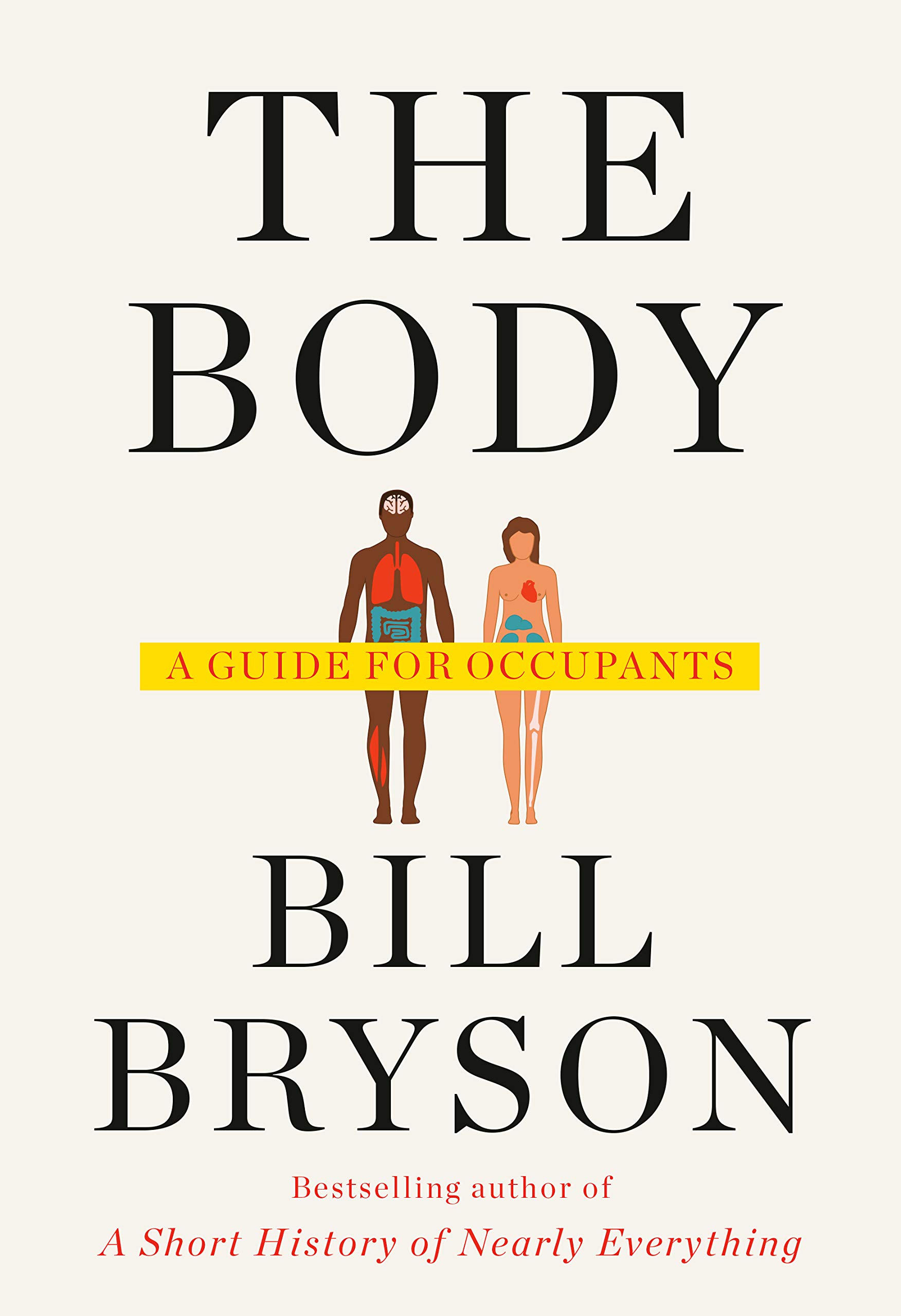
Book cover of The Body

The Body Summary

Technology & Science

By Bill Bryson

Vintage · October 15, 2019

Summary

Bill Bryson, the beloved author known for his engaging and humorous writing style, delves into the intricate world of the human body in his latest book, The Body. Bryson embarks on a comprehensive exploration, uncovering the mysteries and marvels of our biological selves. With his characteristic wit and an ability to simplify complex scientific information, he guides readers through the various systems and functions of the body. From the brain's astonishing capabilities to the wonders of the immune system, Bryson presents a captivating narrative that is both educational and entertaining. He also delves into the history of medical discoveries and the challenges faced by researchers in understanding the human body. Through his storytelling, Bryson not only imparts knowledge but also instills a sense of awe and appreciation for the incredible machine that is our body. Whether you're a novice in the field of biology or a seasoned science buff, The Body offers a rich and rewarding reading experience.

About the Author

Bill Bryson is a renowned author. He specializes in science and travel writing. His style is engaging, humorous, and accessible, making complex topics like those in "The Body" easy to understand.

Chapters

1

Introduction to the Human Body

The human body is an incredibly complex and fascinating organism. It is a collection of trillions of cells that work together in harmony to perform various functions. The body can be divided into different systems, each with its own set of organs and functions. These systems include the skeletal, muscular, nervous, circulatory, respiratory, digestive, urinary, endocrine, and reproductive systems.The skeletal system provides the framework for the body, giving it shape and support. It consists of bones, joints, and cartilage. The muscular system allows the body to move. Muscles are attached to bones and work in pairs to produce movement. The nervous system controls and coordinates the body's activities. It includes the brain, spinal cord, and nerves. The circulatory system transports oxygen, nutrients, and waste products throughout the body. It consists of the heart, blood vessels, and blood. The respiratory system is responsible for taking in oxygen and expelling carbon dioxide. It includes the lungs, trachea, and bronchi. The digestive system breaks down food into nutrients that can be absorbed by the body. It consists of the mouth, esophagus, stomach, small intestine, and large intestine. The urinary system removes waste products from the body. It includes the kidneys, ureters, bladder, and urethra. The endocrine system produces hormones that regulate various body functions. It includes glands such as the pituitary, thyroid, and adrenal glands. The reproductive system is responsible for the production of offspring. It includes the male and female reproductive organs.

2

The Building Blocks of the Body

Cells are the basic building blocks of the body. They are the smallest units of life that can perform all the functions necessary for survival. There are many different types of cells in the body, each with its own unique structure and function. For example, nerve cells are specialized to transmit electrical signals, while muscle cells are specialized to contract and produce movement.Tissues are groups of similar cells that work together to perform a specific function. There are four main types of tissues in the body: epithelial tissue, connective tissue, muscle tissue, and nervous tissue. Epithelial tissue covers the body's surfaces and lines its internal organs. Connective tissue provides support and protection for the body. Muscle tissue allows the body to move. Nervous tissue controls and coordinates the body's activities.Organs are made up of different types of tissues that work together to perform a specific function. For example, the heart is an organ that pumps blood throughout the body. It is made up of cardiac muscle tissue, connective tissue, and nervous tissue. The liver is another organ that performs many important functions, such as filtering toxins from the blood and producing bile. It is made up of liver cells, connective tissue, and blood vessels.

3

The Skeletal System

The skeletal system is made up of bones, joints, and cartilage. Bones are hard, rigid structures that provide support and protection for the body. They also serve as a storage site for minerals such as calcium and phosphorus. There are 206 bones in the adult human body. They can be divided into two main categories: the axial skeleton and the appendicular skeleton.The axial skeleton consists of the skull, vertebral column, and rib cage. The skull protects the brain and provides attachment points for the muscles of the face and neck. The vertebral column supports the body and protects the spinal cord. The rib cage protects the heart and lungs.The appendicular skeleton consists of the bones of the upper and lower limbs, as well as the shoulder and pelvic girdles. The upper limbs include the humerus, radius, ulna, carpals, metacarpals, and phalanges. The lower limbs include the femur, tibia, fibula, tarsals, metatarsals, and phalanges. The shoulder girdle consists of the clavicle and scapula, while the pelvic girdle consists of the hip bones.Joints are the places where two or more bones meet. They allow for movement and flexibility in the body. There are three main types of joints: fibrous joints, cartilaginous joints, and synovial joints. Fibrous joints are immovable joints, such as the joints between the bones of the skull. Cartilaginous joints are slightly movable joints, such as the joints between the vertebrae. Synovial joints are freely movable joints, such as the knee and elbow joints.Cartilage is a flexible connective tissue that provides cushioning and support for the joints. It is found in areas such as the nose, ears, and joints. Cartilage is made up of cells called chondrocytes and a matrix of collagen and proteoglycans.

4

The Muscular System

The muscular system is responsible for movement in the body. It consists of three types of muscle tissue: skeletal muscle, smooth muscle, and cardiac muscle.Skeletal muscle is attached to bones and is responsible for voluntary movement. It is made up of long, cylindrical cells called muscle fibers. Muscle fibers are organized into bundles called fascicles. Skeletal muscle is under the control of the somatic nervous system, which allows us to consciously control our movements.Smooth muscle is found in the walls of internal organs such as the stomach, intestines, and blood vessels. It is responsible for involuntary movement, such as the contraction of the digestive tract and the regulation of blood flow. Smooth muscle is under the control of the autonomic nervous system, which operates without our conscious control.Cardiac muscle is found in the heart. It is responsible for pumping blood throughout the body. Cardiac muscle is also under the control of the autonomic nervous system, but it has its own intrinsic rhythm.Muscles work in pairs to produce movement. When one muscle contracts, the other relaxes. For example, when the biceps muscle in the arm contracts, the triceps muscle relaxes, causing the arm to bend. When the triceps muscle contracts, the biceps muscle relaxes, causing the arm to straighten.

5

The Nervous System

The nervous system is the control center of the body. It is responsible for receiving, processing, and transmitting information. The nervous system can be divided into two main parts: the central nervous system (CNS) and the peripheral nervous system (PNS).The CNS consists of the brain and spinal cord. The brain is the control center of the body. It is responsible for processing information, making decisions, and controlling the body's activities. The spinal cord is a long, thin tube of nerve tissue that extends from the brain down the back. It serves as a pathway for nerve impulses between the brain and the rest of the body.The PNS consists of all the nerves outside of the CNS. It includes the sensory nerves, which carry information from the body's sensory receptors to the CNS, and the motor nerves, which carry information from the CNS to the muscles and glands. The PNS can be further divided into the somatic nervous system and the autonomic nervous system.The somatic nervous system is responsible for voluntary movement and sensory perception. It allows us to consciously control our movements and feel sensations such as touch, pain, and temperature. The autonomic nervous system is responsible for involuntary functions such as heart rate, digestion, and breathing. It can be further divided into the sympathetic nervous system and the parasympathetic nervous system.The sympathetic nervous system is activated in times of stress or danger. It prepares the body for the "fight or flight" response by increasing heart rate, blood pressure, and breathing rate. The parasympathetic nervous system is activated in times of rest and relaxation. It slows down the heart rate, blood pressure, and breathing rate and promotes digestion and other bodily functions.

5 more chapters available

Continue listening in the Spickor app — free download on the App Store.

Listen in App

Why Spickor?

At Spickor, we believe knowledge should have no paywalls. Every book summary can be unlocked for free by watching a short ad — or you can choose an ad-free subscription. Unlike other apps, there's no "1 book per day" free limit. Learn at your own pace, on your own terms.

FeatureSpickorBlinkistHeadway
Free accessAll books free via ad unlock1 book/day only1 book/day only
Book library2,200+ across 8 categories9,000+ (non-fiction only)2,000+ (personal growth focus)
Paid subscriptionNo forced subscription; ad-supportedRequired; from $99.99/yrRequired; from $89.99/yr
Audio for all summariesYesPremium onlyPremium only
Novels & fictionYesNoNo
PlatformsiOS (Android & Web in dev)iOS / Android / WebiOS / Android only

All Books, Truly Free

Unlock any book with a short ad. No daily limits, no hidden fees.

Listen for Free

Every summary includes high-quality audio. No "premium only" labels.

Beyond Self-Help

8 categories including business, technology, and novels.

Listen in App
16 m 49 s