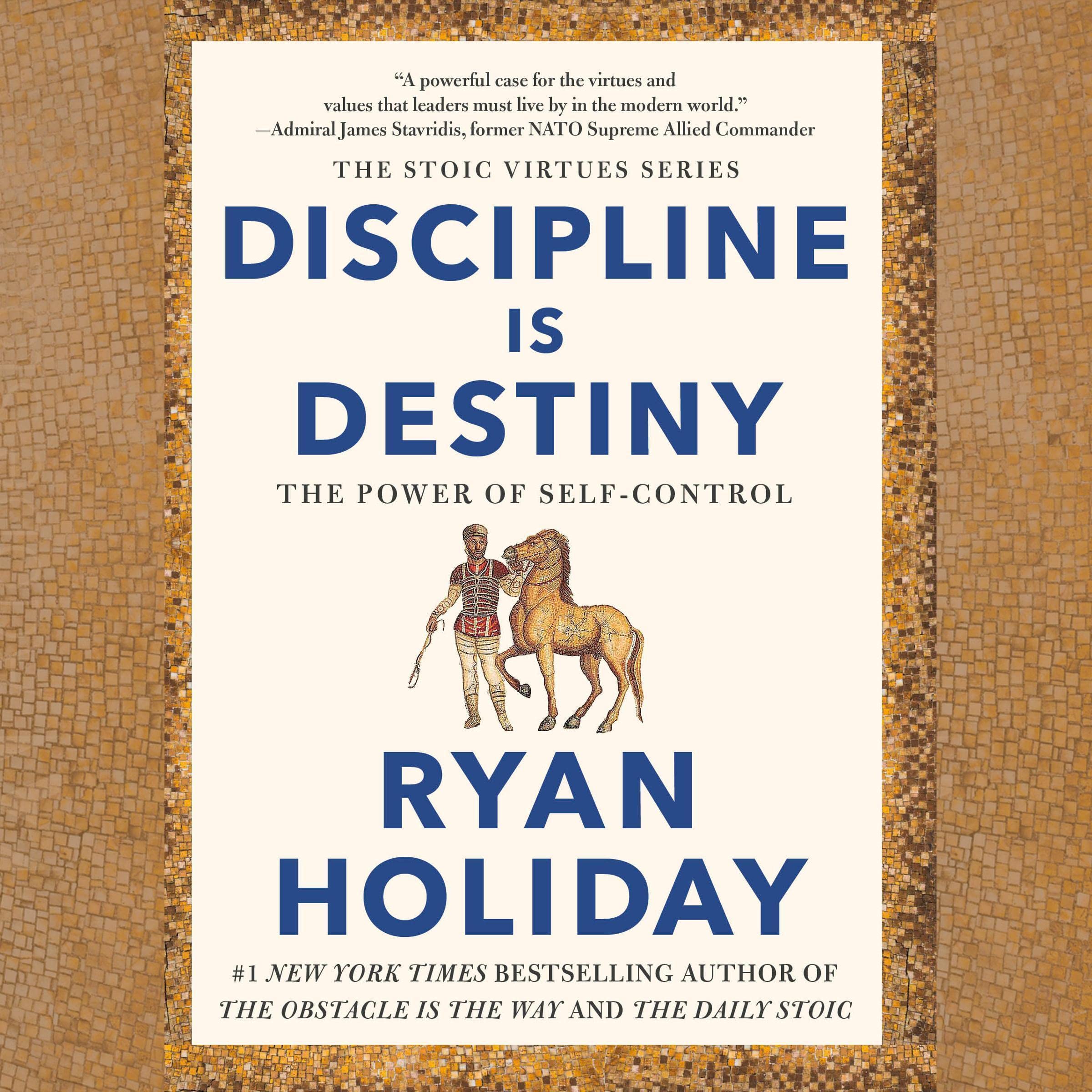
Book cover of Discipline Is Destiny

Discipline Is Destiny Summary

Business & Career

By Ryan Holiday

Penguin Audio · September 27, 2022

Summary

"Discipline Is Destiny" by Ryan Holiday is a profound exploration of the role discipline plays in our lives. Holiday takes readers on a journey through history, examining how great figures from various fields harnessed discipline to achieve remarkable feats. He argues that discipline is not just about self-restraint but is a fundamental key to unlocking one's true potential. The book is filled with real-life stories and practical advice. It guides readers on how to establish daily routines, overcome distractions, and stay focused on their long-term objectives. Whether you're an entrepreneur looking to boost productivity, a student aiming for academic success, or simply someone wanting to improve their self-discipline, this book provides the tools and inspiration you need. Through clear and engaging writing, Holiday presents complex ideas in an accessible way, making it suitable for a wide range of readers. By the end of the book, you'll have a new understanding of discipline and how it can lead you to a more fulfilling and successful life.

About the Author

Ryan Holiday is an American author. He focuses on philosophy-related self-help writing. His style in "Discipline Is Destiny" is practical and thought-provoking, offering actionable insights for personal growth.

Chapters

1

The Foundation of Discipline

Discipline is not just about following rules blindly; it is the cornerstone of a successful and fulfilling life. It empowers us to take control of our actions, thoughts, and emotions, leading to greater self-mastery. At its core, discipline is about making choices that align with our long-term goals rather than being swayed by short-term impulses.In our daily lives, we are constantly bombarded with distractions and temptations. Social media, entertainment, and the allure of immediate pleasure can easily derail us from our paths. However, with discipline, we can resist these distractions. For example, if your goal is to learn a new language, discipline will help you set aside dedicated time each day for study, even when you don't feel like it.Discipline also builds character. When we consistently practice self-control, we become more reliable, responsible, and resilient. We learn to face challenges head-on and persevere through difficulties. This is crucial in both personal and professional settings. In the workplace, a disciplined employee is more likely to meet deadlines, produce high-quality work, and earn the trust of colleagues and superiors.Moreover, discipline provides a sense of stability. In a world that is often chaotic and unpredictable, having a routine and a set of self-imposed rules can give us a feeling of security. It allows us to create a structure for our lives, which in turn helps us to better manage our time and energy. We know what to expect each day, and this predictability can reduce stress and anxiety.
2

Discipline in Time Management

Effective time management is a key aspect of discipline. Time is a finite resource, and how we use it determines our level of success. To manage time well, we first need to set clear goals. These goals should be specific, measurable, achievable, relevant, and time-bound (SMART). For instance, if you want to start a business, your goal could be to launch a minimum viable product within six months.Once we have our goals, we need to break them down into smaller, actionable steps. This makes the goals seem less overwhelming and more achievable. For the business example, the steps could include market research, product development, and marketing planning. Each step should be assigned a specific time frame.Creating a schedule is also essential. A well-structured schedule helps us allocate time for different activities. We can use tools like calendars or time-management apps to plan our days, weeks, and months. It's important to be realistic when creating a schedule. Don't over-commit yourself, as this can lead to burnout.In addition to scheduling, we need to learn to prioritize tasks. Not all tasks are created equal. Some are urgent and important, while others are neither. The Eisenhower Matrix is a useful tool for prioritization. It divides tasks into four categories: urgent and important, important but not urgent, urgent but not important, and neither urgent nor important. By focusing on the urgent and important tasks first, we can make the most of our time.Another aspect of time management is avoiding procrastination. Procrastination is the enemy of discipline. It often stems from fear, perfectionism, or a lack of motivation. To overcome procrastination, we can use techniques such as the Pomodoro Technique, where we work in focused intervals followed by short breaks. This can help us stay motivated and make the task seem less daunting.

3

Self-Discipline in Learning and Skill Development

Learning new skills and knowledge is a continuous process that requires discipline. Whether it's learning a musical instrument, a new programming language, or a foreign language, discipline is what keeps us going.To start with, we need to set a learning goal. This goal should be challenging but achievable. For example, if you want to learn to play the guitar, your goal could be to play a simple song within a month. Then, we need to create a learning plan. This plan should include what materials we will use, how much time we will spend each day on learning, and what milestones we want to reach.Consistency is key in learning. We need to practice regularly. Even if it's just for a few minutes each day, consistent practice will lead to significant progress over time. For instance, if you're learning a language, spending 15 minutes a day practicing vocabulary, grammar, and speaking will make a big difference in the long run.In addition to consistency, we also need to be open to feedback. Feedback helps us identify our strengths and weaknesses. We can seek feedback from teachers, mentors, or peers. For example, if you're working on a writing project, getting feedback from an experienced writer can help you improve your writing skills.Overcoming setbacks is also an important part of the learning process. There will be times when we make mistakes or face difficulties. Instead of getting discouraged, we should use these setbacks as learning opportunities. For example, if you fail a test while learning a new subject, analyze your mistakes and figure out what you need to do differently next time.

4

Discipline in Health and Fitness

Maintaining good health and fitness requires a high level of discipline. Our physical well-being is the foundation of a productive and happy life.First, we need to establish a healthy diet. A balanced diet consists of a variety of nutrients, including carbohydrates, proteins, fats, vitamins, and minerals. We should aim to eat more fruits, vegetables, whole grains, and lean proteins, and limit our intake of processed foods, sugary drinks, and excessive amounts of salt and fat.To stick to a healthy diet, we can plan our meals in advance. This helps us make better food choices and avoid last-minute unhealthy decisions. We can also keep healthy snacks on hand, such as nuts and fruits, to satisfy our cravings between meals.In addition to diet, regular exercise is crucial. Exercise not only keeps us in shape but also has numerous mental health benefits, such as reducing stress and improving mood. We should choose an exercise routine that we enjoy, whether it's running, cycling, swimming, or weightlifting.Setting exercise goals is important. For example, you could aim to run a 5K within three months. Then, break this goal down into smaller steps, such as increasing your running distance gradually each week.Consistency is vital in both diet and exercise. It's not enough to eat healthy or exercise once in a while. We need to make these habits a part of our daily lives. This may require self-control and willpower, especially when faced with temptations like junk food or the urge to skip a workout.Getting enough sleep is also a part of maintaining good health. Sleep is when our bodies repair and rejuvenate. We should aim for 7-9 hours of quality sleep each night. Establishing a regular sleep schedule, such as going to bed and waking up at the same time every day, can help improve the quality of our sleep.

5

Discipline in Emotional and Mental Well-being

Our emotional and mental states have a profound impact on our lives. Discipline plays a crucial role in managing our emotions and maintaining good mental health.One of the first steps is to become more self-aware. We need to recognize our emotions as they arise and understand what triggers them. For example, if you notice that you get angry easily when you're under stress at work, you can start to identify the specific situations that cause this stress.Once we are aware of our emotions, we can learn to regulate them. This doesn't mean suppressing our emotions but rather expressing them in a healthy way. For instance, instead of lashing out at others when we're angry, we can take a few deep breaths, step away from the situation, and then express our feelings in a calm and rational manner.Practicing mindfulness is a great way to develop emotional discipline. Mindfulness involves being present in the moment and observing our thoughts and feelings without judgment. We can practice mindfulness through meditation, yoga, or simply by focusing on our breathing for a few minutes each day.In addition to emotional regulation, we also need to take care of our mental health. This includes challenging negative thought patterns. We often have automatic negative thoughts that can hold us back. For example, if we constantly tell ourselves that we're not good enough, we need to question these thoughts and replace them with more positive and realistic ones.Building resilience is another important aspect of mental well-being. Resilience allows us to bounce back from setbacks and difficulties. We can build resilience by facing challenges head-on, learning from our mistakes, and having a positive attitude. For example, if we lose our job, instead of giving up, we can see it as an opportunity to explore new career paths.

5 more chapters available

Continue listening in the Spickor app — free download on the App Store.

Listen in App

Why Spickor?

At Spickor, we believe knowledge should have no paywalls. Every book summary can be unlocked for free by watching a short ad — or you can choose an ad-free subscription. Unlike other apps, there's no "1 book per day" free limit. Learn at your own pace, on your own terms.

FeatureSpickorBlinkistHeadway
Free accessAll books free via ad unlock1 book/day only1 book/day only
Book library2,200+ across 8 categories9,000+ (non-fiction only)2,000+ (personal growth focus)
Paid subscriptionNo forced subscription; ad-supportedRequired; from $99.99/yrRequired; from $89.99/yr
Audio for all summariesYesPremium onlyPremium only
Novels & fictionYesNoNo
PlatformsiOS (Android & Web in dev)iOS / Android / WebiOS / Android only

All Books, Truly Free

Unlock any book with a short ad. No daily limits, no hidden fees.

Listen for Free

Every summary includes high-quality audio. No "premium only" labels.

Beyond Self-Help

8 categories including business, technology, and novels.

Listen in App
18 m 16 s