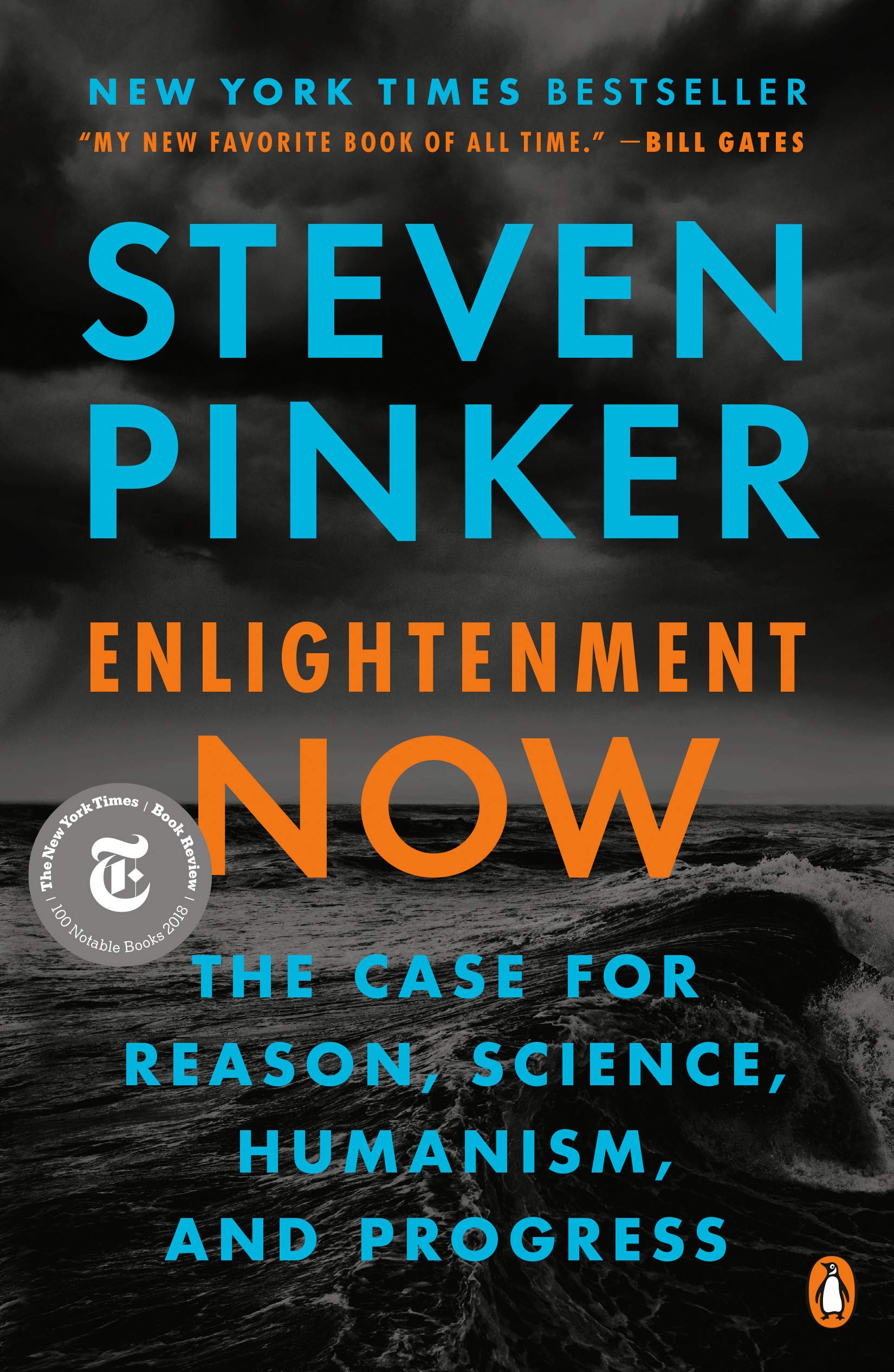
Book cover of Enlightenment Now

Enlightenment Now Summary

Technology & Science

By Steven Pinker

Penguin Books · February 13, 2018

Summary

Enlightenment Now, written by Steven Pinker, is a remarkable exploration of the impact of reason, science, and humanism on the modern world. In a time when we are constantly bombarded with negative news, Pinker takes a step back and provides a data-driven analysis of the progress humanity has made. He dives into areas such as health, wealth, peace, and knowledge, demonstrating how these aspects have improved over the years. Pinker challenges the common perception that the world is in a state of decline. Instead, he argues that the principles of the Enlightenment have led to a better life for most people. Through clear and engaging writing, he presents complex ideas in an accessible way. Whether you're interested in social trends, the history of ideas, or simply want to gain a more positive outlook on the world, this book offers a fresh and valuable perspective. It encourages readers to embrace the power of rational thinking and to continue to strive for a better future.

About the Author

Steven Pinker is a renowned cognitive psychologist. He writes in the fields of psychology, linguistics and science. His style is clear, logical, and combines academic rigor with accessible language, as seen in *Enlightenment Now*.

Chapters

1

Introduction: The Case for Optimism

In a world often inundated with negative news, Steven Pinker's *Enlightenment Now* presents a refreshing and evidence-based argument for optimism. Pinker posits that the modern era, despite its challenges, has witnessed an unprecedented improvement in human well-being. The Enlightenment ideals of reason, science, humanism, and progress have been the driving forces behind this positive change.The book begins by challenging the common perception that the world is going to hell in a handbasket. Pinker points out that many of the problems we face today, such as poverty, disease, and violence, are being steadily reduced. For example, extreme poverty has declined significantly over the past few decades, and the global average life expectancy has increased. These trends are not accidental but are the result of human efforts guided by Enlightenment principles.Pinker argues that we should base our understanding of the world on data and evidence rather than on anecdotal information or emotional reactions. By looking at long-term trends, we can see that the world is getting better in many ways. This shift in perspective is crucial as it allows us to make more informed decisions and take actions to continue the progress.
2

The Enlightenment and Its Values

The Enlightenment was a period in history when thinkers began to question traditional authority and embrace reason and science. Key values of the Enlightenment include reason, which allows us to analyze problems objectively; science, which provides us with reliable knowledge about the world; humanism, which emphasizes the value and dignity of every individual; and progress, which is the belief that through the application of reason and science, we can improve the human condition.Reason is the foundation of all other Enlightenment values. It enables us to think critically, solve problems, and make rational decisions. Science, on the other hand, is a systematic way of acquiring knowledge. It has led to countless technological advancements, from the development of vaccines to the exploration of space. Humanism promotes the well-being of all people, regardless of their race, gender, or social status. It has been the driving force behind social reforms such as the abolition of slavery and the expansion of civil rights.Progress is not just about material improvement but also about moral and social development. The Enlightenment values have allowed us to move towards a more just and peaceful world. For instance, the decline in violence over the centuries can be attributed to the spread of these values. As societies become more rational and humanistic, they are less likely to engage in war and other forms of violence.

3

The Decline of Violence

One of the most remarkable trends in human history is the decline of violence. Pinker presents a wealth of data to show that violence has been decreasing over time, both at the individual and the societal level.At the individual level, rates of homicide have dropped significantly in most parts of the world. In pre-modern societies, the risk of being killed was much higher than it is today. This decline can be attributed to several factors, including the development of law enforcement, the growth of a more civilized society, and the spread of empathy.On the societal level, the number of wars and large-scale conflicts has also decreased. The 20th century, despite its two World Wars, saw a decline in the overall death toll from war compared to earlier centuries. This is due in part to the establishment of international organizations such as the United Nations, which aim to prevent conflicts and promote peace.The decline of violence is not only a matter of physical safety but also has a profound impact on human well-being. When people feel safe, they are more likely to invest in their future, engage in economic activities, and build strong communities.

4

The Improvement of Health

Another area where the world has seen significant progress is in health. Thanks to scientific advancements and improvements in public health, people are living longer and healthier lives.Medical breakthroughs, such as the discovery of antibiotics and vaccines, have saved countless lives. Vaccines have eradicated diseases like smallpox and have significantly reduced the incidence of other infectious diseases. In addition, improvements in sanitation, clean water supply, and nutrition have also contributed to better health.The global average life expectancy has increased from around 30 years in the 19th century to over 70 years today. This increase is not limited to developed countries; many developing countries have also seen substantial improvements in life expectancy.However, there are still challenges in the field of health. New diseases, such as HIV/AIDS and COVID-19, continue to emerge, and there are disparities in access to healthcare between different regions and social groups. But overall, the trend is towards better health for the majority of the world's population.

5

The Growth of Prosperity

Economic prosperity has been a major achievement of the modern era. The Industrial Revolution and subsequent technological advancements have led to a significant increase in the standard of living for many people.Global poverty has been on the decline, with more and more people moving out of extreme poverty. This is due in part to economic growth, trade, and the spread of technology. For example, the development of the internet has created new opportunities for businesses and individuals, allowing them to reach a global market.In addition, economic growth has led to improvements in education, infrastructure, and social services. As countries become more prosperous, they can invest more in these areas, which in turn further promotes economic development.However, there are also challenges in the area of prosperity. Income inequality is a growing concern in many countries, and there are still millions of people living in poverty. Addressing these issues requires a combination of economic policies, social reforms, and international cooperation.

5 more chapters available

Continue listening in the Spickor app — free download on the App Store.

Listen in App

Why Spickor?

At Spickor, we believe knowledge should have no paywalls. Every book summary can be unlocked for free by watching a short ad — or you can choose an ad-free subscription. Unlike other apps, there's no "1 book per day" free limit. Learn at your own pace, on your own terms.

FeatureSpickorBlinkistHeadway
Free accessAll books free via ad unlock1 book/day only1 book/day only
Book library2,200+ across 8 categories9,000+ (non-fiction only)2,000+ (personal growth focus)
Paid subscriptionNo forced subscription; ad-supportedRequired; from $99.99/yrRequired; from $89.99/yr
Audio for all summariesYesPremium onlyPremium only
Novels & fictionYesNoNo
PlatformsiOS (Android & Web in dev)iOS / Android / WebiOS / Android only

All Books, Truly Free

Unlock any book with a short ad. No daily limits, no hidden fees.

Listen for Free

Every summary includes high-quality audio. No "premium only" labels.

Beyond Self-Help

8 categories including business, technology, and novels.

Listen in App
11 m 33 s