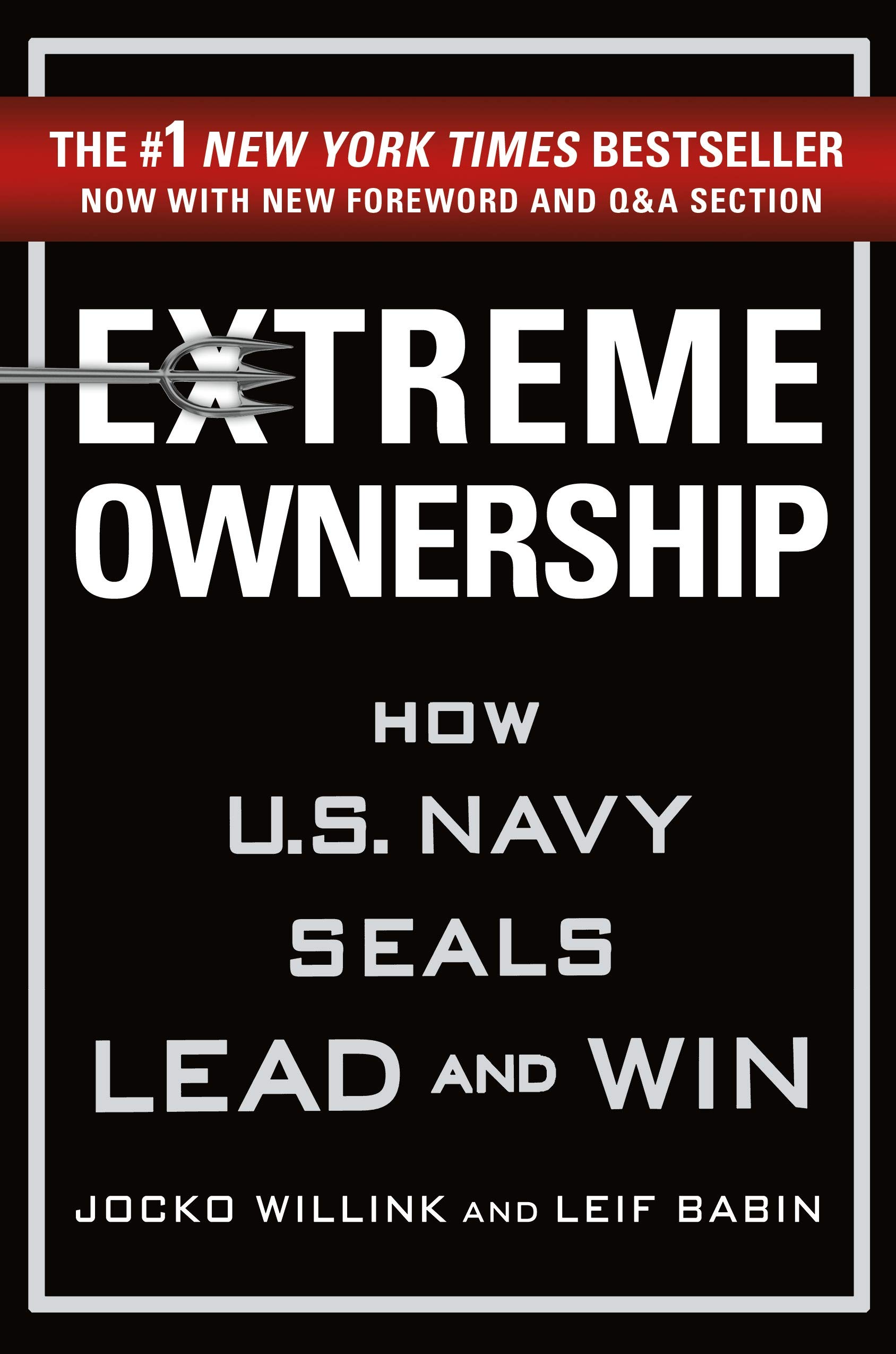
Book cover of Extreme Ownership

Extreme Ownership Summary

Business & Career

By Jocko Willink

St. Martin's Press · November 21, 2017

Summary

"Extreme Ownership" is a remarkable book co-written by Jocko Willink and Leif Babin. Drawing from their extensive military careers, the authors introduce the concept of extreme ownership. This principle emphasizes that leaders must take full responsibility for everything that happens within their sphere of influence. In the military, it's about leading troops to victory, but the lessons are far-reaching. In the business world, it means taking charge of projects and teams, dealing with failures as well as successes. In personal life, it's about being accountable for one's actions and decisions. The book is filled with real-life examples and practical advice. It shows how by adopting extreme ownership, individuals can transform their leadership skills, improve their performance, and achieve better results. It's a must-read for those who want to enhance their leadership capabilities and take control of their lives.

About the Author

Jocko Willink and Leif Babin are former Navy SEALs. They write in the leadership and military strategy field. Their style in "Extreme Ownership" is direct and practical, offering real-world insights.

Chapters

1

Introduction to Extreme Ownership

Extreme Ownership is a powerful concept that emphasizes taking full responsibility for all aspects of one's actions, decisions, and outcomes. Co-authored by Jocko Willink and Leif Babin, this book draws on their extensive experience as Navy SEALs to provide practical lessons on leadership and management that can be applied in various fields, from business to personal life. The core idea is that in any situation, no matter how difficult or complex, the leader must accept full accountability. This means not making excuses, blaming others, or shying away from challenges. By embracing Extreme Ownership, leaders can inspire their teams, drive performance, and achieve extraordinary results.

2

The Concept of Extreme Ownership

At the heart of Extreme Ownership is the understanding that leaders are ultimately responsible for everything that happens within their sphere of influence. This includes both successes and failures. In a military context, a SEAL team leader cannot blame external factors such as bad weather or enemy tactics for a mission's failure. Instead, they must analyze what went wrong and take steps to improve. In business, a manager cannot blame the market or competitors for a product's poor performance. They need to take ownership of the situation, identify the root causes, and develop solutions.Extreme Ownership also means being proactive rather than reactive. Leaders should not wait for problems to arise but should anticipate them and take preventive measures. For example, a project manager should identify potential risks in advance and develop contingency plans. This approach not only helps in avoiding problems but also builds trust and confidence among the team members.Another important aspect of Extreme Ownership is the willingness to learn from mistakes. Leaders should view failures as opportunities for growth and improvement. By openly admitting their mistakes and sharing the lessons learned, they can create a culture of learning and innovation within the team.

3

Leadership in Challenging Situations

In challenging situations, such as combat or high-pressure business environments, effective leadership is crucial. Extreme Ownership requires leaders to remain calm and composed under stress. They need to make quick and informed decisions, even when the information is limited.During a military operation, a SEAL team leader may face unexpected enemy resistance or changing mission parameters. In such cases, the leader cannot panic but must assess the situation, adjust the plan, and communicate clearly with the team. Similarly, in a business crisis, a CEO must lead the company through difficult times by making tough decisions, such as cost-cutting measures or strategic pivots.Leaders also need to be able to inspire and motivate their teams in challenging situations. By demonstrating their own commitment and resilience, they can encourage team members to push through difficult circumstances. For example, a sports coach can inspire the team during a losing streak by showing unwavering belief in their abilities and providing positive feedback.

4

Building and Leading a Team

Building a high-performing team is a key aspect of Extreme Ownership. Leaders need to select the right people for the team, based on their skills, values, and attitude. In a SEAL team, members are carefully chosen for their physical fitness, combat skills, and ability to work in a team environment. In a business, hiring managers should look for candidates who not only have the necessary technical skills but also fit in with the company's culture.Once the team is formed, leaders need to foster a culture of collaboration and trust. This means encouraging open communication, where team members feel comfortable sharing their ideas and concerns. A leader should also recognize and reward individual and team achievements, which helps in boosting morale and motivation.Leaders must also be able to resolve conflicts within the team. In any group, there will be differences in opinions and personalities. A good leader should address these conflicts in a timely and fair manner, focusing on finding solutions that benefit the entire team. For example, if two team members have a disagreement over a project approach, the leader can facilitate a discussion to find a compromise.

5

Strategic Planning and Execution

Strategic planning is an essential part of Extreme Ownership. Leaders need to have a clear vision of what they want to achieve and develop a detailed plan to reach their goals. In a military operation, the mission objective is clearly defined, and a detailed plan is developed, taking into account various factors such as enemy strength, terrain, and available resources.In business, strategic planning involves setting long-term goals, analyzing the market, and developing strategies to gain a competitive advantage. A company's strategic plan should be flexible enough to adapt to changing market conditions. For example, a tech startup may need to adjust its product strategy based on customer feedback and emerging technologies.Once the plan is in place, effective execution is crucial. Leaders need to ensure that the team understands the plan and is committed to its implementation. They should provide the necessary resources and support to the team and monitor progress regularly. If there are any deviations from the plan, the leader should take corrective actions promptly.

5 more chapters available

Continue listening in the Spickor app — free download on the App Store.

Listen in App

Why Spickor?

At Spickor, we believe knowledge should have no paywalls. Every book summary can be unlocked for free by watching a short ad — or you can choose an ad-free subscription. Unlike other apps, there's no "1 book per day" free limit. Learn at your own pace, on your own terms.

FeatureSpickorBlinkistHeadway
Free accessAll books free via ad unlock1 book/day only1 book/day only
Book library2,200+ across 8 categories9,000+ (non-fiction only)2,000+ (personal growth focus)
Paid subscriptionNo forced subscription; ad-supportedRequired; from $99.99/yrRequired; from $89.99/yr
Audio for all summariesYesPremium onlyPremium only
Novels & fictionYesNoNo
PlatformsiOS (Android & Web in dev)iOS / Android / WebiOS / Android only

All Books, Truly Free

Unlock any book with a short ad. No daily limits, no hidden fees.

Listen for Free

Every summary includes high-quality audio. No "premium only" labels.

Beyond Self-Help

8 categories including business, technology, and novels.

Listen in App
11 m 02 s