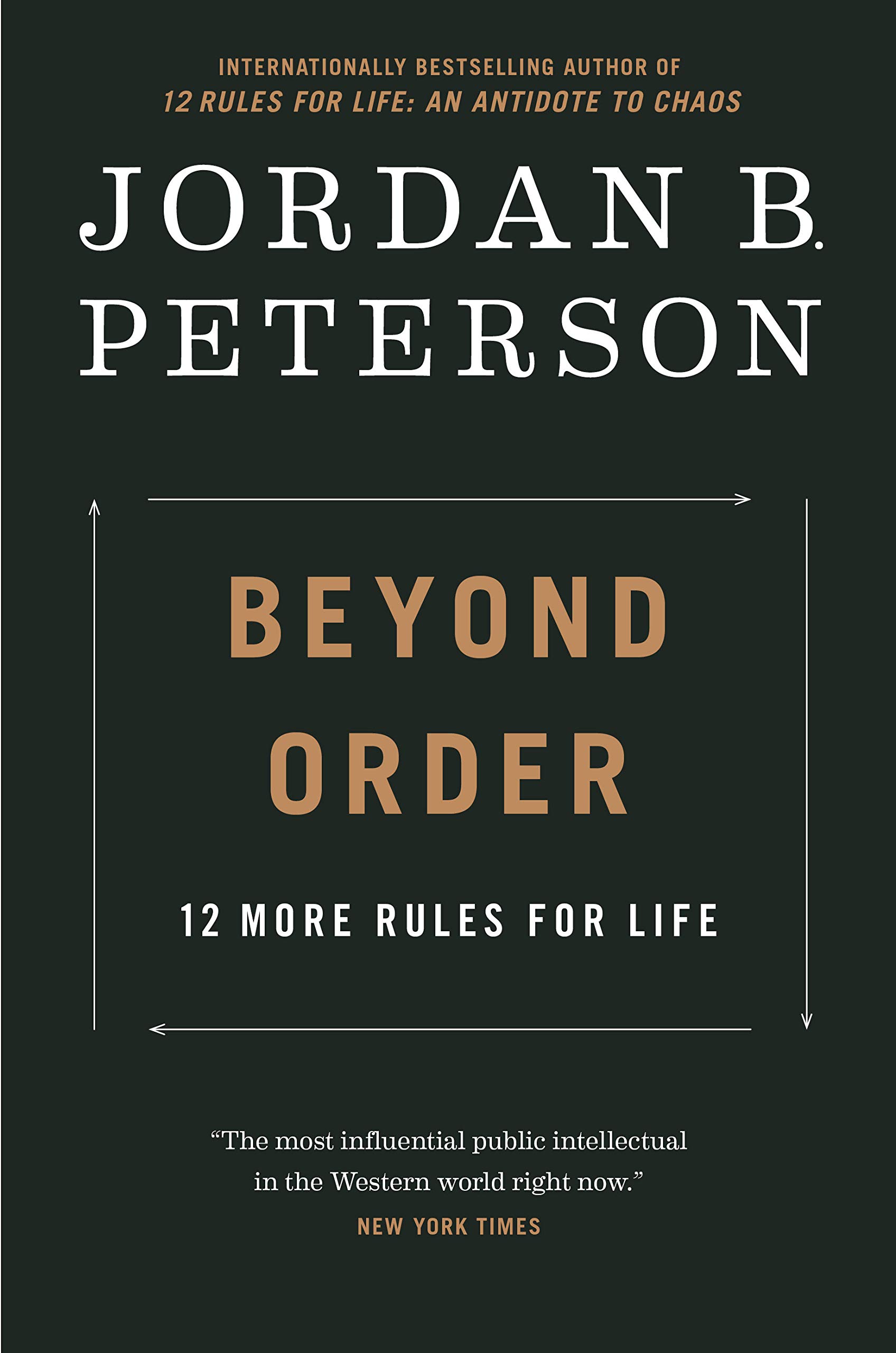
Book cover of Beyond Order

Beyond Order Summary

Meditation & Health

By Jordan B. Peterson

Portfolio · March 2, 2021

Summary

Beyond Order by Jordan B. Peterson is a thought-provoking book that builds on the ideas presented in his previous work. In this volume, Peterson explores the challenges of the modern world and provides strategies to overcome them. He uses real-life examples and psychological research to illustrate his points. The book is not just about theory; it offers actionable steps for readers to improve their lives. Peterson discusses topics such as personal responsibility, relationships, and the importance of maintaining a balance between chaos and order. Whether you're struggling with daily stress or looking for a deeper understanding of yourself, this book provides valuable perspectives. It encourages readers to take control of their lives and make positive changes. Peterson's writing style is engaging and accessible, making complex ideas easy to understand. Beyond Order is a must-read for anyone seeking to find greater meaning and stability in their lives.

About the Author

Jordan B. Peterson is a renowned Canadian psychologist and author. He writes in the fields of psychology and self-help. His style in "Beyond Order" is analytical, combining academic insights with practical advice.

Chapters

1

Introduction to the Concept of Order

In "Beyond Order", the book delves into the significance of order in human life. Order is not just a set of rules or a structured environment; it is the foundation upon which we build our lives. It provides a sense of stability and predictability, allowing us to navigate the complexities of the world. Without order, chaos prevails, and it becomes difficult to make sense of our experiences and achieve our goals.Order can be seen in various aspects of life. In our personal lives, it might manifest as a daily routine, a healthy lifestyle, or a well-organized living space. At a societal level, order is represented by laws, cultural norms, and institutions. These elements work together to create a framework that enables individuals to coexist peacefully and pursue their interests.The book argues that while order is essential, it is also necessary to go "beyond" it. This means not being bound by rigid and outdated forms of order but rather evolving and adapting to new circumstances. It's about finding a balance between the stability provided by order and the flexibility needed for growth and innovation.

2

The Psychological Foundations of Order

Our psychological makeup is closely intertwined with the concept of order. From a young age, we seek patterns and predictability in our environment. This is because our brains are wired to make sense of the world through categorization and organization. When we encounter something new, we try to fit it into existing mental frameworks.For example, children learn language by categorizing words into different parts of speech. This helps them understand how to form sentences and communicate effectively. Similarly, in our social lives, we categorize people based on various characteristics such as age, gender, and occupation. This categorization helps us navigate social interactions and make sense of the complex web of human relationships.However, these mental frameworks can also become limiting. We may develop biases and stereotypes based on our categorizations, which can prevent us from seeing the full complexity of individuals and situations. The book suggests that we need to be aware of these psychological tendencies and be willing to challenge and update our mental models as we gain new experiences.

3

Order in Social Structures

Social structures are built on the principles of order. Families, communities, and nations all have their own sets of rules and hierarchies. These structures provide a sense of belonging and security for individuals. In a family, for instance, there are usually roles and responsibilities assigned to each member. Parents are responsible for providing for the family and guiding their children, while children are expected to follow the rules and respect their elders.In larger social groups, such as communities and nations, laws and regulations are in place to maintain order. These laws govern everything from property rights to criminal behavior. They ensure that individuals can interact with each other in a fair and just manner. However, social structures are not static. They need to adapt to changing circumstances, such as technological advancements and demographic shifts.The book also discusses the importance of leadership in maintaining social order. Good leaders are able to balance the needs of the individual with the needs of the group. They set a vision for the future and inspire others to work towards it. At the same time, they are able to make tough decisions and enforce the rules when necessary.

4

The Role of Order in Personal Growth

Order plays a crucial role in personal growth. When our lives are in disarray, it is difficult to focus on self-improvement. For example, if our living space is cluttered and chaotic, it can be a reflection of our mental state. A messy environment can make it hard to concentrate, relax, and be productive.On the other hand, creating order in our lives can provide a platform for growth. This can involve setting goals, establishing a routine, and developing good habits. By having a clear sense of direction and a structured approach to life, we are more likely to achieve our goals. For instance, if someone wants to improve their physical health, they can set a goal to exercise regularly and eat a balanced diet. By creating a routine around these activities, they are more likely to stick with them and see positive results.However, personal growth also requires us to step outside of our comfort zones. This means challenging the existing order in our lives when it no longer serves us. It might involve taking risks, trying new things, and learning from our mistakes. The key is to find a balance between the stability provided by order and the growth opportunities that come from embracing change.

5

The Dangers of Excessive Order

While order is important, excessive order can also be a problem. When order becomes too rigid, it can stifle creativity and innovation. In an organization, for example, if there are too many rules and procedures, employees may feel restricted and unable to think outside the box. This can lead to a lack of competitiveness in the market and a failure to adapt to new trends.Excessive order can also lead to a lack of empathy and understanding. When we are too focused on following the rules, we may overlook the human element in situations. For instance, in a legal system, if the rules are applied too strictly without considering the context and the individual circumstances, it can lead to unfair outcomes.In our personal lives, excessive order can manifest as perfectionism. People who are perfectionists often set extremely high standards for themselves and others. This can lead to a lot of stress and anxiety, as they are constantly worried about making mistakes. It can also prevent them from taking risks and trying new things, as they are afraid of not meeting their own high expectations.

5 more chapters available

Continue listening in the Spickor app — free download on the App Store.

Listen in App

Why Spickor?

At Spickor, we believe knowledge should have no paywalls. Every book summary can be unlocked for free by watching a short ad — or you can choose an ad-free subscription. Unlike other apps, there's no "1 book per day" free limit. Learn at your own pace, on your own terms.

FeatureSpickorBlinkistHeadway
Free accessAll books free via ad unlock1 book/day only1 book/day only
Book library2,200+ across 8 categories9,000+ (non-fiction only)2,000+ (personal growth focus)
Paid subscriptionNo forced subscription; ad-supportedRequired; from $99.99/yrRequired; from $89.99/yr
Audio for all summariesYesPremium onlyPremium only
Novels & fictionYesNoNo
PlatformsiOS (Android & Web in dev)iOS / Android / WebiOS / Android only

All Books, Truly Free

Unlock any book with a short ad. No daily limits, no hidden fees.

Listen for Free

Every summary includes high-quality audio. No "premium only" labels.

Beyond Self-Help

8 categories including business, technology, and novels.

Listen in App
11 m 50 s