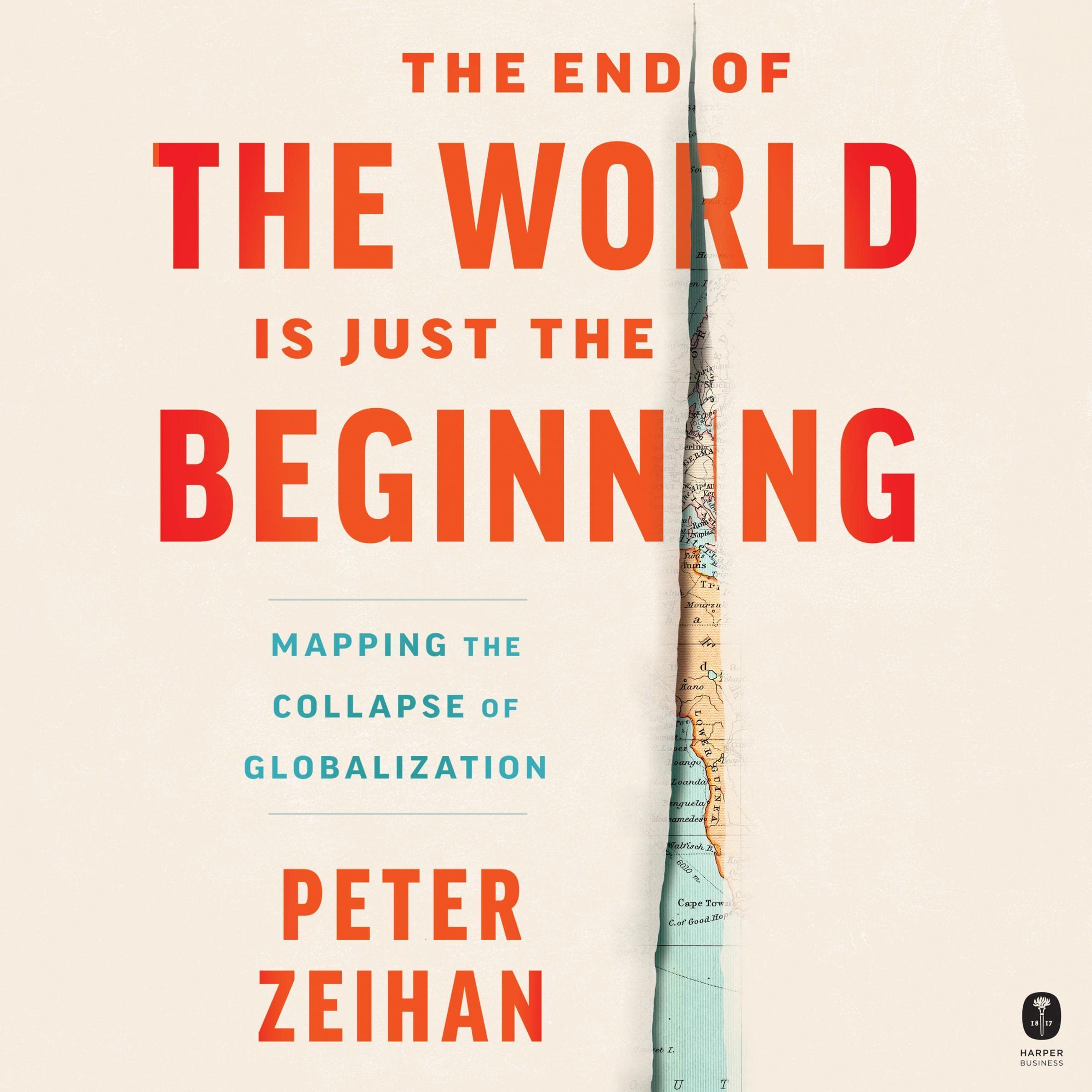
Book cover of The End of the World Is Just the Beginning

The End of the World Is Just the Beginning Summary

Economics & Money

By Peter Zeihan

Harper Business · June 14, 2022

Summary

In 'The End of the World Is Just the Beginning', Peter Zeihan delves into a fascinating concept. In a world where the end of everything might seem like a disaster, he argues it's actually the start of something new. Zeihan uses real-world data and thought-provoking analysis to paint a picture of what life could be like post-apocalypse. He explores how different aspects of society, such as economics, politics, and culture, will adapt and transform. The book doesn't just focus on the gloom; it also shows the potential for growth and opportunity. Whether it's the emergence of new power structures or the development of innovative technologies, Zeihan provides a well-rounded view of the 'new beginning'. Through his clear and accessible writing, he makes complex ideas understandable for the average reader. It's not just a prediction but a wake-up call to consider the future in a new light. Reading this book, you'll find yourself imagining a world that's both strange and full of possibilities.

About the Author

Peter Zeihan is a geopolitical analyst and author. He focuses on geopolitics and global trends in his writing. His style is clear-cut, presenting complex concepts in an accessible way, as seen in *The End of the World Is Just the Beginning*.

Chapters

1

Introduction: The New Global Landscape

In "The End of the World Is Just the Beginning," Peter Zeihan presents a bold and insightful analysis of the future of the global economy and geopolitics. He argues that the end of the era of globalization, which has defined the past few decades, is upon us, and that this shift will bring about significant changes in the way countries interact and economies function.The book begins by highlighting the key factors that have contributed to the current state of the world. Globalization was made possible by a combination of factors, including the end of the Cold War, the rise of China as a manufacturing powerhouse, and the development of new technologies that made it easier to trade and communicate across borders. However, these conditions are now changing, and the world is entering a new phase.One of the main drivers of this change is demographics. Many developed countries, including those in Europe and East Asia, are facing aging populations and declining birth rates. This demographic shift has far-reaching implications for economic growth, as there will be fewer workers to support the elderly and drive innovation. At the same time, some regions, such as Africa, are experiencing rapid population growth, but they lack the infrastructure and resources to fully capitalize on this demographic dividend.Another important factor is the changing nature of energy. The era of cheap and abundant fossil fuels is coming to an end, and countries are increasingly looking for alternative sources of energy. This transition will not only impact the energy sector but also have a profound effect on industries that rely on energy, such as transportation and manufacturing.


2

Demographics and Economic Growth

Demographics play a crucial role in determining a country's economic potential. In countries with aging populations, there are several challenges. First, the labor force shrinks, which can lead to a decrease in productivity. As the number of working-age people declines relative to the number of retirees, the burden on the working population to support the elderly through social security and healthcare systems increases.For example, in Japan, which has one of the oldest populations in the world, the shrinking labor force has led to a slowdown in economic growth. The country has struggled to maintain its competitiveness in the global market as it faces a shortage of workers in key industries.On the other hand, countries with young and growing populations, like those in Africa, have the potential for rapid economic growth. However, they need to invest in education, infrastructure, and job creation to harness this demographic dividend. Without proper investment, a large young population can become a source of social unrest rather than an economic asset.In addition to the domestic impact, demographics also affect international trade. Aging countries may become more protectionist as they try to protect their domestic industries and jobs. This can lead to a decline in global trade and a more fragmented global economy.

3

Energy Transition and Geopolitics

The transition from fossil fuels to alternative energy sources is one of the most significant challenges and opportunities of our time. Fossil fuels, such as oil, coal, and natural gas, have been the backbone of the global economy for decades. However, their use has contributed to climate change and environmental degradation.As countries look to reduce their carbon emissions and transition to renewable energy sources like solar, wind, and hydroelectric power, there will be a major shift in the global energy landscape. This shift will have geopolitical implications.Countries that are rich in fossil fuels, such as Saudi Arabia and Russia, will face economic challenges as the demand for their products declines. On the other hand, countries that invest in renewable energy technologies and infrastructure, like Germany and China, will gain a competitive advantage.The transition to renewable energy also requires significant investment in research and development, as well as in the construction of new energy infrastructure. This will create new business opportunities in the clean energy sector, but it will also require governments and businesses to work together to overcome technical and financial challenges.

4

Trade and Supply Chains

Globalization has led to the development of complex global supply chains, where goods are produced in multiple countries and assembled in others. However, the end of the era of globalization is causing a re-evaluation of these supply chains.One of the main reasons for this re-evaluation is the increasing risk associated with global supply chains. Events such as the COVID-19 pandemic and trade disputes between countries have highlighted the vulnerability of these supply chains. For example, when factories in China were shut down during the pandemic, it disrupted the supply of components to manufacturers around the world.As a result, many companies are now looking to shorten their supply chains and bring production closer to home. This process, known as reshoring or near-shoring, has several benefits. It reduces the risk of supply disruptions, allows for better quality control, and can also create jobs in domestic economies.However, reshoring also has its challenges. It may require significant investment in new manufacturing facilities and technology. In addition, some industries may still rely on certain raw materials or components that are only available in specific regions of the world.

5

Geopolitical Shifts and Power Dynamics

The end of globalization will also lead to significant geopolitical shifts. The United States, which has been the dominant global power for decades, is facing new challenges. Its influence in the world is being challenged by the rise of China and other emerging economies.China has become a major economic and military power in recent years. It has invested heavily in infrastructure projects around the world through its Belt and Road Initiative, which has increased its influence in Asia, Africa, and Europe. At the same time, China is also developing advanced technologies, such as 5G and artificial intelligence, which could give it a competitive edge in the global market.Other countries, such as Russia, are also looking to assert their influence in the international arena. Russia has a significant military and energy resources, and it has been involved in conflicts in Ukraine and Syria.The changing geopolitical landscape will lead to new alliances and rivalries. Countries will need to navigate these complex relationships to protect their interests and ensure their security.

4 more chapters available

Continue listening in the Spickor app — free download on the App Store.

Listen in App

Why Spickor?

At Spickor, we believe knowledge should have no paywalls. Every book summary can be unlocked for free by watching a short ad — or you can choose an ad-free subscription. Unlike other apps, there's no "1 book per day" free limit. Learn at your own pace, on your own terms.

FeatureSpickorBlinkistHeadway
Free accessAll books free via ad unlock1 book/day only1 book/day only
Book library2,200+ across 8 categories9,000+ (non-fiction only)2,000+ (personal growth focus)
Paid subscriptionNo forced subscription; ad-supportedRequired; from $99.99/yrRequired; from $89.99/yr
Audio for all summariesYesPremium onlyPremium only
Novels & fictionYesNoNo
PlatformsiOS (Android & Web in dev)iOS / Android / WebiOS / Android only

All Books, Truly Free

Unlock any book with a short ad. No daily limits, no hidden fees.

Listen for Free

Every summary includes high-quality audio. No "premium only" labels.

Beyond Self-Help

8 categories including business, technology, and novels.

Listen in App
10 m 59 s