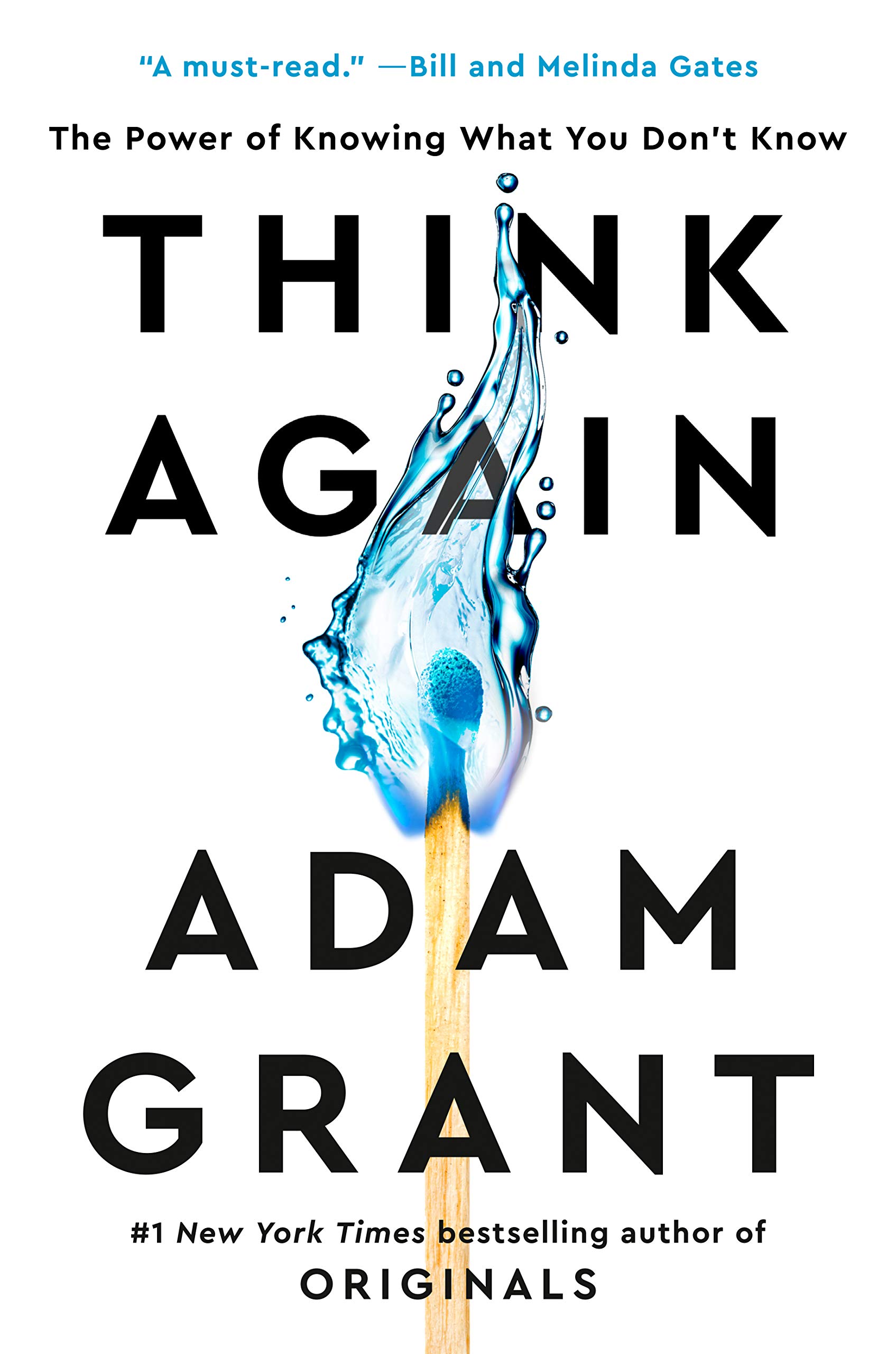
Book cover of Think Again

Think Again Summary

Meditation & Health

By Adam Grant

Viking · February 2, 2021

Summary

In 'Think Again', Adam Grant delves into the art and science of rethinking. In our daily lives, we often hold onto our beliefs firmly, reluctant to change our minds. However, Grant argues that the ability to reconsider our thoughts is a crucial skill in an ever-changing world. He provides real-life examples and research-backed strategies to help readers break free from the shackles of fixed thinking. Whether it's in our personal relationships, professional careers, or social interactions, the book shows how rethinking can lead to better decisions and more fulfilling lives. By the end, readers will be inspired to approach every situation with an open mind, ready to learn and grow.

About the Author

Adam Grant is a renowned organizational psychologist and bestselling author. He specializes in writing about work, leadership, and personal growth. His style is engaging, data-driven, and thought-provoking, as seen in his book "Think Again".

Chapters

1

Introduction: The Power of Rethinking

In a world that values quick decisions and unwavering confidence, the ability to think again is a superpower. Rethinking isn't about admitting failure; it's about recognizing that our knowledge is always evolving. We often hold onto beliefs and opinions long after they've become outdated. This book explores how we can break free from the shackles of our fixed mindsets and embrace the process of reevaluation. The modern world is changing at an unprecedented pace, and what worked yesterday may not work today. Whether it's in our personal lives, our careers, or our society, there's a constant need to adapt and learn. By learning to think again, we can make better decisions, build stronger relationships, and drive innovation.

2

The Fixed vs. Growth Mindset

Our mindset plays a crucial role in how we approach learning and change. A fixed mindset is the belief that our abilities and intelligence are static. People with a fixed mindset are afraid of making mistakes because they see them as a sign of failure. This fear often prevents them from taking risks and exploring new ideas. On the other hand, a growth mindset is the belief that our abilities can be developed through effort and learning. Those with a growth mindset see mistakes as opportunities for growth. They're more likely to seek feedback, learn from their experiences, and adapt to new situations. To cultivate a growth mindset, we need to challenge our assumptions and be open to new perspectives. We should view learning as a lifelong journey rather than a destination. By embracing the growth mindset, we can become more resilient and better equipped to handle the challenges of the modern world.

3

The Art of Doubt

Doubt is often seen as a negative emotion, but it can be a powerful tool for learning. When we doubt our beliefs and assumptions, we're more likely to question them and seek out new information. Doubt can help us avoid the pitfalls of overconfidence and make more informed decisions. However, it's important to distinguish between healthy doubt and excessive skepticism. Healthy doubt is a willingness to question our beliefs in the face of new evidence, while excessive skepticism can lead to inaction and indecision. To practice healthy doubt, we can start by asking ourselves critical questions about our beliefs. We can also seek out diverse perspectives and engage in constructive debates. By embracing doubt, we can become more open-minded and better able to adapt to change.

4

The Role of Experts and Novices

In many fields, experts are seen as the authorities. However, experts can sometimes be resistant to change because they've invested so much time and effort in their existing knowledge. They may be less likely to question their assumptions and more likely to rely on their past experiences. Novices, on the other hand, have the advantage of fresh perspectives. They're not bound by the same assumptions and biases as experts. This can make them more innovative and open to new ideas. We can learn from both experts and novices. Experts can provide us with valuable insights and knowledge, while novices can challenge our assumptions and introduce us to new ways of thinking. By combining the expertise of experts with the fresh perspectives of novices, we can make more informed decisions and drive innovation.

5

Changing Our Minds in Relationships

Our relationships are often based on our beliefs and assumptions about others. However, these beliefs can sometimes be inaccurate or outdated. When we're willing to change our minds about others, we can build stronger and more meaningful relationships. In a relationship, it's important to be open to feedback and willing to see things from the other person's perspective. We should avoid making snap judgments and instead take the time to understand the other person's point of view. By changing our minds in relationships, we can resolve conflicts more effectively, build trust, and create a more positive and supportive environment.

5 more chapters available

Continue listening in the Spickor app — free download on the App Store.

Listen in App

Why Spickor?

At Spickor, we believe knowledge should have no paywalls. Every book summary can be unlocked for free by watching a short ad — or you can choose an ad-free subscription. Unlike other apps, there's no "1 book per day" free limit. Learn at your own pace, on your own terms.

FeatureSpickorBlinkistHeadway
Free accessAll books free via ad unlock1 book/day only1 book/day only
Book library2,200+ across 8 categories9,000+ (non-fiction only)2,000+ (personal growth focus)
Paid subscriptionNo forced subscription; ad-supportedRequired; from $99.99/yrRequired; from $89.99/yr
Audio for all summariesYesPremium onlyPremium only
Novels & fictionYesNoNo
PlatformsiOS (Android & Web in dev)iOS / Android / WebiOS / Android only

All Books, Truly Free

Unlock any book with a short ad. No daily limits, no hidden fees.

Listen for Free

Every summary includes high-quality audio. No "premium only" labels.

Beyond Self-Help

8 categories including business, technology, and novels.

Listen in App
7 m 26 s