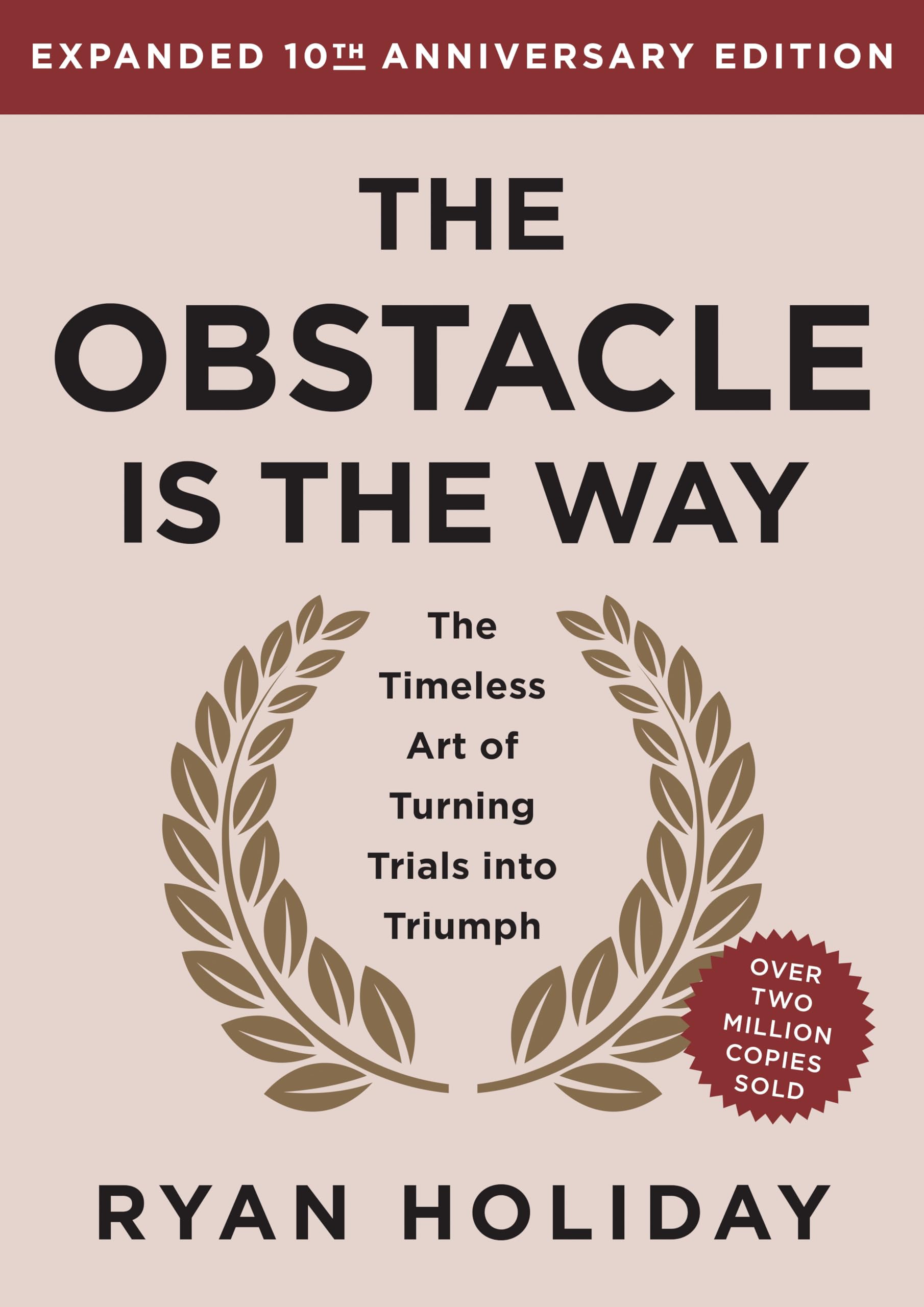
Book cover of The Obstacle is the Way

The Obstacle is the Way Summary

Personal Growth

By Ryan Holiday

Portfolio · October 1, 2024

Summary

"The Obstacle is the Way", Ryan Holiday revisits and enriches his classic work. The book delves deep into the art of transforming life's trials into moments of victory. Holiday explores how great figures throughout history, from ancient philosophers to modern-day leaders, have used obstacles as stepping-stones to success. He presents a series of practical and actionable insights, showing readers how to reframe setbacks as opportunities. Whether it's in business, personal relationships, or self-development, the principles in this book can be applied to various aspects of life. By understanding and implementing these strategies, readers can learn to navigate through difficulties with resilience and grace, ultimately achieving their goals. This anniversary edition not only includes the original content but also new perspectives and examples, making it an even more valuable resource for anyone looking to turn their challenges into triumphs.

About the Author

Ryan Holiday is an American author. He specializes in self-help and philosophy books. His writing style is practical and draws on ancient wisdom, as seen in "The Obstacle is the Way Expanded 10th Anniversary Edition".

Chapters

1

Introduction: The Power of Adversity

Life is full of obstacles, challenges, and setbacks. These difficulties can be overwhelming, but they also present opportunities for growth and transformation. The Obstacle is the Way: The Timeless Art of Turning Trials into Triumph by Ryan Holiday offers a practical guide on how to face adversity with resilience, courage, and wisdom. This book draws inspiration from the Stoic philosophy, which emphasizes the importance of accepting what we cannot control and focusing on what we can. By adopting this mindset, we can turn obstacles into stepping-stones towards success.The book argues that obstacles are not roadblocks but rather essential elements of our journey. They force us to adapt, learn, and become stronger. Instead of avoiding or complaining about difficulties, we should embrace them as opportunities to develop our character and skills. Throughout the book, real-life examples from history, business, and sports are used to illustrate how great individuals have overcome challenges and achieved remarkable success.


2

Understanding the Obstacle

To effectively deal with obstacles, it is crucial to understand their nature. Obstacles come in various forms, such as physical limitations, financial difficulties, social pressures, and emotional distress. They can be external, like a difficult boss or a competitive market, or internal, such as self-doubt and fear.We often view obstacles as negative, but they can also be positive in many ways. For example, a financial setback can teach us about money management and frugality. A health issue can prompt us to adopt a healthier lifestyle. By reframing obstacles in a positive light, we can start to see the potential benefits they bring.It's important to analyze the root causes of obstacles. Sometimes, an obstacle may be a symptom of a deeper problem. For instance, if we are constantly facing relationship problems, it could be due to our communication skills or personal insecurities. By identifying the root causes, we can find more effective solutions.

3

Perception: The First Step

Perception plays a vital role in how we deal with obstacles. Our thoughts and beliefs about a situation can either make it seem insurmountable or manageable. A positive perception helps us approach obstacles with a calm and rational mindset.We can change our perception by challenging our assumptions. For example, if we assume that a difficult task is impossible, we are likely to give up easily. However, if we question this assumption and look for alternative ways to approach the task, we may find that it is more achievable than we thought.Meditation and mindfulness can also be powerful tools to improve our perception. By being present in the moment and observing our thoughts without judgment, we can gain a clearer understanding of our situation. This allows us to respond to obstacles in a more effective way rather than reacting impulsively.Another aspect of perception is gratitude. When we focus on what we have rather than what we lack, we can develop a more positive outlook. Even in the face of obstacles, there are often things to be grateful for. For example, during a job loss, we can be grateful for the skills and experiences we have gained from our previous work.

4

Action: Overcoming the Challenge

Once we have a proper perception of the obstacle, the next step is to take action. Inaction only allows the obstacle to grow and become more difficult to deal with. Action can be small steps towards solving the problem.We need to set clear goals and break them down into actionable steps. For example, if our obstacle is to pay off a large debt, we can set a goal to pay a certain amount each month. Then we can create a budget, cut unnecessary expenses, and look for additional sources of income.Taking action also requires courage. Sometimes, we may be afraid of failure or making mistakes. However, failure is a natural part of the process of overcoming obstacles. Each failure provides an opportunity to learn and improve.It's important to be persistent in our actions. Obstacles may not be solved overnight, and there may be setbacks along the way. But by staying committed to our goals and continuing to take action, we increase our chances of success.

5

Will: The Driving Force

Willpower is the internal strength that keeps us going when faced with obstacles. It is the ability to resist temptation, stay focused, and persevere through difficult times.To strengthen our will, we need to practice self-discipline. This can involve setting rules for ourselves, such as a regular exercise routine or a study schedule. By following these rules consistently, we train our willpower.Another way to boost will is to have a strong sense of purpose. When we have a clear purpose in life, we are more likely to stay motivated and overcome obstacles. For example, if our purpose is to start a business to help people, we will be more willing to face the challenges that come with entrepreneurship.We also need to manage our energy levels. Willpower is like a muscle, and it can get tired. By getting enough sleep, eating a healthy diet, and taking breaks, we can maintain our willpower and be more effective in dealing with obstacles.

5 more chapters available

Continue listening in the Spickor app — free download on the App Store.

Listen in App

Why Spickor?

At Spickor, we believe knowledge should have no paywalls. Every book summary can be unlocked for free by watching a short ad — or you can choose an ad-free subscription. Unlike other apps, there's no "1 book per day" free limit. Learn at your own pace, on your own terms.

FeatureSpickorBlinkistHeadway
Free accessAll books free via ad unlock1 book/day only1 book/day only
Book library2,200+ across 8 categories9,000+ (non-fiction only)2,000+ (personal growth focus)
Paid subscriptionNo forced subscription; ad-supportedRequired; from $99.99/yrRequired; from $89.99/yr
Audio for all summariesYesPremium onlyPremium only
Novels & fictionYesNoNo
PlatformsiOS (Android & Web in dev)iOS / Android / WebiOS / Android only

All Books, Truly Free

Unlock any book with a short ad. No daily limits, no hidden fees.

Listen for Free

Every summary includes high-quality audio. No "premium only" labels.

Beyond Self-Help

8 categories including business, technology, and novels.

Listen in App
9 m 50 s