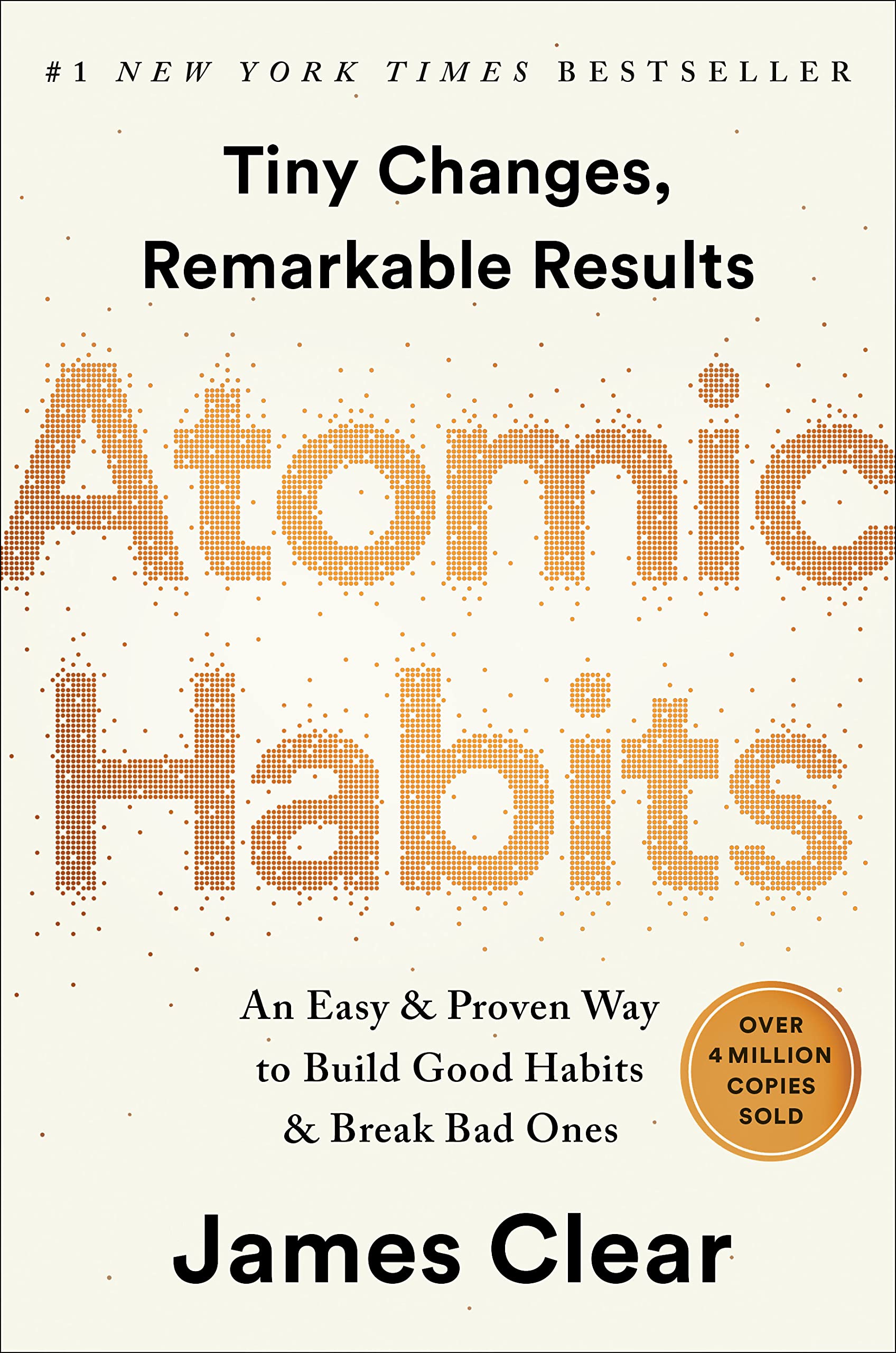
Book cover of Atomic Habits

Atomic Habits Summary

Personal Growth

By James Clear

Avery · October 16, 2018

Summary

In the book Atomic Habits, author JAMES CLEAR delves into the science of habit formation and offers a fresh perspective on how we can make lasting changes in our lives. He argues that the key to success isn't about grand, sweeping gestures but rather about making tiny, incremental improvements every day. These "atomic habits" might seem insignificant on their own, but over time, they can compound to produce extraordinary results. CLEAR presents a four-step model for building habits: cue, craving, response, and reward. By understanding these elements, readers can learn to design their environments in a way that makes good habits easier to form and bad habits harder to maintain. He also shares numerous real-life examples and case studies to illustrate his points, making the concepts accessible and relatable. Whether you're looking to get fit, become more productive, or enhance your overall well-being, Atomic Habits provides a roadmap to help you create positive, sustainable change. It's a practical guide that empowers readers to take control of their habits and, in turn, their lives.

About the Author

JAMES CLEAR is an author specializing in self-improvement. His writing in "Atomic Habits" features practical advice and clear explanations, making complex self-development concepts accessible and easy to understand.

Chapters

1

Introduction to Atomic Habits

Atomic Habits is a self-improvement book that offers practical strategies for building good habits and breaking bad ones. It emphasizes that small, incremental changes can lead to remarkable results over time. The core idea is that by focusing on the process rather than the outcome, we can create lasting change in our lives.Habits are the compound interest of self-improvement. Just as a small amount of money invested regularly can grow into a large sum over time, small, positive habits repeated consistently can lead to significant personal growth. On the other hand, small negative habits can accumulate and have a detrimental effect on our lives.The book provides a framework for understanding how habits work and how to manipulate them to our advantage. It's not about making huge, sudden changes but about making tiny adjustments that gradually add up. For example, instead of trying to run a marathon overnight, start by running a few minutes each day. These small steps are easier to stick to and can lead to long-term success.

2

The Fundamentals of Habit Formation

Habits are formed through a four-step cycle: cue, craving, response, and reward. The cue is the trigger that initiates the habit. It could be a time of day, a location, or an event. For instance, if you always have a cup of coffee after breakfast, the act of finishing breakfast is the cue.The craving is the motivation behind the habit. It's the desire to change your internal state. In the coffee example, you might crave the energy boost that coffee provides. The response is the actual behavior you perform. This is the action that follows the craving, like reaching for the coffee cup.The reward is what satisfies the craving. When you drink the coffee and feel more alert, that's the reward. This reward then reinforces the habit loop, making it more likely that you'll repeat the behavior in the future.Understanding this cycle is crucial because it allows us to identify the weak points in our habits. If we can change the cue, adjust the craving, modify the response, or alter the reward, we can reshape our habits. For example, if you want to stop having that post-breakfast coffee, you could change the cue by having a glass of water instead right after breakfast. This disrupts the old habit loop and makes it easier to form a new one.

3

The 1% Rule

The 1% rule is a central concept in Atomic Habits. It states that if you improve by just 1% each day, over time, these small improvements will compound into significant change. For example, if you're a musician and you practice for an extra minute each day, that 1% increase in practice time can lead to a substantial improvement in your skills over a year.Conversely, if you decline by 1% each day, the negative effects will also compound. You might start missing small opportunities, and over time, these missed opportunities can add up to a big setback.The beauty of the 1% rule is that it's achievable. Making a 1% improvement is not overwhelming, so it's easier to stick to. It's about making consistent, incremental progress rather than trying to make huge leaps all at once. For example, if you're trying to lose weight, instead of going on a strict diet and intense exercise regime right away, you could start by reducing your calorie intake by 1% and increasing your physical activity by a small amount each day.

4

How to Make Good Habits Easy

One of the key strategies in the book is to make good habits easy to start. This can be done by using the concept of "implementation intentions." An implementation intention is a specific plan that states when and where you will perform a particular behavior. For example, instead of saying "I want to exercise more," you could say "I will go for a 10-minute walk every morning after I brush my teeth."Another way to make good habits easy is to reduce the friction associated with them. If you want to read more, keep a book on your bedside table so it's easily accessible. You can also use the "two-minute rule," which suggests that when starting a new habit, it should take no more than two minutes to begin. For example, if you want to start a meditation practice, start with just two minutes of meditation each day. Once you've established the habit of sitting down to meditate, you can gradually increase the time.Making good habits easy also involves creating an environment that supports them. If you're trying to eat healthier, stock your kitchen with healthy foods and remove junk food. This way, when you're hungry, it's easier to make a healthy choice.

5

How to Make Bad Habits Difficult

To break bad habits, the opposite approach is needed. You need to make bad habits difficult to start. One way to do this is by increasing the friction associated with the habit. If you're trying to cut down on your phone usage, you could turn off notifications or put your phone in another room when you're working.You can also use "commitment devices." A commitment device is something that locks you into a certain behavior. For example, if you want to stop smoking, you could give a large sum of money to a friend and tell them not to give it back until you've been smoke-free for a certain period.Another strategy is to change your environment to make bad habits less appealing. If you tend to overeat when you watch TV, remove the snacks from the living room and only allow yourself to eat in the kitchen. This makes it more difficult to mindlessly snack while watching your favorite shows.

5 more chapters available

Continue listening in the Spickor app — free download on the App Store.

Listen in App

Why Spickor?

At Spickor, we believe knowledge should have no paywalls. Every book summary can be unlocked for free by watching a short ad — or you can choose an ad-free subscription. Unlike other apps, there's no "1 book per day" free limit. Learn at your own pace, on your own terms.

FeatureSpickorBlinkistHeadway
Free accessAll books free via ad unlock1 book/day only1 book/day only
Book library2,200+ across 8 categories9,000+ (non-fiction only)2,000+ (personal growth focus)
Paid subscriptionNo forced subscription; ad-supportedRequired; from $99.99/yrRequired; from $89.99/yr
Audio for all summariesYesPremium onlyPremium only
Novels & fictionYesNoNo
PlatformsiOS (Android & Web in dev)iOS / Android / WebiOS / Android only

All Books, Truly Free

Unlock any book with a short ad. No daily limits, no hidden fees.

Listen for Free

Every summary includes high-quality audio. No "premium only" labels.

Beyond Self-Help

8 categories including business, technology, and novels.

Listen in App
10 m 58 s