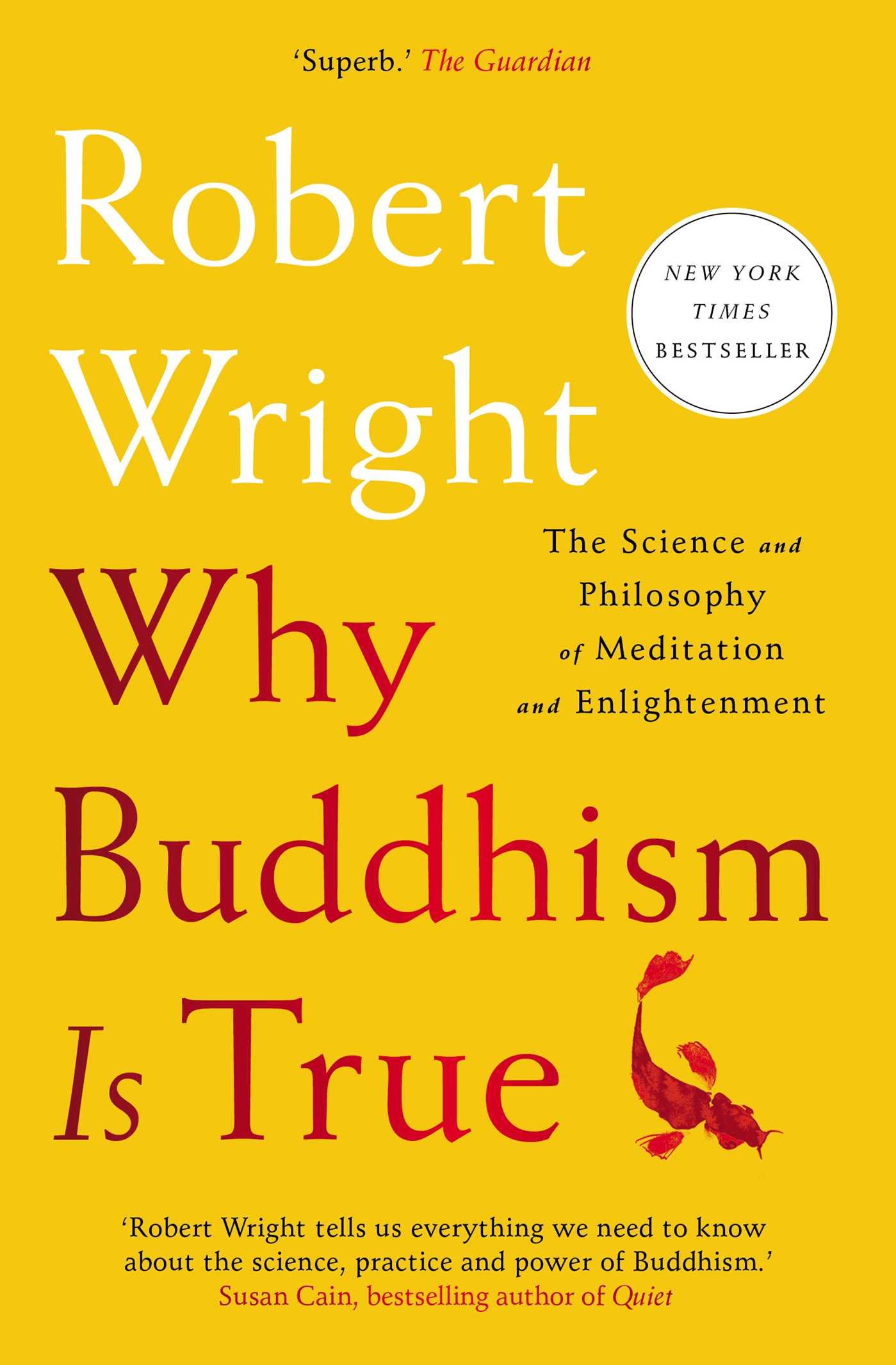
Book cover of Why Buddhism is True

Why Buddhism is True Summary

Humanity & Culture

By Robert Wright

Simon & Schuster · August 8, 2017

Summary

"Why Buddhism is True" by Robert Wright is a thought-provoking exploration that bridges the gap between ancient Buddhist wisdom and modern scientific understanding. Wright, a well-known science writer, takes readers on a journey to understand the core tenets of Buddhism. He examines concepts like mindfulness, suffering, and the nature of the self, all through the lens of evolutionary psychology. By drawing on scientific studies, he shows how these Buddhist ideas are not just spiritual musings but have real-world implications for our mental health and happiness. For example, he explains how the practice of mindfulness can help us break free from the cycle of craving and negative emotions. The book is filled with engaging anecdotes and accessible explanations, making it a fascinating read for those interested in exploring the intersection of spirituality and science. It challenges us to rethink our assumptions about the mind and the world around us, and to consider the potential benefits of incorporating Buddhist practices into our daily lives.

About the Author

Robert Wright is a well-known American author. He specializes in science-related and philosophical writing. In "Why Buddhism is True", his style combines scientific research with philosophical insights, presenting complex ideas clearly.

Chapters

1

Introduction: The Relevance of Buddhism in Modern Life

In a world filled with constant distractions and stress, the ancient teachings of Buddhism offer a path to inner peace and self-understanding. "Why Buddhism is True" by Robert Wright delves into how the principles of Buddhism align with modern science, particularly psychology and evolutionary biology. This book is not about religious conversion but about using Buddhist insights to lead a more meaningful and less suffering-filled life.Buddhism has long been associated with practices like meditation, which aim to help individuals gain control over their minds. In modern society, we often find ourselves at the mercy of our thoughts and emotions, constantly reacting to external stimuli. Buddhism provides a framework to break free from this cycle. By understanding the true nature of our minds and the world around us, we can achieve a state of equanimity and happiness.


2

The Nature of the Mind

Our minds are complex entities shaped by evolution. Evolutionary psychology tells us that our brains have developed to help us survive and reproduce. However, many of the mental mechanisms that were beneficial in our ancestral environment are no longer useful in modern life. For example, the fear response that helped our ancestors avoid predators can now manifest as excessive anxiety in a safe, modern environment.Buddhism posits that our minds are filled with illusions. These illusions, or "delusions" in Buddhist terms, prevent us from seeing the world as it truly is. One of the key illusions is the idea of a fixed, unchanging self. In reality, our sense of self is constantly changing, influenced by our experiences, thoughts, and emotions. By recognizing this, we can start to break free from the attachment to our self-image and reduce the suffering that comes with it.

3

The Concept of Dukkha

Dukkha is a central concept in Buddhism, often translated as "suffering." But it is more than just physical pain or emotional distress. Dukkha also encompasses the sense of unease and dissatisfaction that pervades our lives. Even when we achieve our goals, the satisfaction is often short-lived, and we quickly move on to the next desire.This cycle of craving and dissatisfaction is deeply ingrained in our nature. Evolution has programmed us to always seek more, whether it's food, status, or relationships. Buddhism teaches that by understanding the nature of dukkha, we can start to break free from this cycle. Through practices like meditation, we can observe our cravings without acting on them, and gradually reduce the hold they have on us.

4

The Power of Meditation

Meditation is a core practice in Buddhism, and it offers a way to train the mind. There are different types of meditation, but one of the most common is mindfulness meditation. Mindfulness involves paying attention to the present moment, without judgment. When we meditate, we focus on our breath, bodily sensations, or thoughts as they arise.Through meditation, we can develop greater self-awareness. We become more attuned to our emotions, thoughts, and physical sensations. This self-awareness allows us to recognize when our minds are being pulled by cravings or aversions. Instead of reacting automatically, we can choose to respond in a more mindful way.Meditation also helps to quiet the mind. Our minds are often filled with a constant stream of thoughts, which can be a source of stress and distraction. By focusing on the present moment, we can reduce the mental chatter and achieve a state of calm.

5

The Illusion of the Self

As mentioned earlier, the idea of a fixed self is an illusion. We often think of ourselves as having a single, unchanging identity, but in reality, our sense of self is a construction of our minds. Our self-concept is influenced by our memories, beliefs, and social roles.Buddhism challenges this view of the self. It suggests that there is no "self" in the traditional sense, but rather a collection of ever-changing mental and physical processes. When we look closely at our experience, we find that there is no single, permanent entity that we can call "me."Recognizing the illusion of the self has profound implications. It can help us let go of the need to defend our self-image and reduce the conflicts and suffering that come with it. We can also develop a greater sense of empathy and connection with others, as we realize that we are all part of the same ever-changing process.

5 more chapters available

Continue listening in the Spickor app — free download on the App Store.

Listen in App

Why Spickor?

At Spickor, we believe knowledge should have no paywalls. Every book summary can be unlocked for free by watching a short ad — or you can choose an ad-free subscription. Unlike other apps, there's no "1 book per day" free limit. Learn at your own pace, on your own terms.

FeatureSpickorBlinkistHeadway
Free accessAll books free via ad unlock1 book/day only1 book/day only
Book library2,200+ across 8 categories9,000+ (non-fiction only)2,000+ (personal growth focus)
Paid subscriptionNo forced subscription; ad-supportedRequired; from $99.99/yrRequired; from $89.99/yr
Audio for all summariesYesPremium onlyPremium only
Novels & fictionYesNoNo
PlatformsiOS (Android & Web in dev)iOS / Android / WebiOS / Android only

All Books, Truly Free

Unlock any book with a short ad. No daily limits, no hidden fees.

Listen for Free

Every summary includes high-quality audio. No "premium only" labels.

Beyond Self-Help

8 categories including business, technology, and novels.

Listen in App
9 m 02 s