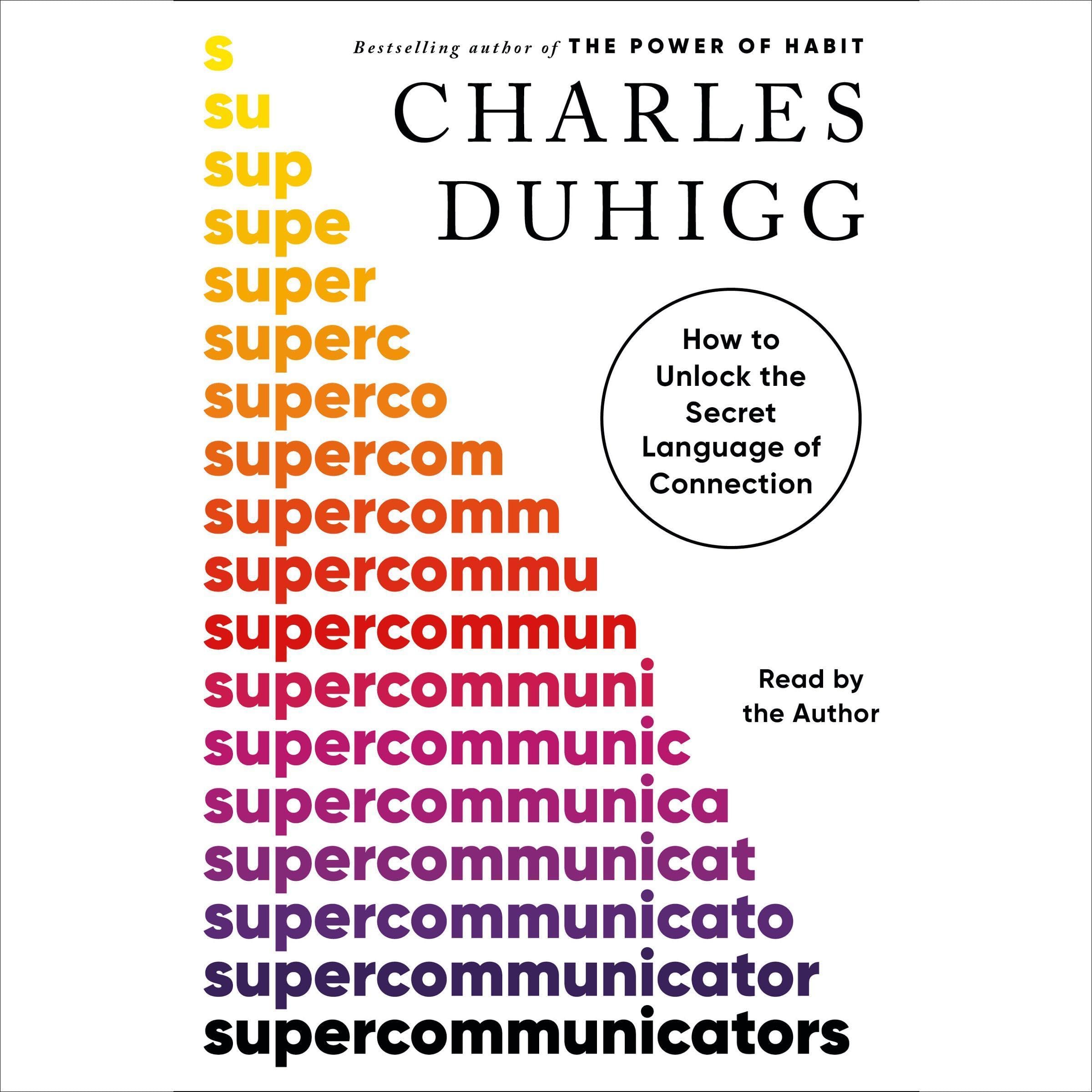
Book cover of Supercommunicators

Supercommunicators Summary

Personal Growth

By Charles Duhigg

Random House Audio · February 20, 2024

Summary

In the book "Supercommunicators," author Charles Duhigg takes readers on a journey to uncover the art of effective communication. Drawing on extensive research and numerous real-world examples, Duhigg explores what sets supercommunicators apart. He explains how small changes in the way we speak, listen, and present ourselves can have a profound impact on our personal and professional lives. For instance, in business settings, being able to communicate clearly can lead to better deals and stronger partnerships. In social situations, it can help build deeper relationships. The book is filled with practical strategies that readers can apply immediately. From understanding non-verbal cues to structuring your message for maximum impact, Duhigg provides a comprehensive guide to becoming a more persuasive and engaging communicator. It's not just about speaking louder or more often; it's about communicating in a way that resonates with your audience. Whether you're a budding entrepreneur, a student, or someone looking to improve their daily interactions, "Supercommunicators" offers valuable insights and tools to transform your communication skills.

About the Author

Charles Duhigg is a well-known author. He specializes in writing about business and self-improvement. His style in "Supercommunicators" is clear, engaging, and filled with practical insights.

Chapters

1

Introduction to Supercommunicators

In the modern world, effective communication is crucial for success in various aspects of life, whether it's in business, relationships, or personal growth. "Supercommunicators" by Charles Duhigg delves into the art and science of becoming a master communicator. This book offers valuable insights and practical strategies to help individuals enhance their communication skills and become supercommunicators.Supercommunicators are not just those who can speak well; they are individuals who can connect with others on a deeper level, understand their needs, and convey their messages effectively. They have the ability to build trust, inspire action, and create meaningful relationships. By learning the principles and techniques outlined in this book, anyone can improve their communication abilities and become a more influential and persuasive communicator.Throughout the book, we will explore the key elements of supercommunication, including understanding your audience, crafting compelling messages, using non-verbal communication effectively, and building rapport. We will also look at how to handle difficult conversations, give and receive feedback, and adapt your communication style to different situations.


2

Understanding Your Audience

One of the fundamental aspects of supercommunication is understanding your audience. To communicate effectively, you need to know who you are talking to, what their interests are, what their needs and concerns are, and how they prefer to receive information.First, you need to do some research about your audience. If you are giving a presentation at work, find out about the background of the people in the audience. What is their level of knowledge about the topic? What are their professional goals? If you are having a conversation with a friend, think about their personality, their current situation, and their values.Once you have a good understanding of your audience, you can tailor your message to them. For example, if you are presenting to a group of technical experts, you can use more technical jargon and in-depth analysis. But if your audience consists of non-technical people, you need to simplify your language and use more examples and analogies.Another important aspect is to consider the emotional state of your audience. Are they stressed, excited, or bored? Understanding their emotions can help you adjust your tone and approach. For instance, if your audience is stressed, you might want to use a calm and reassuring tone. If they are excited, you can match their energy and enthusiasm.By understanding your audience, you can make your communication more relevant, engaging, and effective. It allows you to connect with them on a personal level and increases the chances of your message being well-received.

3

Crafting Compelling Messages

Crafting a compelling message is at the heart of supercommunication. A good message should be clear, concise, and relevant to your audience.To start, you need to have a clear purpose for your communication. Are you trying to inform, persuade, or entertain? Once you have defined your purpose, you can structure your message accordingly.A simple and effective way to structure a message is to use the three-part model: introduction, body, and conclusion. In the introduction, you should grab the attention of your audience and introduce the main topic. You can use a story, a question, or a surprising fact to make your introduction engaging.The body of your message is where you present your main points. Each point should be well-organized and supported by evidence. You can use examples, statistics, or personal experiences to make your points more convincing. It's important to keep your points focused and avoid going off-topic.In the conclusion, you should summarize your main points and restate your purpose. You can also end with a call to action, encouraging your audience to take the next step.Another important aspect of crafting a compelling message is using the right language. Use simple and straightforward words that are easy for your audience to understand. Avoid using complex jargon or technical terms unless your audience is familiar with them. Also, use positive and engaging language to create a more positive impression.

4

Non-Verbal Communication

Non-verbal communication plays a significant role in supercommunication. It includes body language, facial expressions, tone of voice, and eye contact.Body language can convey a lot of information. For example, standing up straight with your shoulders back shows confidence, while slouching can give the impression of being uninterested or insecure. Gestures can also enhance your message. For instance, using hand gestures to emphasize important points can make your communication more engaging.Facial expressions are another important part of non-verbal communication. A smile can make you seem friendly and approachable, while a frown can indicate disapproval or concern. Pay attention to your facial expressions and make sure they match the message you are trying to convey.Tone of voice is also crucial. A calm and steady tone can make you seem trustworthy, while a high-pitched or aggressive tone can be off-putting. You can adjust your tone depending on the situation and the message you want to send. For example, if you are giving a serious presentation, you might use a more solemn tone. If you are having a friendly conversation, you can use a more relaxed and upbeat tone.Eye contact is an important non-verbal cue. Maintaining appropriate eye contact shows that you are engaged and interested in the conversation. However, be careful not to stare too intensely, as this can make the other person uncomfortable.By being aware of and using non-verbal communication effectively, you can enhance your overall communication and make a stronger impression on your audience.

5

Building Rapport

Building rapport is essential for supercommunication. Rapport is the connection and trust that you build with others. When you have rapport with someone, they are more likely to listen to you and be receptive to your message.One way to build rapport is to find common ground. Look for shared interests, experiences, or values. For example, if you are meeting someone for the first time, you can ask about their hobbies or their work. If you find that you both like the same sports team, it can be a great way to start a conversation and build a connection.Active listening is also crucial for building rapport. When you listen actively, you show that you value the other person's thoughts and feelings. You can do this by maintaining eye contact, nodding, and asking relevant questions. Avoid interrupting the other person and make sure you understand their perspective before responding.Another important aspect is to be genuine and authentic. People can sense when you are being fake, so it's important to be yourself. Share your own experiences and opinions in a sincere way. This can help to build trust and make the other person more comfortable around you.Building rapport takes time and effort, but it is a key skill for supercommunicators. By building strong relationships with others, you can improve your communication and achieve better results.

5 more chapters available

Continue listening in the Spickor app — free download on the App Store.

Listen in App

Why Spickor?

At Spickor, we believe knowledge should have no paywalls. Every book summary can be unlocked for free by watching a short ad — or you can choose an ad-free subscription. Unlike other apps, there's no "1 book per day" free limit. Learn at your own pace, on your own terms.

FeatureSpickorBlinkistHeadway
Free accessAll books free via ad unlock1 book/day only1 book/day only
Book library2,200+ across 8 categories9,000+ (non-fiction only)2,000+ (personal growth focus)
Paid subscriptionNo forced subscription; ad-supportedRequired; from $99.99/yrRequired; from $89.99/yr
Audio for all summariesYesPremium onlyPremium only
Novels & fictionYesNoNo
PlatformsiOS (Android & Web in dev)iOS / Android / WebiOS / Android only

All Books, Truly Free

Unlock any book with a short ad. No daily limits, no hidden fees.

Listen for Free

Every summary includes high-quality audio. No "premium only" labels.

Beyond Self-Help

8 categories including business, technology, and novels.

Listen in App
14 m 00 s