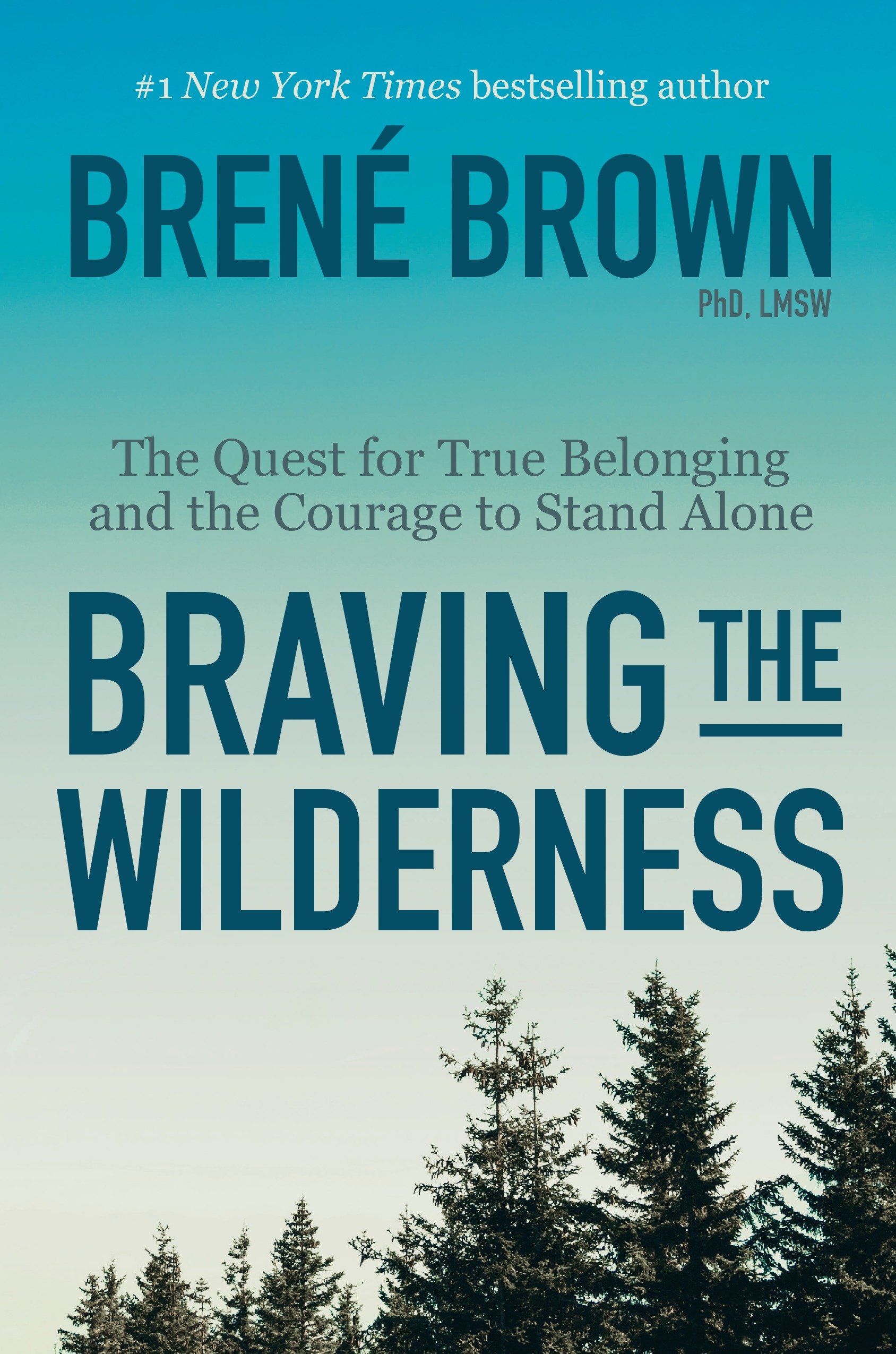
Book cover of Braving the Wilderness

Braving the Wilderness Summary

Personal Growth

By Brené Brown

Random House · September 12, 2017

Summary

In "Braving the Wilderness," Brené Brown, a well-known researcher and author, embarks on a profound exploration of what it means to truly belong. In a society often driven by social media and surface-level connections, Brown challenges readers to look deeper. She argues that true belonging requires us to be brave enough to stand alone, to be our authentic selves even when it's not popular. Brown draws on her extensive research and real-life stories to illustrate her points. She shows how vulnerability is not a weakness but a strength, and how it can lead to more meaningful relationships. By facing our fears and stepping into the unknown, we can find a sense of belonging that is based on authenticity. This book is not just a theoretical exploration; it provides practical advice on how to navigate the challenges of modern life. Whether it's dealing with social pressure or finding our place in a community, Brown offers guidance on how to be true to ourselves. It's a powerful and inspiring read that will resonate with anyone who has ever felt lost or disconnected in the world.

About the Author

Brené Brown is a renowned researcher, author. She focuses on vulnerability, courage, and shame. Her writing in *Braving the Wilderness* is engaging, blending research-based insights with relatable stories.

Chapters

1

Introduction: The Call to the Wilderness

In a world filled with constant connection and the pressure to fit in, we often find ourselves in a paradox. We're more connected than ever through technology, yet many of us feel incredibly alone. "Braving the Wilderness" by Brené Brown delves into this complex issue and offers a path to true belonging. The wilderness here is not a physical place but a metaphor for the space where we must be our true selves, even when it's uncomfortable. It's about stepping away from the false safety of conformity and into the unknown territory of authenticity.The book challenges the idea that fitting in is the same as belonging. Fitting in is about changing ourselves to meet the expectations of others, while belonging is about being accepted for who we truly are. Brown argues that we need to have the courage to be vulnerable and show up as our whole selves, even when it means standing alone. This is the essence of braving the wilderness – having the strength to be authentic in a world that often rewards conformity.


2

The Power of Vulnerability

Vulnerability is a central theme in the book. It's not a sign of weakness but a strength that allows us to connect with others on a deeper level. When we're vulnerable, we open ourselves up to the possibility of rejection, but we also open the door to true connection and belonging. Brown shares numerous stories and research findings to illustrate the power of vulnerability. For example, in our personal relationships, being vulnerable means sharing our fears, insecurities, and true feelings with our partners, friends, and family. It might be admitting that we're struggling at work or that we're scared about the future. By doing so, we create a space for others to be vulnerable in return, strengthening our relationships.In a professional context, vulnerability can lead to innovation and collaboration. When leaders are willing to admit their mistakes and show their authentic selves, it encourages their teams to do the same. This creates a culture of trust and openness, where new ideas can flourish. However, being vulnerable is not easy. It requires us to face our fears and be willing to be seen in all our imperfections.

3

The Myth of "Us vs. Them"

One of the biggest obstacles to belonging is the "us vs. them" mentality. This mindset divides people into groups, creating a sense of separation and hostility. We see this in politics, social media, and even in our daily lives. When we label others as "the enemy," we close ourselves off from understanding and connection.Brown argues that we need to break free from this binary thinking. Instead of seeing others as different or threatening, we should look for common ground. This doesn't mean ignoring our differences but rather recognizing that we all share the same basic human needs for love, belonging, and safety.To overcome the "us vs. them" mentality, we need to practice empathy. Empathy is the ability to understand and share the feelings of others. It allows us to see the world from their perspective and build bridges of understanding. By engaging in meaningful conversations and listening to others' stories, we can start to break down the barriers that divide us.

4

The Importance of Values

Our values are the compass that guides us through the wilderness of life. They are the principles and beliefs that we hold dear and that shape our decisions and actions. When we live in alignment with our values, we feel a sense of purpose and authenticity.Brown emphasizes the importance of identifying our core values. This involves reflecting on what truly matters to us, what gives our lives meaning, and what we want to stand for. Once we have a clear understanding of our values, we can use them as a guide in all aspects of our lives.For example, if one of our values is honesty, we can make choices that reflect this value in our relationships, at work, and in our daily interactions. Living in alignment with our values also means being willing to make difficult decisions and stand up for what we believe in, even when it's unpopular.

5

Building Community

True belonging is not just about individual authenticity but also about building communities where everyone feels valued and accepted. A community is a group of people who come together around a shared purpose or value. It provides a sense of support, connection, and belonging.To build a strong community, we need to create spaces where people can be their true selves. This involves fostering an environment of trust, respect, and inclusion. We need to encourage open communication, active listening, and collaboration.In a community, we also have a responsibility to support and lift each other up. This might mean offering a helping hand, providing emotional support, or celebrating each other's successes. By working together, we can create a community that is greater than the sum of its parts.

5 more chapters available

Continue listening in the Spickor app — free download on the App Store.

Listen in App

Why Spickor?

At Spickor, we believe knowledge should have no paywalls. Every book summary can be unlocked for free by watching a short ad — or you can choose an ad-free subscription. Unlike other apps, there's no "1 book per day" free limit. Learn at your own pace, on your own terms.

FeatureSpickorBlinkistHeadway
Free accessAll books free via ad unlock1 book/day only1 book/day only
Book library2,200+ across 8 categories9,000+ (non-fiction only)2,000+ (personal growth focus)
Paid subscriptionNo forced subscription; ad-supportedRequired; from $99.99/yrRequired; from $89.99/yr
Audio for all summariesYesPremium onlyPremium only
Novels & fictionYesNoNo
PlatformsiOS (Android & Web in dev)iOS / Android / WebiOS / Android only

All Books, Truly Free

Unlock any book with a short ad. No daily limits, no hidden fees.

Listen for Free

Every summary includes high-quality audio. No "premium only" labels.

Beyond Self-Help

8 categories including business, technology, and novels.

Listen in App
9 m 26 s