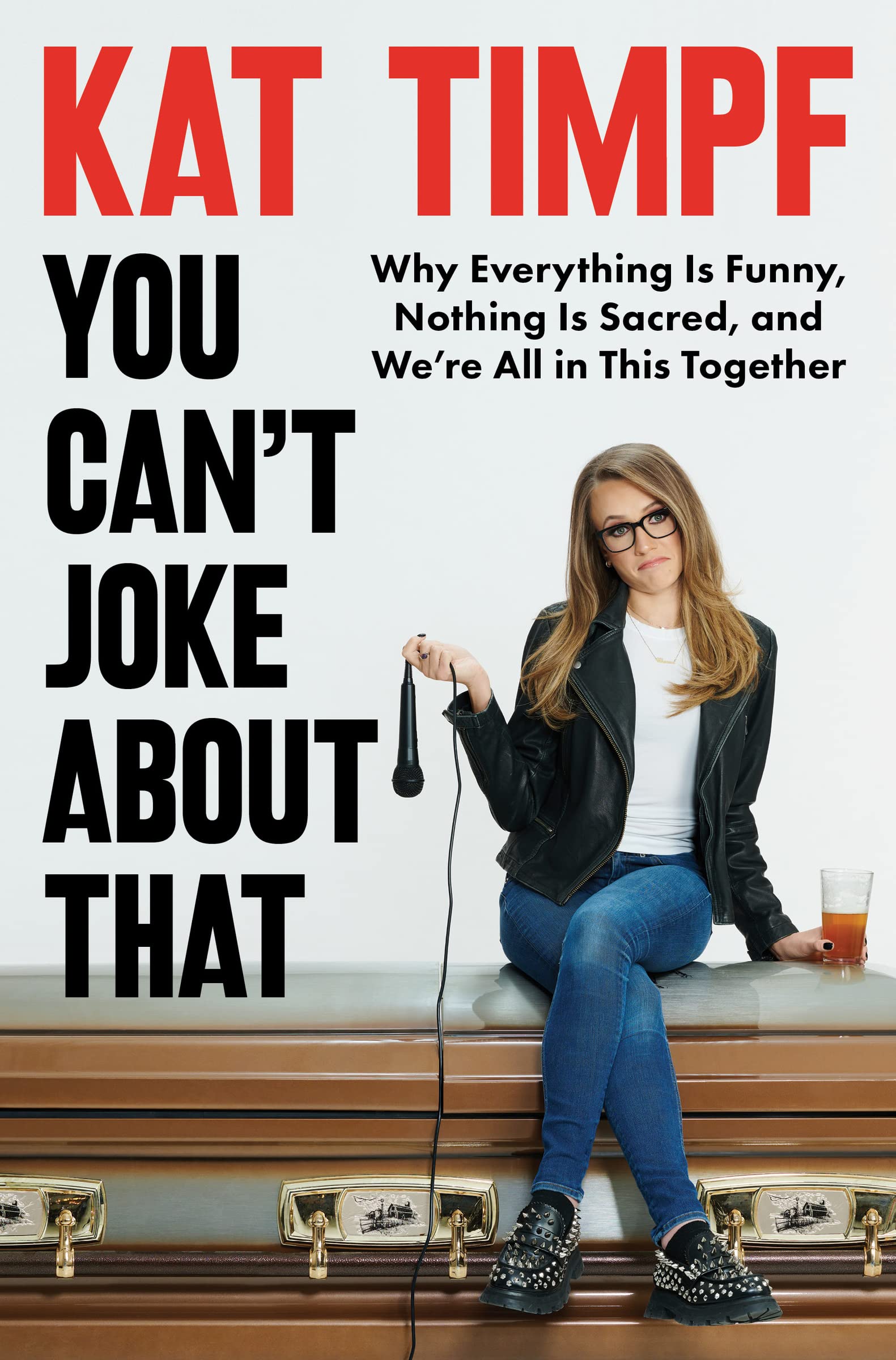
Book cover of You Can't Joke About That

You Can't Joke About That Summary

Humanity & Culture

By Kat Timpf

Summary

You Can't Joke About That, penned by Kat Timpf, is a thought-provoking exploration of the complex world of humor and its boundaries. In today's society, there are numerous topics that are deemed too sensitive to joke about. Timpf delves deep into these so-called 'taboo' subjects, analyzing why they are off-limits and whether that's truly necessary. Through her engaging writing style, she takes readers on a journey through different aspects of comedy, from stand-up routines to online memes. Timpf challenges the status quo and encourages readers to think critically about the restrictions placed on humor. This book is not just about making people laugh; it's about understanding the cultural and social implications of what we find funny. It's a call to re-evaluate our views on comedy and the rules that govern it. Whether you're a comedy enthusiast or someone who simply wants to understand the changing landscape of humor, You Can't Joke About That offers valuable insights.

About the Author

Kat Timpf is a well-known author. She specializes in writing satirical and humorous non-fiction. In "You Can't Joke About That", her sharp wit and incisive commentary make her works engaging and thought-provoking.

Chapters

1

Introduction: The Landscape of Joke Taboos

In the modern era, the boundaries of what can and cannot be joked about have become increasingly blurred and controversial. "You Can't Joke About That" by Kat Timpf delves into this complex issue. The book starts by highlighting how society has become more sensitive, with certain topics being labeled as off-limits for humor. This shift has led to a lot of confusion and self-censorship among comedians and the general public. The author points out that the concept of what is "jokable" has changed over time. In the past, many topics that are now considered taboo were fair game for comedy. But as society has evolved, new sensitivities have emerged. For example, issues related to race, gender, and mental health have become areas where people are extremely cautious when it comes to making jokes. This new landscape has a significant impact on the world of comedy and free speech.
2

The Origins of Joke Taboos

Joke taboos don't just appear out of thin air. They have deep-seated origins in social, cultural, and historical factors. One of the main drivers is the growing awareness of social justice. As people have become more educated about the struggles of marginalized groups, there is a desire to protect them from potentially harmful jokes. Another factor is the power of the media. In the age of social media, a single joke can go viral and cause a huge uproar. This has made people more afraid to take risks with their humor. Additionally, political correctness has played a role. The push for more inclusive language and behavior has led to a narrowing of the boundaries of acceptable humor. For instance, in the past, certain ethnic stereotypes were commonly used in comedy. But as society has become more aware of the harm these stereotypes can cause, they have become taboo. This shift is a result of a combination of social progress and the changing cultural norms.

3

The Impact on Comedians

Comedians are at the forefront of the joke-taboo battle. They are constantly walking a tightrope between making people laugh and avoiding offense. Many comedians feel that the current climate of joke taboos is stifling their creativity. In the past, comedians could take risks and push the envelope with their jokes. But now, they have to be extremely careful about what they say. This has led to a lot of self-censorship. Some comedians are afraid to perform certain jokes because they fear the backlash they might face. For example, a comedian might have a great joke about a particular group, but they won't tell it because they're worried about being labeled as offensive. This not only limits the variety of jokes that are being told but also affects the quality of comedy. Comedians are often forced to play it safe, which can make their performances less engaging.

4

The Role of Free Speech

Free speech is a fundamental right, and it is closely related to the issue of joke taboos. The ability to make jokes is an important part of free expression. However, in the current climate, free speech in the context of comedy is under threat. Some people argue that there should be limits to what can be joked about in order to protect the feelings of others. But others believe that this is a slippery slope. If we start restricting what can be joked about, where do we draw the line? For example, if we say that jokes about a certain race are off-limits, what about jokes about other groups? And who gets to decide what is and isn't acceptable? The book explores these questions and argues that while we should be sensitive to the feelings of others, we also need to protect the right to free speech in comedy.

5

The Psychology of Humor and Taboos

Understanding the psychology of humor is crucial when it comes to dealing with joke taboos. Humor often works by subverting expectations and challenging the status quo. Jokes that cross the line can be particularly effective because they make people think and question their assumptions. However, the human mind also has a natural aversion to things that are considered taboo. When we hear a joke about a sensitive topic, our initial reaction might be shock or discomfort. This is because our brains are wired to protect us from potential threats, and taboos are often associated with things that are considered dangerous or inappropriate. For example, a joke about a serious illness might make some people uncomfortable because it goes against our natural empathy for those who are suffering. But at the same time, humor can also be a way to cope with difficult situations. The book examines how these psychological factors interact with the concept of joke taboos.

5 more chapters available

Continue listening in the Spickor app — free download on the App Store.

Listen in App

Why Spickor?

At Spickor, we believe knowledge should have no paywalls. Every book summary can be unlocked for free by watching a short ad — or you can choose an ad-free subscription. Unlike other apps, there's no "1 book per day" free limit. Learn at your own pace, on your own terms.

FeatureSpickorBlinkistHeadway
Free accessAll books free via ad unlock1 book/day only1 book/day only
Book library2,200+ across 8 categories9,000+ (non-fiction only)2,000+ (personal growth focus)
Paid subscriptionNo forced subscription; ad-supportedRequired; from $99.99/yrRequired; from $89.99/yr
Audio for all summariesYesPremium onlyPremium only
Novels & fictionYesNoNo
PlatformsiOS (Android & Web in dev)iOS / Android / WebiOS / Android only

All Books, Truly Free

Unlock any book with a short ad. No daily limits, no hidden fees.

Listen for Free

Every summary includes high-quality audio. No "premium only" labels.

Beyond Self-Help

8 categories including business, technology, and novels.

Listen in App
9 m 13 s