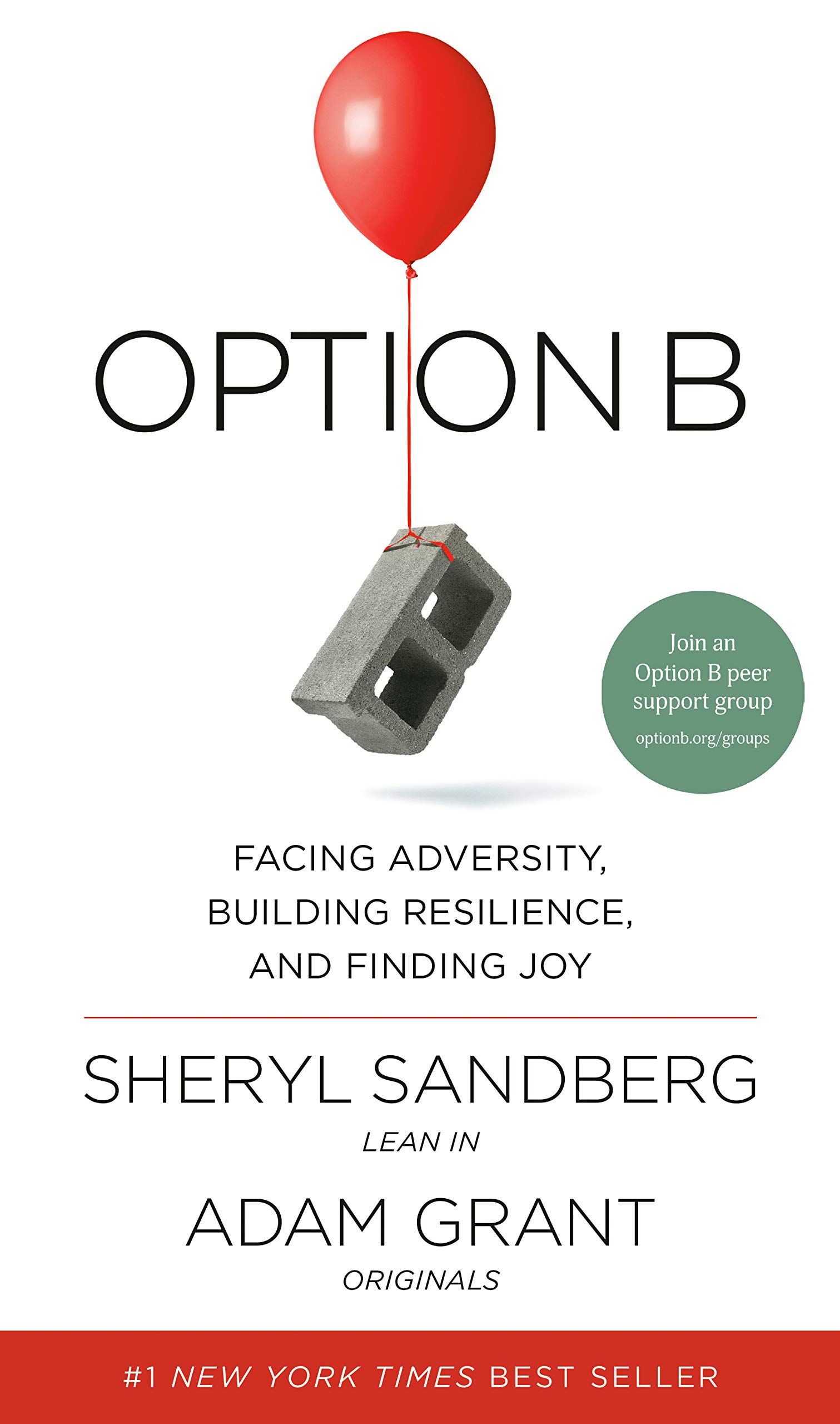
Book cover of Option B

Option B Summary

Personal Growth

By Adam Grant

Knopf · April 24, 2017

Summary

After Sheryl faced a personal tragedy, she and Adam set out to understand the science of resilience. The book delves into the latest research on how people can recover from loss, disappointment, and failure. It presents real-life examples of individuals who have found their way through difficult times, offering a ray of hope. Through practical strategies and moving stories, "Option B" provides a roadmap for anyone who has ever been knocked down. It encourages readers to embrace the idea that even when life doesn't go as planned, there is always an alternative path forward. Whether it's a career setback, a personal loss, or a health challenge, this book equips readers with the tools to build resilience and find meaning in adversity.

About the Author

Sheryl Sandberg, a businesswoman, and Adam Grant, a psychologist, co-authored "Option B". Their writing combines real-world business insights and psychological knowledge, with a practical and inspiring style.

Chapters

1

Introduction to Option B

In life, we all face setbacks and losses. These can be as significant as the death of a loved one, the end of a long-term relationship, or the loss of a job. Option B is about how we can bounce back from these difficult situations. It's not just about getting through the tough times but also about growing stronger and finding new meaning in life. When we face adversity, we often have two choices. Option A is the life we originally planned, the one that's now disrupted. Option B is the path we take after the setback. This book is a guide to making the most of Option B.When a major setback occurs, it can feel like our world is falling apart. We may experience shock, grief, and a sense of helplessness. But it's important to understand that these are normal reactions. Everyone copes with adversity differently, and there's no one-size-fits-all solution. However, by learning from the experiences of others and understanding the science behind resilience, we can better navigate through these difficult times. Resilience isn't something that only a few special people have; it's a skill that can be developed and strengthened over time.The authors, Sheryl Sandberg and Adam Grant, bring different perspectives to the table. Sheryl Sandberg experienced a personal tragedy when her husband suddenly passed away. Through her own journey of recovery, she learned a great deal about resilience. Adam Grant, on the other hand, is a psychologist who specializes in the study of work, motivation, and leadership. Together, they combine real-life stories and scientific research to provide a comprehensive guide on how to face and overcome adversity.

2

Understanding Adversity

Adversity comes in many forms. It could be a natural disaster that destroys homes and communities, a serious illness that affects a person's health and well-being, or a financial crisis that leads to job loss and economic instability. Each type of adversity has its own unique challenges and impacts on our lives.One of the first steps in dealing with adversity is to recognize and accept it. Denying the reality of a setback can prevent us from moving forward. For example, if someone loses their job, they may initially refuse to believe it and keep waiting for things to go back to normal. But this kind of denial can lead to inaction and further problems. Instead, it's important to face the situation head-on and start thinking about what can be done next.Adversity also has a psychological impact on us. It can cause stress, anxiety, and depression. When we experience a major setback, our self-esteem may take a hit. We might start to question our abilities and our worth. For instance, if a student fails an important exam, they may think they're not smart enough or that they'll never succeed. These negative thoughts can be a major obstacle to recovery.However, it's important to note that adversity is not always a negative thing. In some cases, it can be a catalyst for growth. It can force us to reevaluate our lives, our goals, and our values. For example, someone who has a near-death experience may decide to change their lifestyle and focus on the things that truly matter to them, like spending more time with family and friends.

3

The Power of Resilience

Resilience is the ability to bounce back from adversity. It's not about avoiding difficult situations but rather about how we respond to them. Resilient people are able to adapt to change, learn from their experiences, and keep moving forward.There are several factors that contribute to resilience. One of the most important is having a strong support system. Friends, family, and colleagues can provide emotional support, practical help, and a sense of belonging. For example, when someone is going through a divorce, their friends can be there to listen, offer advice, and help them through the difficult process.Another factor is having a positive mindset. Resilient people tend to view setbacks as temporary and as opportunities for growth. They don't dwell on the negative but instead focus on the things they can control. For instance, if a business owner faces a financial setback, they may look for new ways to improve their business rather than giving up.Self-efficacy is also crucial for resilience. This is the belief in one's own ability to achieve goals and overcome challenges. When people have high self-efficacy, they are more likely to take on difficult tasks and persevere in the face of obstacles. For example, an athlete who believes in their ability to win a race is more likely to train hard and keep going even when they face difficulties.Resilience can be developed through practice. We can start by setting small goals and working towards them. Each time we achieve a goal, no matter how small, it boosts our confidence and makes us more resilient. We can also learn from the experiences of others who have overcome similar challenges.

4

Building a Support System

A strong support system is essential for dealing with adversity. It can provide emotional support, practical assistance, and a sense of community. There are different types of support that we can seek in different situations.Emotional support is perhaps the most important type. It involves having someone to talk to, someone who can listen without judgment and offer empathy. Friends and family are often the primary sources of emotional support. When we're going through a tough time, just being able to share our feelings with someone who cares can make a big difference.Practical support is also crucial. This can include things like help with daily tasks, financial assistance, or career advice. For example, if someone loses their job, a friend or family member might help them with job hunting, or lend them some money to cover their expenses until they find a new job.In addition to friends and family, we can also build a support system through community organizations and support groups. These can provide a sense of belonging and connection with others who are going through similar experiences. For example, a cancer support group can offer emotional support and practical advice to cancer patients and their families.However, building a support system takes time and effort. We need to be proactive in reaching out to others and building relationships. We also need to be willing to offer support to others in return. By creating a reciprocal relationship, we can strengthen our support system and make it more effective in times of need.

5

The Role of Mindset

Our mindset plays a crucial role in how we deal with adversity. There are two main types of mindsets: the fixed mindset and the growth mindset.People with a fixed mindset believe that their abilities and qualities are fixed traits. They think that they are either smart or not, talented or not, and that these things can't be changed. When faced with a setback, people with a fixed mindset may see it as a sign of their own limitations. For example, if a student with a fixed mindset fails a test, they may think that they're just not good at the subject and give up.On the other hand, people with a growth mindset believe that their abilities can be developed through hard work, learning, and perseverance. They see setbacks as opportunities to learn and grow. For example, a student with a growth mindset who fails a test will view it as a chance to identify their weaknesses and work on improving them.Having a growth mindset can be a powerful tool in dealing with adversity. It allows us to approach challenges with a positive attitude and a willingness to learn. We can develop a growth mindset by changing the way we think about failure and setbacks. Instead of seeing them as negative, we can view them as stepping stones to success.We can also encourage a growth mindset in others. By praising effort and perseverance rather than just talent, we can help others develop a more positive attitude towards learning and growth. For example, instead of saying "You're so smart," we can say "You worked really hard on that, and it paid off."

5 more chapters available

Continue listening in the Spickor app — free download on the App Store.

Listen in App

Why Spickor?

At Spickor, we believe knowledge should have no paywalls. Every book summary can be unlocked for free by watching a short ad — or you can choose an ad-free subscription. Unlike other apps, there's no "1 book per day" free limit. Learn at your own pace, on your own terms.

FeatureSpickorBlinkistHeadway
Free accessAll books free via ad unlock1 book/day only1 book/day only
Book library2,200+ across 8 categories9,000+ (non-fiction only)2,000+ (personal growth focus)
Paid subscriptionNo forced subscription; ad-supportedRequired; from $99.99/yrRequired; from $89.99/yr
Audio for all summariesYesPremium onlyPremium only
Novels & fictionYesNoNo
PlatformsiOS (Android & Web in dev)iOS / Android / WebiOS / Android only

All Books, Truly Free

Unlock any book with a short ad. No daily limits, no hidden fees.

Listen for Free

Every summary includes high-quality audio. No "premium only" labels.

Beyond Self-Help

8 categories including business, technology, and novels.

Listen in App
15 m 36 s