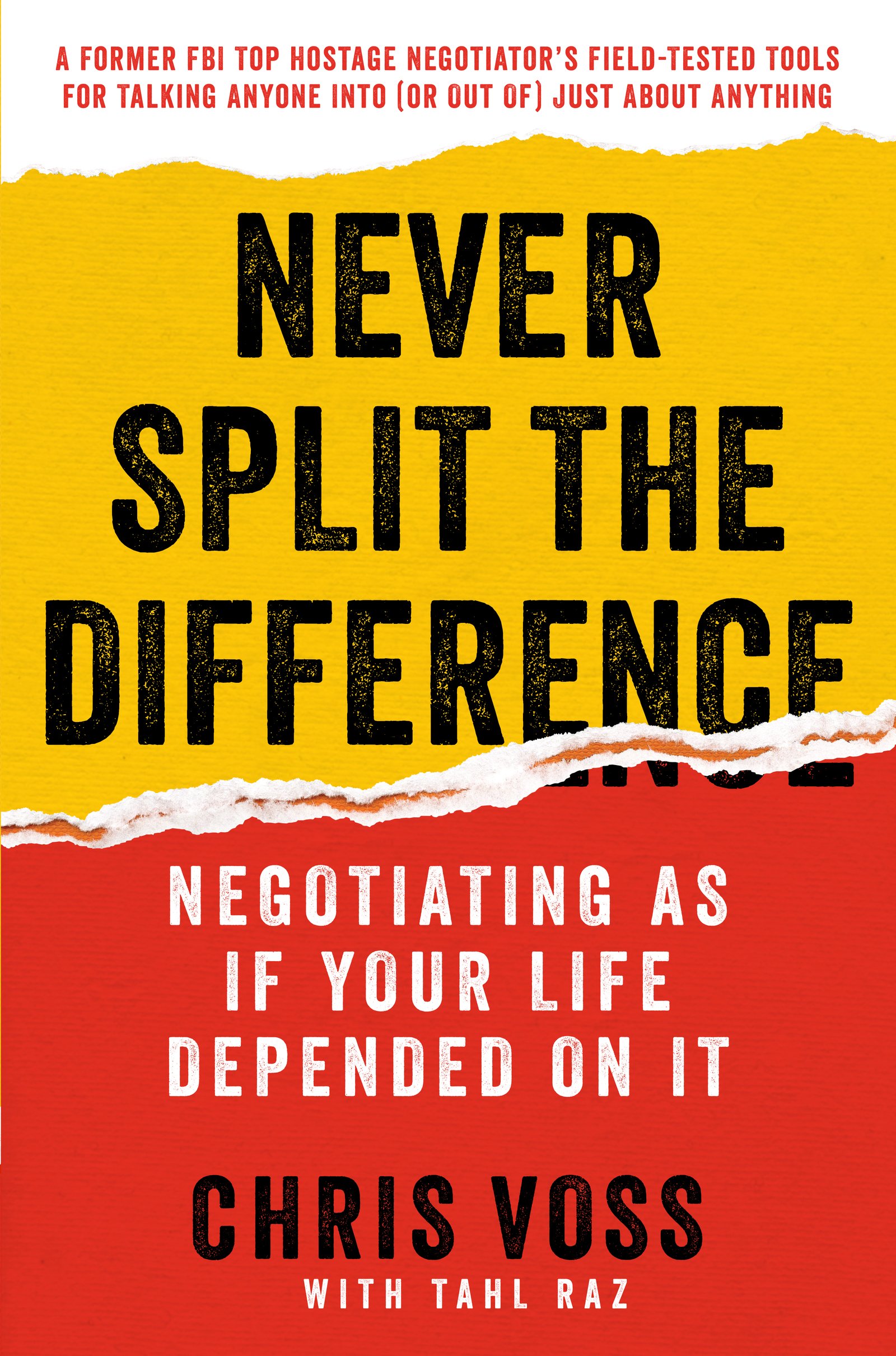
Book cover of Never Split the Difference

Never Split the Difference Summary

Personal Growth

By Chris Voss

Harper Business · May 17, 2016

Summary

"Never Split the Difference" is a remarkable book co-written by Chris Voss, a former FBI hostage negotiator, and Tahl Raz. Voss brings his real-world high-stakes negotiation experience to the pages. In the book, readers will discover a wealth of negotiation strategies that can be applied in various aspects of life. From business deals to personal relationships, the principles presented are both practical and effective. It introduces concepts like "tactical empathy", which helps in understanding the other party's perspective. By learning these techniques, you can turn difficult conversations into successful negotiations. The book is filled with real-life examples and actionable advice, making it a must-read for anyone looking to improve their negotiation skills. It will guide you through the process of getting what you want while maintaining positive relationships. Whether you're a salesperson, a manager, or just someone who wants to communicate better, this book has something valuable to offer.

About the Author

Chris Voss and Tahl Raz are co-authors. Voss, a former FBI hostage negotiator, and Raz collaborate on negotiation-related writing. Their style in "Never Split the Difference" is practical and engaging, offering real-world negotiation strategies.

Chapters

1

Introduction to Negotiation

Negotiation is a crucial skill in both personal and professional life. It's not just about haggling over prices; it's about finding solutions that satisfy all parties involved. In "Never Split the Difference," Chris Voss and Tahl Raz share insights from Voss's experience as a former FBI hostage negotiator. The principles and techniques in this book can be applied to various negotiation scenarios, from business deals to everyday interactions.Negotiation is often seen as a battle, but it doesn't have to be. Instead of trying to win at all costs, the goal should be to create value and build relationships. By understanding the other party's needs and interests, we can find mutually beneficial solutions. This approach not only leads to better outcomes but also helps to maintain positive relationships.

2

The Power of Active Listening

One of the most important skills in negotiation is active listening. Active listening involves paying full attention to what the other person is saying, both verbally and non-verbally. It means not interrupting, asking clarifying questions, and showing empathy.When we actively listen, we can uncover the other party's real concerns and interests. For example, if someone is negotiating a salary increase, they might mention their long-hours and additional responsibilities. By listening carefully, we can understand that they are looking for recognition and fair compensation.Active listening also helps to build trust. When the other person feels heard and understood, they are more likely to be open and cooperative. We can use techniques like mirroring, where we repeat the last few words of what the other person said. This simple act shows that we are paying attention and can encourage the other person to share more.

3

Emotional Intelligence in Negotiation

Emotions play a significant role in negotiation. Understanding and managing emotions, both our own and the other party's, is essential. Emotional intelligence allows us to stay calm and focused during a negotiation, even when faced with difficult situations.For instance, if the other party becomes angry or frustrated, we can use emotional intelligence to defuse the situation. We can acknowledge their feelings and try to understand the root cause of their emotions. By doing so, we can turn a potentially hostile situation into a more productive one.On the other hand, we also need to be aware of our own emotions. If we get too angry or defensive, it can derail the negotiation. We should take a step back, breathe, and think rationally before responding.

4

The Art of Labeling

Labeling is a powerful technique in negotiation. It involves identifying and naming the other party's emotions and concerns. By labeling, we can show that we understand their perspective and build rapport.For example, if the other party seems frustrated during a negotiation, we can say, "It sounds like you're frustrated with the current situation." This simple statement can help to validate their feelings and open the door for further discussion.Labeling can also be used to address potential objections. If we anticipate that the other party might be concerned about a particular aspect of the deal, we can label that concern in advance. For instance, "I know you might be worried about the delivery time." This shows that we are aware of their concerns and are willing to address them.

5

Bargaining and Pricing

When it comes to bargaining and pricing, there are several strategies we can use. One approach is to anchor the negotiation. We can start with an extreme offer, which sets the reference point for the negotiation. For example, if we are selling a product, we can start with a high price. This gives us room to negotiate down while still getting a good deal.Another strategy is to use the "no" technique. Sometimes, saying "no" can be a powerful way to gain more information. When the other party says "no," it often reveals their true concerns and boundaries. We can then use this information to adjust our approach.We also need to be aware of the power of silence. After making an offer, it's important to stay quiet and let the other party respond. Many people feel uncomfortable with silence and will fill the void by making concessions.

5 more chapters available

Continue listening in the Spickor app — free download on the App Store.

Listen in App

Why Spickor?

At Spickor, we believe knowledge should have no paywalls. Every book summary can be unlocked for free by watching a short ad — or you can choose an ad-free subscription. Unlike other apps, there's no "1 book per day" free limit. Learn at your own pace, on your own terms.

FeatureSpickorBlinkistHeadway
Free accessAll books free via ad unlock1 book/day only1 book/day only
Book library2,200+ across 8 categories9,000+ (non-fiction only)2,000+ (personal growth focus)
Paid subscriptionNo forced subscription; ad-supportedRequired; from $99.99/yrRequired; from $89.99/yr
Audio for all summariesYesPremium onlyPremium only
Novels & fictionYesNoNo
PlatformsiOS (Android & Web in dev)iOS / Android / WebiOS / Android only

All Books, Truly Free

Unlock any book with a short ad. No daily limits, no hidden fees.

Listen for Free

Every summary includes high-quality audio. No "premium only" labels.

Beyond Self-Help

8 categories including business, technology, and novels.

Listen in App
8 m 22 s