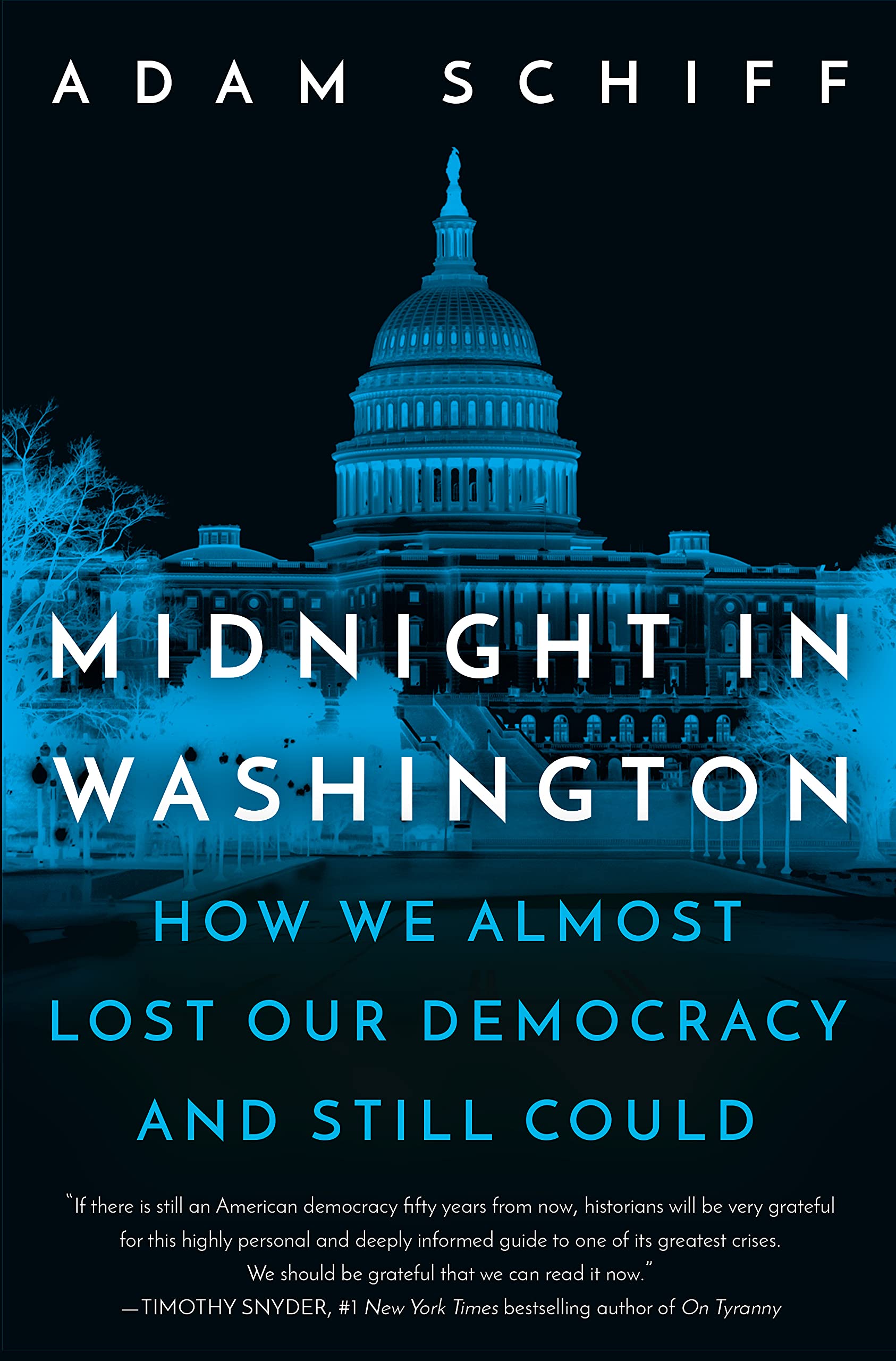
Book cover of Midnight in Washington

Midnight in Washington Summary

Humanity & Culture

By Adam Schiff

Random House · October 12, 2021

Summary

Adam Schiff's 'Midnight in Washington' is a captivating exploration of the nation's capital when the sun sets. As the clock strikes midnight, Washington, D.C., takes on a new persona. The book peels back the layers of the city's officialdom and politics, offering a rare glimpse into the nocturnal activities that shape the country's destiny. Schiff, with his insider knowledge, weaves together a narrative that combines real-life events and the undercurrents of power that flow through the city's corridors. Whether it's the hushed conversations in dimly lit offices or the strategic maneuvers made under the veil of night, 'Midnight in Washington' brings to life the unseen side of the political landscape. It's not just about the politicians; it's about the city itself, a place where history is made 24/7. This is a book that will keep you up at night, not out of fear, but out of a deep-seated curiosity about what truly goes on in the heart of American power.

About the Author

Adam Schiff is a well-known American politician and author. He writes in the political and non-fiction realm. His work "Midnight in Washington" features in-depth political insights presented in a clear and engaging style.

Chapters

1

Introduction to "Midnight in Washington"

"Midnight in Washington" by Adam Schiff offers a deep-dive into the political landscape of Washington, D.C. It provides a comprehensive view of the power struggles, policy-making processes, and the implications of political decisions on the nation. This book is not just a recount of events but also an analysis of how the political system operates at the highest levels.

2

The Political Arena in Washington

Washington, D.C. is the heart of American politics. It is a place where different political ideologies clash and where decisions are made that can shape the future of the nation. In this arena, politicians, lobbyists, and interest groups all play significant roles. Politicians strive to gain power and influence, often through a complex web of relationships and negotiations. Lobbyists work to promote the interests of their clients, whether they are large corporations or advocacy groups. Interest groups, on the other hand, try to sway public opinion and government policies in their favor. The power dynamics in Washington are constantly changing. New political players emerge, and old ones fade away. The balance of power between the executive, legislative, and judicial branches is a delicate one. For example, the executive branch has the power to propose and implement policies, but the legislative branch has the power to approve or reject them. The judicial branch can also step in to interpret laws and ensure that they are constitutional.

3

The Role of Congress

Congress is a crucial part of the political system in Washington. It is composed of two chambers: the Senate and the House of Representatives. The Senate has 100 members, two from each state, while the House of Representatives has 435 members, with the number from each state based on its population. Congress is responsible for making laws. Members of Congress introduce bills, which then go through a series of committees and votes. The process can be long and complex, with many opportunities for debate and amendment. In addition to law-making, Congress also has the power to oversee the executive branch. It can hold hearings, conduct investigations, and demand information from government agencies. The political parties in Congress play a significant role in the legislative process. Democrats and Republicans often have different views on issues such as healthcare, taxation, and foreign policy. These differences can lead to gridlock, where it becomes difficult to pass legislation. However, there are also times when the two parties can come together to reach a compromise.

4

The Executive Branch

The executive branch is headed by the President of the United States. The President has a wide range of powers, including the power to propose legislation, veto bills, and command the military. The President also appoints key officials, such as cabinet members and federal judges. The President's role in foreign policy is particularly important. The United States is a global superpower, and the President has the responsibility of representing the country on the international stage. The President can negotiate treaties, make diplomatic agreements, and use military force when necessary. The executive branch also includes various government agencies, such as the Department of State, the Department of Defense, and the Department of Treasury. These agencies are responsible for implementing the policies of the President and the government. They play a crucial role in areas such as national security, economic development, and international relations.

5

The Judicial Branch

The judicial branch is responsible for interpreting the law. The Supreme Court is the highest court in the United States, and its decisions have a far-reaching impact on the nation. The Supreme Court has the power of judicial review, which means it can declare laws unconstitutional. The appointment of Supreme Court justices is a highly political process. The President nominates justices, and the Senate must confirm them. The ideological leanings of the justices can have a significant impact on the court's decisions. For example, a more conservative-leaning court may be more likely to uphold traditional values and limit government intervention, while a more liberal-leaning court may be more likely to support social change and expand individual rights. Lower federal courts also play an important role in the judicial system. They handle a wide range of cases, from criminal trials to civil disputes. These courts apply the law and make decisions that can affect the lives of individuals and businesses.

5 more chapters available

Continue listening in the Spickor app — free download on the App Store.

Listen in App

Why Spickor?

At Spickor, we believe knowledge should have no paywalls. Every book summary can be unlocked for free by watching a short ad — or you can choose an ad-free subscription. Unlike other apps, there's no "1 book per day" free limit. Learn at your own pace, on your own terms.

FeatureSpickorBlinkistHeadway
Free accessAll books free via ad unlock1 book/day only1 book/day only
Book library2,200+ across 8 categories9,000+ (non-fiction only)2,000+ (personal growth focus)
Paid subscriptionNo forced subscription; ad-supportedRequired; from $99.99/yrRequired; from $89.99/yr
Audio for all summariesYesPremium onlyPremium only
Novels & fictionYesNoNo
PlatformsiOS (Android & Web in dev)iOS / Android / WebiOS / Android only

All Books, Truly Free

Unlock any book with a short ad. No daily limits, no hidden fees.

Listen for Free

Every summary includes high-quality audio. No "premium only" labels.

Beyond Self-Help

8 categories including business, technology, and novels.

Listen in App
9 m 52 s