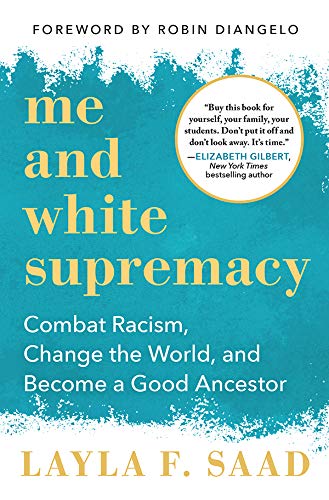
Book cover of Me and White Supremacy

Me and White Supremacy Summary

Humanity & Culture

By Layla F. Saad

Sourcebooks · January 28, 2020

Summary

"Me and White Supremacy" by Layla F. Saad is a groundbreaking book that delves deep into the complex issue of white supremacy. In today's society, racial inequality remains a pressing problem, and this book provides a unique approach to addressing it. The author presents 28 days of prompts, each designed to encourage self-examination. These prompts lead white readers to confront their own privilege, unconscious biases, and the ways in which they may contribute to the system of white supremacy. For non-white readers, it offers a perspective on how to engage in conversations about race with white individuals. The book doesn't shy away from difficult topics. It challenges readers to be honest with themselves and to take actionable steps towards anti-racism. By working through the prompts, readers can gain a deeper understanding of the racial dynamics in their lives and society at large. It's not just a theoretical exploration but a practical guide for real change. Whether you're new to the conversation about race or have been actively involved in anti-racist work, this book offers valuable insights and a path forward.

About the Author

Layla F. Saad is an author and anti-racism educator. She focuses on writing about racial justice. Her style in "Me and White Supremacy" is direct and thought-provoking, guiding readers to confront uncomfortable truths.

Chapters

1

Introduction: Confronting White Supremacy

White supremacy is a deeply ingrained system that permeates all aspects of society. It's not just about blatant acts of racism but also about the subtle, everyday ways in which white people benefit from a system that privileges them. This book is a call to action for white people to recognize their role in upholding white supremacy and to take steps to dismantle it.The first step is to understand that white supremacy is not just an individual problem but a systemic one. It's built into the very fabric of our institutions, laws, and cultural norms. For example, in the criminal justice system, black people are more likely to be arrested, convicted, and receive harsher sentences than white people for the same crimes. In education, black students often face discrimination and lack access to quality resources.White people need to acknowledge that they have unearned privileges simply because of their skin color. These privileges can include things like not being followed in a store, having access to better job opportunities, and being less likely to be pulled over by the police. By recognizing these privileges, white people can start to understand the ways in which they contribute to the maintenance of white supremacy.


2

Understanding White Privilege

White privilege is a set of unearned advantages that white people have in society. It's not something that white people necessarily asked for, but it's something that they benefit from nonetheless. One of the most important aspects of white privilege is the ability to move through the world without having to think about race on a daily basis.For example, white people can turn on the TV and see people who look like them represented in a positive light. They can go to the library and find books written by authors who share their race. They can walk into a store and not be treated with suspicion because of their skin color. These are all things that black people and other people of color often don't have.Another aspect of white privilege is the ability to be oblivious to the experiences of people of color. White people can choose to ignore the racism and discrimination that people of color face because it doesn't directly affect them. This lack of awareness can lead to a sense of complacency and a failure to take action to address the problem.To truly understand white privilege, white people need to listen to the experiences of people of color. They need to be willing to have uncomfortable conversations and to challenge their own assumptions. By doing so, they can start to break down the barriers that prevent them from seeing the world from the perspective of people of color.

3

The Impact of White Supremacy on People of Color

White supremacy has a profound impact on the lives of people of color. It affects their physical, mental, and emotional well-being. In terms of physical health, people of color are more likely to experience stress-related illnesses due to the constant exposure to racism. For example, black people are more likely to suffer from high blood pressure and heart disease, which can be linked to the chronic stress of living in a racist society.Mentally, the constant microaggressions and discrimination that people of color face can lead to anxiety, depression, and low self-esteem. Microaggressions are subtle, often unconscious acts of discrimination, such as being asked where you're really from when you're a native-born citizen. These small acts can add up over time and have a significant impact on a person's mental health.Emotionally, people of color often feel a sense of anger, frustration, and helplessness. They see the injustice around them and feel that their voices are not being heard. This can lead to a sense of isolation and a lack of trust in the system.White people need to understand the real-world consequences of white supremacy on people of color. By doing so, they can start to take responsibility for their role in perpetuating this system and work towards creating a more just and equitable society.

4

Recognizing Implicit Bias

Implicit bias refers to the unconscious attitudes and stereotypes that people have about different groups of people. Everyone has implicit biases, regardless of their race. These biases can influence our decisions, actions, and interactions with others.For white people, implicit bias can lead to discriminatory behavior, even if they don't consciously intend to be racist. For example, a white hiring manager might unconsciously favor a white candidate over a black candidate because of implicit biases about intelligence or work ethic.To recognize implicit bias, white people need to engage in self-reflection. They can take implicit bias tests, which are designed to measure the strength of their unconscious associations. These tests can help white people become more aware of their biases and start to take steps to overcome them.It's also important for white people to be mindful of their language and actions. They should avoid using language that reinforces stereotypes and should challenge others when they see discriminatory behavior. By being more aware of their implicit biases, white people can start to make more conscious and inclusive decisions.

5

Taking Responsibility

White people need to take responsibility for their role in upholding white supremacy. This means acknowledging that they have benefited from the system and that they have a moral obligation to work towards its dismantling.Taking responsibility involves more than just feeling guilty. It requires action. White people can start by educating themselves about the history of racism and white supremacy in their country. They can read books, watch documentaries, and attend workshops to learn more about the experiences of people of color.White people also need to use their privilege to advocate for change. They can speak up against racism in their communities, support policies that promote equality, and use their influence to create a more inclusive environment. For example, they can support black-owned businesses, vote for politicians who are committed to racial justice, and mentor young people of color.In addition, white people need to be accountable for their actions. If they make a mistake or engage in discriminatory behavior, they should apologize and take steps to correct it. They should also be open to feedback from people of color and use it as an opportunity to learn and grow.

5 more chapters available

Continue listening in the Spickor app — free download on the App Store.

Listen in App

Why Spickor?

At Spickor, we believe knowledge should have no paywalls. Every book summary can be unlocked for free by watching a short ad — or you can choose an ad-free subscription. Unlike other apps, there's no "1 book per day" free limit. Learn at your own pace, on your own terms.

FeatureSpickorBlinkistHeadway
Free accessAll books free via ad unlock1 book/day only1 book/day only
Book library2,200+ across 8 categories9,000+ (non-fiction only)2,000+ (personal growth focus)
Paid subscriptionNo forced subscription; ad-supportedRequired; from $99.99/yrRequired; from $89.99/yr
Audio for all summariesYesPremium onlyPremium only
Novels & fictionYesNoNo
PlatformsiOS (Android & Web in dev)iOS / Android / WebiOS / Android only

All Books, Truly Free

Unlock any book with a short ad. No daily limits, no hidden fees.

Listen for Free

Every summary includes high-quality audio. No "premium only" labels.

Beyond Self-Help

8 categories including business, technology, and novels.

Listen in App
11 m 59 s