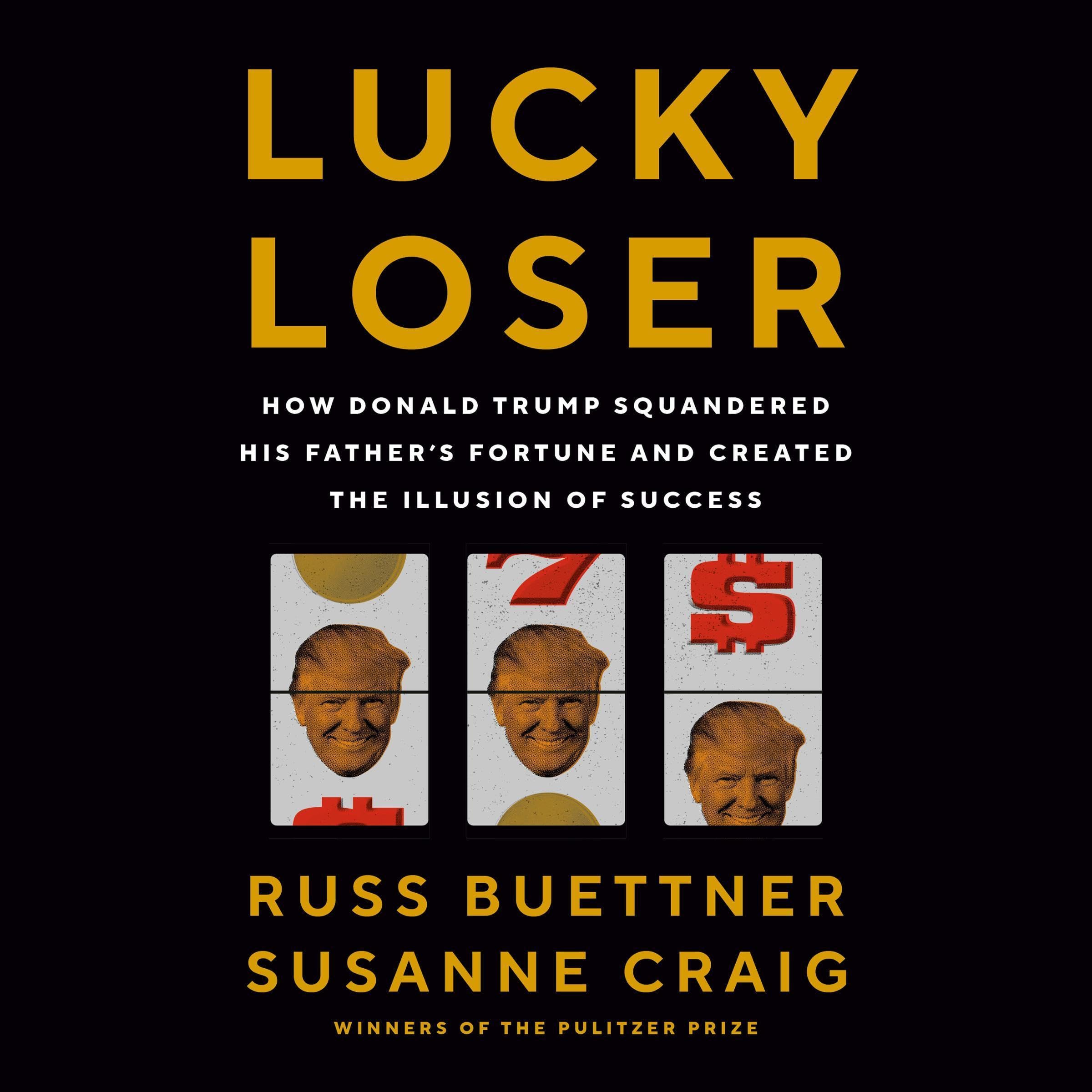
Book cover of Lucky Loser

Lucky Loser Summary

Humanity & Culture

By Russ Buettner & Susanne Craig

Penguin Audio · September 17, 2024

Summary

Lucky Loser, penned by Russ Buettner and Susanne Craig, is a remarkable literary work that offers a fresh perspective on a variety of subjects. The authors masterfully blend real-life stories and engaging narratives to create a book that is both entertaining and insightful. As you turn the pages, you'll find yourself immersed in a world filled with unique characters and compelling situations. The book doesn't just tell a story; it makes you think about different aspects of life and the choices we make. Whether it's through the exploration of personal experiences or broader social issues, Lucky Loser has something to offer every reader. It's a book that can be enjoyed in a cozy corner or during a commute, and it will leave you with a lot to ponder long after you've finished reading.

About the Author

Russ Buettner and Susanne Craig are journalists. They focus on investigative writing. Their style in "Lucky Loser" is detailed and fact-based, presenting in-depth research and real-life stories.

Chapters

1

Introduction to "Lucky Loser"

"Lucky Loser" is a book co-written by Russ Buettner and Susanne Craig. This book delves into the complex and often controversial financial and business world, uncovering hidden truths and revealing the real-life stories behind some well-known figures. It presents a detailed account of how certain individuals navigate through the ups and downs of the business and financial arenas, and how they manage to turn what seems like losses into opportunities. The book offers a unique perspective on the nature of success and failure in the business world, challenging conventional wisdom and providing valuable insights for anyone interested in business, finance, or the stories of those who have made their mark in these fields.


2

The Concept of "Lucky Loser"

The term "Lucky Loser" refers to those who, on the surface, appear to be losers in business or financial matters but, in reality, are able to find hidden advantages in their so-called losses. These individuals may face setbacks such as business failures, financial losses, or legal troubles. However, they possess the ability to learn from these experiences and turn them into something positive. For example, a businessperson might lose a major contract but use that setback as an opportunity to re-evaluate their business strategy, focus on new markets, or develop new products. This concept challenges the traditional view that failure is always a negative outcome. Instead, it suggests that failure can be a stepping-stone to future success. In the business world, many successful entrepreneurs have experienced multiple failures before achieving their goals. The "Lucky Loser" concept encourages us to look at failure from a different perspective and see the potential for growth and opportunity within it.

3

The Financial World Unveiled

The book takes a deep dive into the financial world, exploring how various financial instruments and practices work. It explains complex financial concepts in an easy-to-understand way. For instance, it discusses the role of banks, investment firms, and financial regulators in the economy. It also looks at how financial markets operate, including the stock market, bond market, and derivatives market. The authors show how these markets can be both a source of opportunity and a place of risk. In the financial world, there are often hidden agendas and power plays. Some financial institutions may engage in unethical practices to maximize their profits, while others may be more focused on providing stable and reliable services to their clients. The book reveals these dynamics, helping readers understand the inner workings of the financial system and how to navigate it safely. It also highlights the importance of financial literacy, as individuals need to be able to make informed decisions about their money in this complex environment.

4

Business Strategies of the "Lucky Losers"

The "Lucky Losers" in the book employ a variety of business strategies to turn their losses into gains. One common strategy is diversification. By spreading their investments across different industries and asset classes, they reduce the risk of being overly exposed to a single market or company. For example, a real-estate investor might also invest in stocks, bonds, and small businesses. Another strategy is innovation. When faced with a setback, these individuals often look for new and creative ways to solve problems. They may develop new products or services, or find new ways to market existing ones. Additionally, they are not afraid to take risks. They understand that in order to achieve great success, they need to step outside of their comfort zones. However, they also manage these risks carefully, conducting thorough research and analysis before making any major decisions. These business strategies are not only applicable to large-scale businesses but can also be used by small business owners and individual investors.

5

The Role of Networking

Networking plays a crucial role in the lives of the "Lucky Losers." They understand the importance of building relationships with other businesspeople, investors, and industry experts. Through networking, they can gain access to valuable information, resources, and opportunities. For example, a businessperson might meet a potential investor at a networking event, which could lead to a new funding opportunity for their business. Networking also allows them to learn from others' experiences. They can share ideas, get feedback on their business plans, and stay updated on the latest industry trends. In addition, a strong network can provide support during difficult times. When a "Lucky Loser" faces a setback, their network of contacts can offer advice, encouragement, and even financial assistance. Building and maintaining a network requires time and effort, but it can be a powerful tool for success in the business world.

5 more chapters available

Continue listening in the Spickor app — free download on the App Store.

Listen in App

Why Spickor?

At Spickor, we believe knowledge should have no paywalls. Every book summary can be unlocked for free by watching a short ad — or you can choose an ad-free subscription. Unlike other apps, there's no "1 book per day" free limit. Learn at your own pace, on your own terms.

FeatureSpickorBlinkistHeadway
Free accessAll books free via ad unlock1 book/day only1 book/day only
Book library2,200+ across 8 categories9,000+ (non-fiction only)2,000+ (personal growth focus)
Paid subscriptionNo forced subscription; ad-supportedRequired; from $99.99/yrRequired; from $89.99/yr
Audio for all summariesYesPremium onlyPremium only
Novels & fictionYesNoNo
PlatformsiOS (Android & Web in dev)iOS / Android / WebiOS / Android only

All Books, Truly Free

Unlock any book with a short ad. No daily limits, no hidden fees.

Listen for Free

Every summary includes high-quality audio. No "premium only" labels.

Beyond Self-Help

8 categories including business, technology, and novels.

Listen in App
9 m 50 s