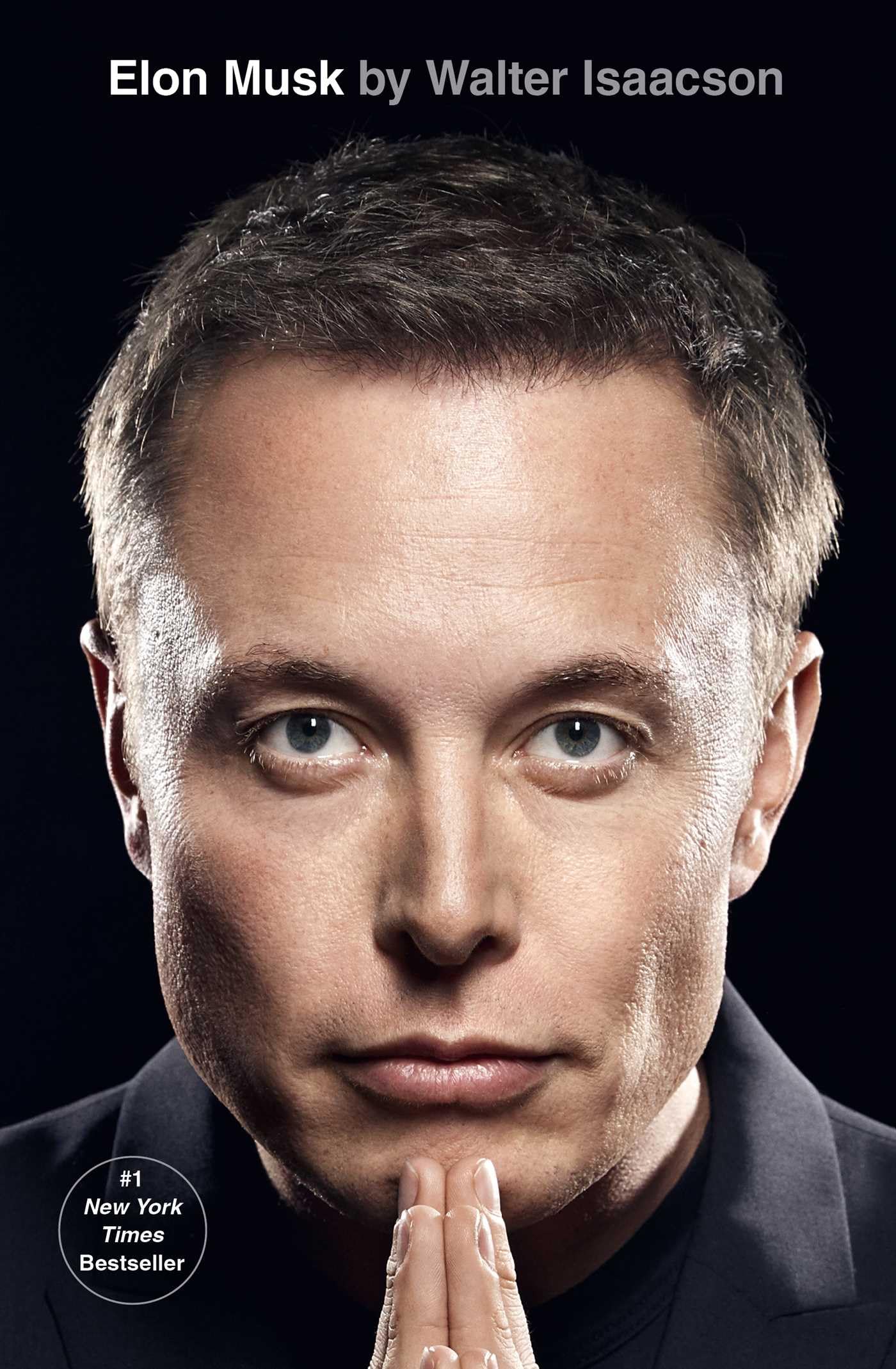
Book cover of Elon Musk

Elon Musk Summary

Humanity & Culture

By Walter Isaacson

Simon & Schuster · September 12, 2023

Summary

Walter Isaacson's "Elon Musk" is a captivating biography that takes readers on an extraordinary journey through the life of one of the most influential figures of our time. Isaacson, renowned for his biographies of other great minds, has had exclusive access to Musk, his family, friends, and colleagues. This allows for a rich and detailed portrait of the man behind the companies like Tesla and SpaceX. The book explores Musk's early years in South Africa, his move to the United States, and his rapid rise in the tech world. It shows how his unwavering belief in innovation has led him to take on seemingly impossible challenges, from revolutionizing the automotive industry with electric cars to making space travel more accessible. Along the way, we see Musk's struggles, his failures, and his remarkable ability to bounce back. It's a story of ambition, perseverance, and the pursuit of a better future. Whether you're interested in technology, business, or simply the human spirit, this book offers a fascinating look at a man who is shaping the world we live in.

About the Author

Walter Isaacson is a well-known biographer. He specializes in writing biographies of influential figures. His style is detailed and engaging, as seen in his work "Elon Musk", vividly presenting the subject's life and achievements.

Chapters

1

Introduction to Elon Musk

Elon Musk is a name that has become synonymous with innovation and disruption in the 21st century. He is the CEO of Tesla, SpaceX, Neuralink, and The Boring Company, and his influence spans across multiple industries, including automotive, aerospace, energy, and technology. This book delves deep into the life and mind of Elon Musk, exploring his early years, his business ventures, and his vision for the future.Musk's story begins in South Africa, where he was born in 1971. His childhood was marked by a love for learning and a curiosity about the world. He was an avid reader, devouring books on science, technology, and philosophy. This early exposure to knowledge laid the foundation for his future success. As a young man, Musk moved to the United States to pursue his education at the University of Pennsylvania, where he earned degrees in physics and economics.After graduation, Musk co-founded Zip2, a company that provided business directories and maps to newspapers. This venture was a success, and in 1999, Compaq acquired Zip2 for $307 million. Musk's share of the deal was around $22 million, which he used to co-found X.com, an online payment company. X.com later became PayPal, and in 2002, eBay acquired PayPal for $1.5 billion. Musk received $165 million from the sale, which gave him the financial resources to pursue his more ambitious dreams.

2

The Birth of SpaceX

SpaceX, or Space Exploration Technologies Corp., was founded by Elon Musk in 2002 with the goal of reducing space transportation costs and enabling the colonization of Mars. At the time, the space industry was dominated by government agencies like NASA, and the idea of a private company entering the space race seemed far-fetched.Musk's vision for SpaceX was to create reusable rockets, a concept that had not been fully realized before. The first few launches of SpaceX's Falcon 1 rocket were failures, but Musk refused to give up. He believed that failure was an essential part of the learning process. After several attempts, the Falcon 1 became the first privately-developed liquid-fueled rocket to reach orbit in 2008.This achievement was a game-changer in the space industry. It demonstrated that a private company could compete with government-run space programs. SpaceX went on to develop the Falcon 9 rocket, which is capable of carrying payloads to the International Space Station (ISS). The Falcon 9 also introduced the concept of reusable first-stage boosters, which significantly reduced the cost of space launches.In addition to the Falcon rockets, SpaceX is working on the Starship, a fully reusable spacecraft designed for long-distance space travel, including missions to Mars. The Starship has the potential to revolutionize space exploration and make interplanetary travel a reality.

3

The Rise of Tesla

Tesla, founded in 2003, is another of Elon Musk's most well-known ventures. The company's mission is to accelerate the world's transition to sustainable energy. When Tesla was first founded, electric cars were seen as slow, expensive, and impractical. Musk had a different vision. He wanted to create high-performance electric vehicles that could compete with traditional gasoline-powered cars.The first Tesla vehicle, the Roadster, was based on the Lotus Elise chassis. It was a sports car that could go from 0 to 60 mph in under four seconds, challenging the perception that electric cars were slow. The Roadster was followed by the Model S, a luxury sedan that set new standards for electric vehicle range and performance.Tesla's success was not without challenges. The company faced production issues, supply-chain problems, and skepticism from the automotive industry. However, Musk's determination and innovative approach helped Tesla overcome these obstacles. The Model 3, a more affordable electric car, was a game-changer for the company. It made electric vehicles accessible to a wider audience and helped Tesla become one of the most valuable car companies in the world.In addition to cars, Tesla is also involved in energy storage with its Powerwall and Powerpack products. These products store energy from renewable sources like solar panels, making it possible for homes and businesses to use clean energy even when the sun isn't shining.

4

Neuralink and the Future of Brain-Machine Interface

Neuralink is a neurotechnology company founded by Elon Musk in 2016. The company's goal is to develop implantable brain-machine interfaces (BMIs) that can enhance human cognitive abilities and treat neurological disorders.The concept of a brain-machine interface is not new, but Neuralink aims to take it to the next level. The company is developing a technology called the "Link," which is a tiny, flexible electrode array that can be implanted into the brain. The Link is designed to record and stimulate neural activity, allowing for a direct connection between the brain and external devices.One of the potential applications of Neuralink's technology is to help people with paralysis. By using the Link, individuals with spinal cord injuries could control prosthetic limbs or other devices using their thoughts. Another application is to enhance human cognition. For example, it could potentially allow people to learn new skills faster or have access to information directly in their minds.However, Neuralink's technology also raises ethical and privacy concerns. There are questions about how the data collected from the brain will be used and who will have access to it. Musk and his team are aware of these concerns and are working to develop ethical guidelines for the use of their technology.

5

The Boring Company and Urban Transportation

The Boring Company was founded by Elon Musk in 2016 with the goal of reducing traffic congestion in urban areas. The company's solution is to build underground tunnels for high-speed transportation.The idea behind The Boring Company is to create a network of tunnels that can accommodate autonomous electric vehicles. These vehicles would travel at high speeds in the tunnels, bypassing surface traffic. The company's first project was a test tunnel in Hawthorne, California.Building tunnels is a challenging and expensive process. Traditional tunneling methods are slow and costly, but The Boring Company is working on developing new tunneling technologies to make the process faster and more cost-effective. For example, the company is using a tunneling machine called the Prufrock, which is designed to dig tunnels more efficiently.The Boring Company's vision is to create a transportation system that is fast, efficient, and environmentally friendly. If successful, it could revolutionize urban transportation and change the way people commute in cities.

5 more chapters available

Continue listening in the Spickor app — free download on the App Store.

Listen in App

Why Spickor?

At Spickor, we believe knowledge should have no paywalls. Every book summary can be unlocked for free by watching a short ad — or you can choose an ad-free subscription. Unlike other apps, there's no "1 book per day" free limit. Learn at your own pace, on your own terms.

FeatureSpickorBlinkistHeadway
Free accessAll books free via ad unlock1 book/day only1 book/day only
Book library2,200+ across 8 categories9,000+ (non-fiction only)2,000+ (personal growth focus)
Paid subscriptionNo forced subscription; ad-supportedRequired; from $99.99/yrRequired; from $89.99/yr
Audio for all summariesYesPremium onlyPremium only
Novels & fictionYesNoNo
PlatformsiOS (Android & Web in dev)iOS / Android / WebiOS / Android only

All Books, Truly Free

Unlock any book with a short ad. No daily limits, no hidden fees.

Listen for Free

Every summary includes high-quality audio. No "premium only" labels.

Beyond Self-Help

8 categories including business, technology, and novels.

Listen in App
12 m 32 s