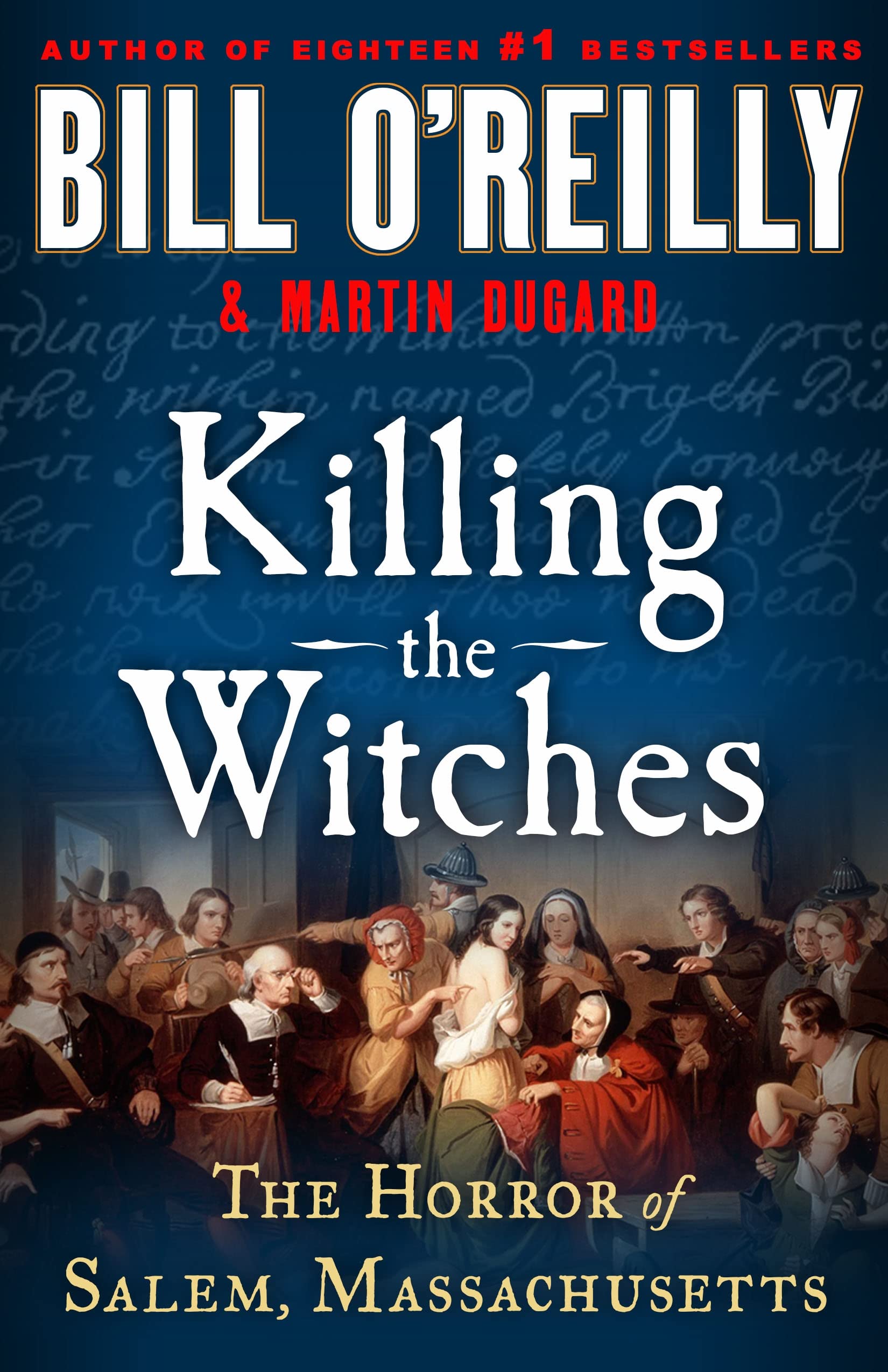
Book cover of Killing the Witches

Killing the Witches Summary

Humanity & Culture

By Bill O'Reilly

St. Martin's Press · September 26, 2023

Summary

"Killing the Witches" by Bill O'Reilly and Martin Dugard is a captivating exploration of the witch-hunts that occurred in Europe and America. The authors paint a detailed picture of a time when fear and superstition reigned supreme. People were accused of witchcraft based on the flimsiest of evidence, and the resulting trials often led to brutal executions. Through meticulous research, O'Reilly and Dugard uncover the social, political, and religious factors that contributed to these widespread persecutions. They show how the power dynamics of the time, combined with the general ignorance and fear of the unknown, led to the mass hysteria. The book not only tells the stories of the victims but also the people who played key roles in the witch-hunts, from the accusers to the judges. It is a chilling reminder of how easily society can turn on its own members. As readers delve into the pages of this book, they will gain a deeper understanding of this dark period in history and the lasting impact it has had on our culture.

About the Author

Bill O'Reilly, a well-known journalist, and Martin Dugard, an author, co-wrote "Killing the Witches". Their writing combines historical facts with engaging storytelling, presenting history in an accessible and captivating way.

Chapters

1

Introduction

"Killing the Witches" is a captivating historical narrative co-written by Bill O'Reilly and Martin Dugard. The book delves into the dark and often misunderstood era of the Salem witch trials. It takes readers on a journey back to 17th-century Massachusetts, where fear, superstition, and religious fervor combined to create a perfect storm of hysteria.The story begins with the small village of Salem, a community deeply rooted in Puritan beliefs. The Puritans were a strict religious group that adhered to a rigid set of moral and religious codes. In this environment, any deviation from the norm was seen as a sign of evil or witchcraft. The book explores how this religious and social context set the stage for the events that would follow.

2

The Initial Hysteria

In the early 1692, a group of young girls in Salem began to exhibit strange behavior. They would contort their bodies, make strange noises, and claim to be possessed by evil spirits. These symptoms were quickly attributed to witchcraft, and the girls accused several local women of being witches. The first to be accused was Tituba, a slave from Barbados. Tituba's confession under pressure, whether genuine or coerced, further fueled the growing panic.The accusations spread like wildfire throughout the village. People who were once respected members of the community found themselves being labeled as witches. The local authorities, driven by fear and a desire to maintain order, launched a full-scale investigation into the alleged witchcraft. The legal process at the time was far from fair, with little evidence required to convict someone of witchcraft.

3

The Legal Process

The legal system during the Salem witch trials was severely flawed. The courts relied heavily on spectral evidence, which was based on the idea that the devil could take the form of an innocent person and torment others. This meant that a person could be accused simply because someone claimed to have seen their "specter" causing harm.The trials were often chaotic and emotional. Accused witches were subjected to harsh interrogations and were expected to confess. Those who refused to confess were often tortured or imprisoned. The judges in these cases were influenced by the public's fear and the religious beliefs of the time. As a result, many innocent people were found guilty and sentenced to death.

4

The Role of the Community

The community of Salem played a significant role in the witch trials. Neighbors turned against neighbors, and families were torn apart. The fear of witchcraft created a climate of suspicion and mistrust. People were quick to point fingers at others, often for personal gain or to settle old scores.Some members of the community actively participated in the witch-hunting. They would attend the trials, cheer for the convictions, and even provide false testimony. Others, however, were more skeptical. There were a few brave individuals who spoke out against the injustice of the trials, but their voices were often drowned out by the hysteria.

5

The Impact on Women

The Salem witch trials had a disproportionate impact on women. The majority of those accused and convicted were women. In Puritan society, women were already seen as the weaker sex, more susceptible to the influence of the devil. The accusations often targeted women who were independent, outspoken, or did not conform to the traditional gender roles.These women were not only at risk of losing their lives but also their reputations. Their families were also affected, as they were shunned by the community. The trials had a long-lasting impact on the status of women in Salem and beyond, highlighting the vulnerability of women in a patriarchal society.

5 more chapters available

Continue listening in the Spickor app — free download on the App Store.

Listen in App

Why Spickor?

At Spickor, we believe knowledge should have no paywalls. Every book summary can be unlocked for free by watching a short ad — or you can choose an ad-free subscription. Unlike other apps, there's no "1 book per day" free limit. Learn at your own pace, on your own terms.

FeatureSpickorBlinkistHeadway
Free accessAll books free via ad unlock1 book/day only1 book/day only
Book library2,200+ across 8 categories9,000+ (non-fiction only)2,000+ (personal growth focus)
Paid subscriptionNo forced subscription; ad-supportedRequired; from $99.99/yrRequired; from $89.99/yr
Audio for all summariesYesPremium onlyPremium only
Novels & fictionYesNoNo
PlatformsiOS (Android & Web in dev)iOS / Android / WebiOS / Android only

All Books, Truly Free

Unlock any book with a short ad. No daily limits, no hidden fees.

Listen for Free

Every summary includes high-quality audio. No "premium only" labels.

Beyond Self-Help

8 categories including business, technology, and novels.

Listen in App
7 m 15 s