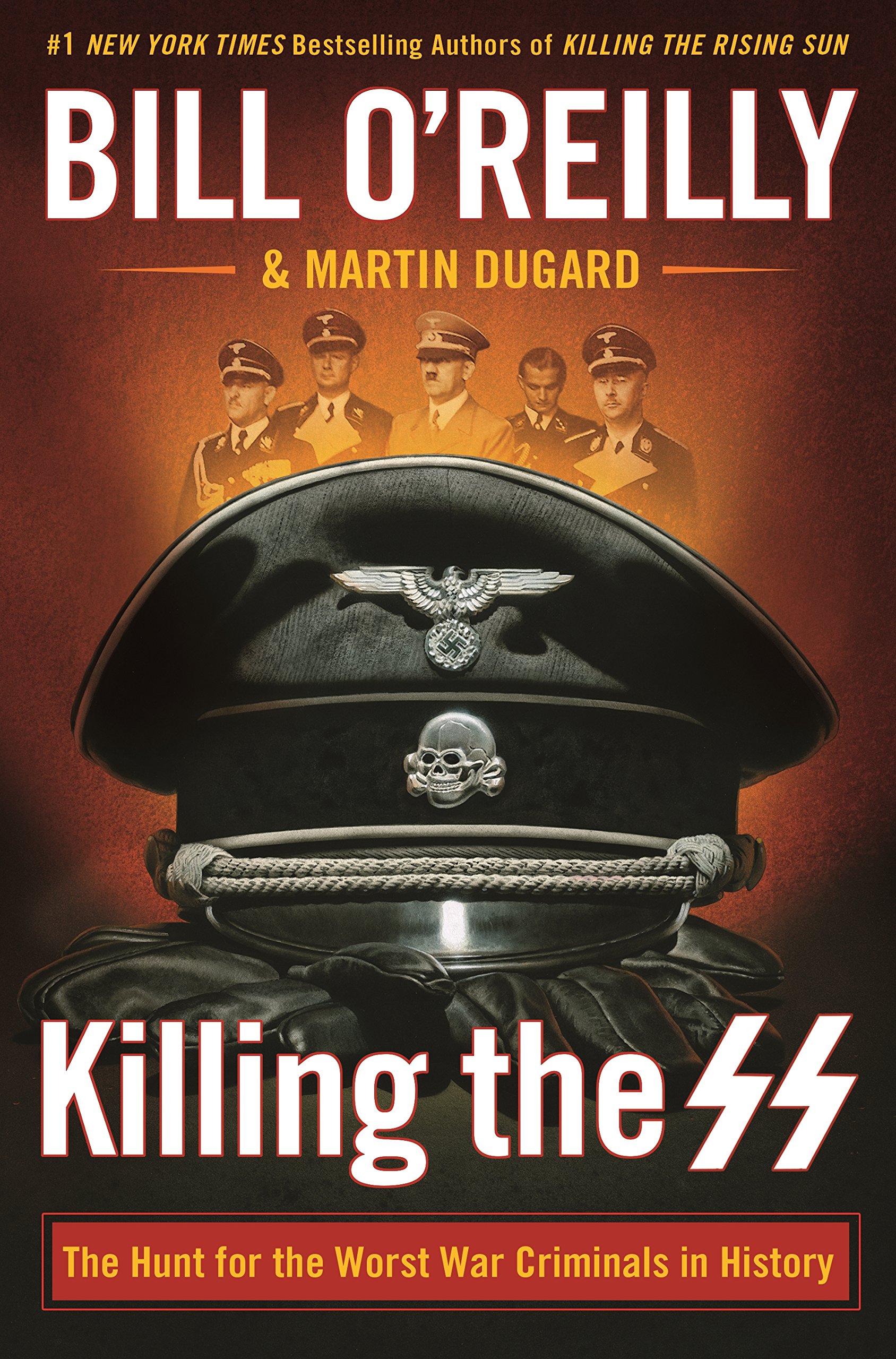
Book cover of Killing the SS

Killing the SS Summary

Humanity & Culture

By Martin Dugard

Henry Holt and Co. · October 9, 2018

Summary

"Killing the SS" by Bill O'Reilly and Martin Dugard is a riveting exploration of the final days of the SS, the infamous paramilitary organization of Nazi Germany. The book begins by setting the stage, highlighting the SS's role in the atrocities of World War II. As the war nears its end, the SS finds itself on the verge of collapse. The authors meticulously detail the efforts to hunt down SS leaders, from the intense manhunts to the trials that followed. O'Reilly and Dugard delve deep into the personalities of the key SS figures, showing both their power-hungry nature and their desperation as their world crumbled. Through extensive research and engaging storytelling, they bring to life the historical events that led to the downfall of the SS. It's not just a story of vengeance but also a reflection on the nature of power, evil, and the lasting impact of the Holocaust. This book provides a comprehensive look at a dark chapter in history, making it a must-read for those interested in World War II history. The narrative flows smoothly, balancing historical facts with a sense of drama. It offers a unique perspective on how the Allied forces worked to bring justice to the world after the war. Whether you're a history buff or just looking for an engaging read, "Killing the SS" will keep you hooked from start to finish.

About the Author

Bill O'Reilly and Martin Dugard are well-known authors. They focus on historical non-fiction. Their writing style is vivid and engaging, bringing historical events in books like "Killing the SS" to life.

Chapters

1

Introduction: The SS and Its Infamy

The SS, or Schutzstaffel, was a powerful and feared organization within Nazi Germany. It played a central role in the implementation of Hitler's genocidal policies and other atrocities during World War II. This book, "Killing the SS" by Bill O'Reilly and Martin Dugard, delves into the story of how the SS was brought to justice and ultimately destroyed.The SS was founded in 1925 as a small paramilitary unit of the Nazi Party. Over time, it grew in size and power, becoming a vast organization with its own military, police, and intelligence branches. The SS was responsible for some of the most heinous crimes in human history, including the Holocaust, mass shootings, and the operation of concentration camps.As the war neared its end, the Allied forces were determined to hold the SS accountable for its actions. This led to a long and arduous process of tracking down and prosecuting SS members, as well as dismantling the organization itself.


2

The Rise of the SS

The SS began as a small group of bodyguards for Adolf Hitler. Under the leadership of Heinrich Himmler, it quickly expanded and became a key part of the Nazi regime. Himmler was a fanatical ideologue who believed in the superiority of the Aryan race and was determined to create a pure German nation.The SS was involved in a wide range of activities, from security and intelligence to the administration of concentration camps. It had its own military force, the Waffen-SS, which fought on the front lines during the war. The SS also played a major role in the persecution of Jews, Roma, homosexuals, and other groups deemed "undesirable" by the Nazi regime.The SS's power and influence grew steadily throughout the 1930s and 1940s. It became a state within a state, with its own laws, courts, and prisons. The SS was also involved in economic activities, such as the exploitation of slave labor in the concentration camps.

3

The Holocaust and SS Atrocities

The Holocaust was the systematic murder of approximately six million Jews by the Nazi regime, with the SS playing a central role in its implementation. The SS was responsible for rounding up Jews from all over Europe and transporting them to concentration camps, where they were either killed immediately or used as slave labor.In addition to the Jews, the SS also targeted other groups, including Roma, homosexuals, disabled people, and political opponents. The SS carried out mass shootings, gassings, and other forms of mass murder in an effort to eliminate these groups.The concentration camps were a key part of the SS's genocidal program. Camps such as Auschwitz, Treblinka, and Dachau were designed to kill as many people as possible in the most efficient way. The SS guards at these camps were often extremely brutal, and the conditions in the camps were appalling.

4

The Allied Advance and the Collapse of the SS

As the Allied forces advanced into Germany in 1944 and 1945, the SS faced a growing crisis. The organization was stretched thin, and many of its members were demoralized. The Allied bombing campaigns had also taken a toll on the SS's infrastructure and resources.The SS tried to resist the Allied advance, but it was ultimately unable to stop the tide of the war. As the Allied forces closed in on Berlin, Hitler committed suicide, and the Nazi regime began to collapse. The SS members began to flee, trying to avoid capture and prosecution.The Allied forces quickly moved to capture and interrogate SS members. Many of the top SS leaders were arrested and brought to trial at the Nuremberg Trials. These trials were a major step in holding the SS accountable for its crimes.

5

The Nuremberg Trials

The Nuremberg Trials were a series of military tribunals held in Nuremberg, Germany, from 1945 to 1946. The trials were designed to prosecute the major war criminals of the Nazi regime, including many SS leaders.The trials were based on the principles of international law and aimed to establish the guilt of the defendants for crimes against peace, war crimes, and crimes against humanity. The prosecution presented a vast amount of evidence, including eyewitness testimony, documents, and photographs, to prove the SS's involvement in atrocities.Many of the SS leaders were found guilty and sentenced to death or long-term imprisonment. The Nuremberg Trials set an important precedent for holding individuals accountable for international crimes and helped to shape the development of international law.

5 more chapters available

Continue listening in the Spickor app — free download on the App Store.

Listen in App

Why Spickor?

At Spickor, we believe knowledge should have no paywalls. Every book summary can be unlocked for free by watching a short ad — or you can choose an ad-free subscription. Unlike other apps, there's no "1 book per day" free limit. Learn at your own pace, on your own terms.

FeatureSpickorBlinkistHeadway
Free accessAll books free via ad unlock1 book/day only1 book/day only
Book library2,200+ across 8 categories9,000+ (non-fiction only)2,000+ (personal growth focus)
Paid subscriptionNo forced subscription; ad-supportedRequired; from $99.99/yrRequired; from $89.99/yr
Audio for all summariesYesPremium onlyPremium only
Novels & fictionYesNoNo
PlatformsiOS (Android & Web in dev)iOS / Android / WebiOS / Android only

All Books, Truly Free

Unlock any book with a short ad. No daily limits, no hidden fees.

Listen for Free

Every summary includes high-quality audio. No "premium only" labels.

Beyond Self-Help

8 categories including business, technology, and novels.

Listen in App
8 m 49 s