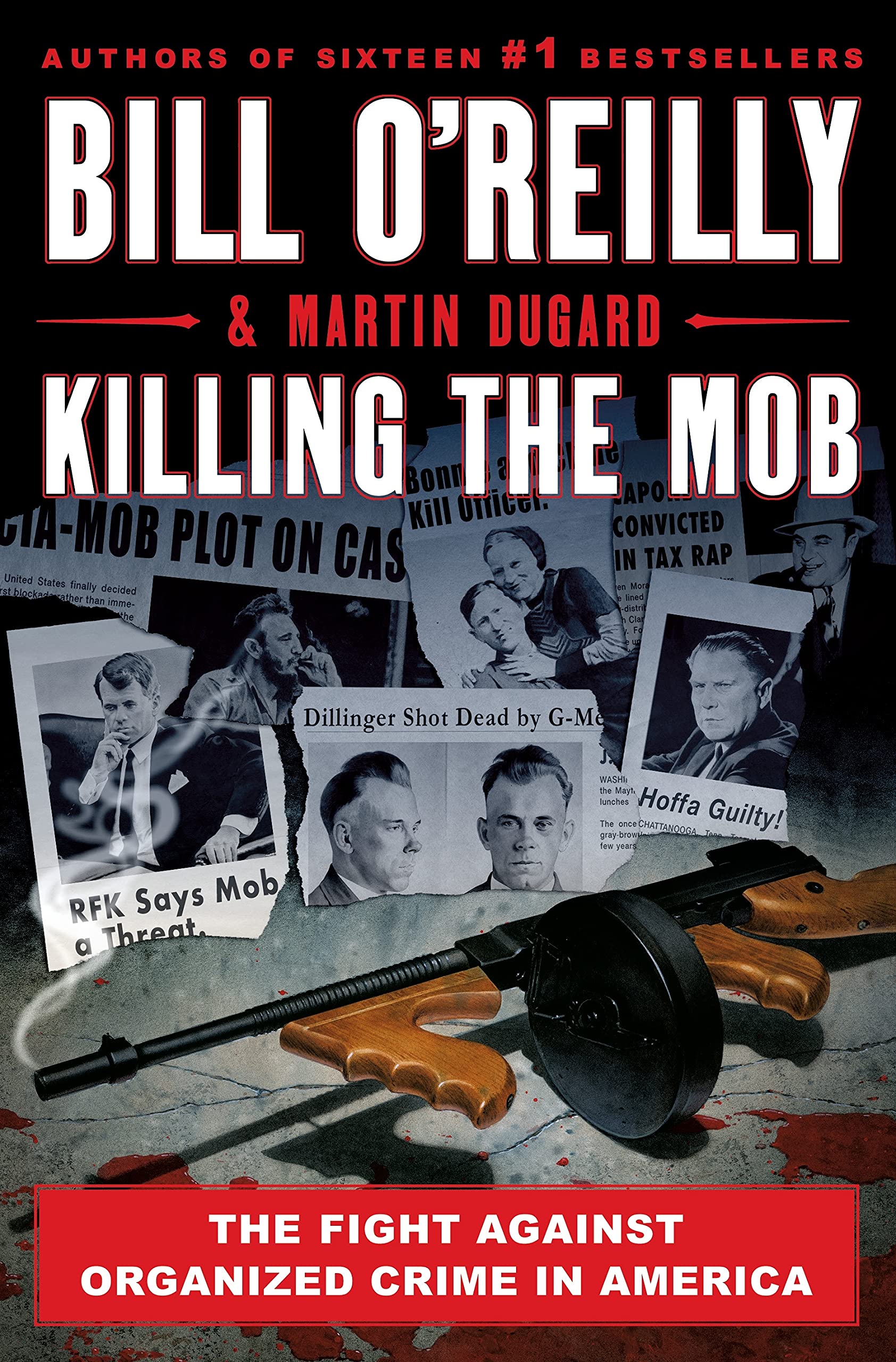
Book cover of Killing the Mob

Killing the Mob Summary

Humanity & Culture

By Martin Dugard

St. Martin's Press · May 4, 2021

Summary

"Killing the Mob" by Bill O'Reilly and Martin Dugard is a captivating account of the American mafia. The book delves deep into the history of organized crime in the United States. It starts by introducing the early days of the mob, when it first established its roots and began to exert its influence over various industries. The authors describe how the mobsters built their empires, using violence, intimidation, and corruption. As the story progresses, we see the law-enforcement agencies' growing determination to take down these criminal organizations. The book details the high-stakes battles between the mob and the police, including the famous investigations and trials that led to the downfall of many notorious mob bosses. Through well-researched and engaging storytelling, O'Reilly and Dugard bring to life the characters and events that shaped the mob's history. Whether it's the power struggles within the mafia families or the heroic efforts of the detectives and agents, every page is filled with suspense and intrigue. It's not just a book about crime; it's a reflection of a significant part of American history and the constant fight against lawlessness.

About the Author

Bill O'Reilly and Martin Dugard are well-known authors. They focus on historical non-fiction. Their writing style is engaging, blending facts with vivid storytelling, as seen in "Killing the Mob".

Chapters

1

Introduction to the Mob

The book "Killing the Mob" delves into the history and downfall of the American Mafia. The Mafia, also known as the Cosa Nostra, was a powerful criminal organization that had a significant influence on various aspects of American society, especially in the early to mid-20th century.The Mafia originated in Sicily and was brought to the United States by Italian immigrants. In the U.S., it quickly established itself in major cities like New York, Chicago, and Las Vegas. The organization was involved in a wide range of illegal activities, including extortion, gambling, prostitution, and drug trafficking. It operated through a strict hierarchical structure, with a boss at the top, followed by underbosses, capos, and soldiers.The power of the Mafia was based on fear and intimidation. They controlled entire neighborhoods and businesses, and anyone who dared to oppose them faced severe consequences. For example, they would often use violence to enforce their will, such as bombings, shootings, and kidnappings. This made them a force to be reckoned with in the criminal underworld.

2

The Rise of the Mob

The early days of the Mafia in America were marked by a series of power struggles and alliances. In the 1920s and 1930s, Prohibition provided a lucrative opportunity for the Mafia. The illegal production and sale of alcohol became a major source of income for the organization. They set up large-scale bootlegging operations, using speakeasies to distribute their products.During this period, the Mafia also expanded its influence into other areas. They started to control labor unions, using them to gain access to construction projects and other industries. By threatening and bribing union leaders, they were able to ensure that their members got the jobs and that the projects ran smoothly.The Mafia's power continued to grow in the post-World War II era. They became involved in the casino business in Las Vegas, which was a new and rapidly growing industry. The Mafia bosses saw an opportunity to make huge profits from gambling, and they used their influence to get a foothold in the city. They built and controlled many of the major casinos, and their presence in Las Vegas was a symbol of their power and reach.

3

Key Mob Figures

There were several key figures in the history of the Mafia. One of the most well-known was Al Capone. Capone was the boss of the Chicago Outfit, one of the most powerful Mafia organizations in the country. He was known for his flamboyant lifestyle and his ruthless approach to business. Capone's organization was involved in a wide range of criminal activities, including bootlegging, prostitution, and murder. His most famous act was the St. Valentine's Day Massacre in 1929, where seven members of a rival gang were killed.Another important figure was Lucky Luciano. Luciano is often credited with modernizing the Mafia. He was the first to establish the Commission, a governing body that regulated the activities of the various Mafia families. Luciano also played a key role in the heroin trade, which became a major source of income for the Mafia in the mid-20th century.Vito Genovese was also a significant figure. He was a powerful boss who was involved in many criminal activities, including drug trafficking and labor racketeering. Genovese was known for his paranoia and his willingness to use violence to eliminate his enemies.

4

Law Enforcement's Struggle

Law enforcement agencies faced many challenges in their efforts to combat the Mafia. The Mafia was a highly organized and secretive organization, and it was difficult for the police to gather evidence against them. The members of the Mafia were bound by a code of silence, known as Omertà, which made it almost impossible to get them to testify against each other.In the early days, law enforcement often used traditional methods such as surveillance and raids. However, these methods were not very effective against the Mafia. The Mafia had informants within the police department, and they were able to stay one step ahead of the law.As time went on, law enforcement agencies started to use more sophisticated techniques. They began to focus on wiretapping and other forms of electronic surveillance. They also started to work with informants, offering them protection and financial incentives in exchange for information. These new methods began to yield results, and law enforcement was able to make some significant arrests.

5

The Role of the Media

The media played a crucial role in the fight against the Mafia. Newspapers and magazines often reported on the activities of the Mafia, bringing their crimes to the public's attention. This helped to create public pressure for law enforcement to take action against the organization.The media also played a role in shaping public perception of the Mafia. Movies and television shows often portrayed the Mafia as glamorous and powerful, which sometimes led to a romanticized view of the organization. However, at the same time, the media also exposed the brutal and criminal nature of the Mafia, which helped to turn public opinion against them.In addition, the media was instrumental in covering the trials of Mafia members. These trials were often high-profile events, and the media coverage helped to ensure that the public was aware of the evidence against the Mafia and the justice being served.

5 more chapters available

Continue listening in the Spickor app — free download on the App Store.

Listen in App

Why Spickor?

At Spickor, we believe knowledge should have no paywalls. Every book summary can be unlocked for free by watching a short ad — or you can choose an ad-free subscription. Unlike other apps, there's no "1 book per day" free limit. Learn at your own pace, on your own terms.

FeatureSpickorBlinkistHeadway
Free accessAll books free via ad unlock1 book/day only1 book/day only
Book library2,200+ across 8 categories9,000+ (non-fiction only)2,000+ (personal growth focus)
Paid subscriptionNo forced subscription; ad-supportedRequired; from $99.99/yrRequired; from $89.99/yr
Audio for all summariesYesPremium onlyPremium only
Novels & fictionYesNoNo
PlatformsiOS (Android & Web in dev)iOS / Android / WebiOS / Android only

All Books, Truly Free

Unlock any book with a short ad. No daily limits, no hidden fees.

Listen for Free

Every summary includes high-quality audio. No "premium only" labels.

Beyond Self-Help

8 categories including business, technology, and novels.

Listen in App
10 m 19 s