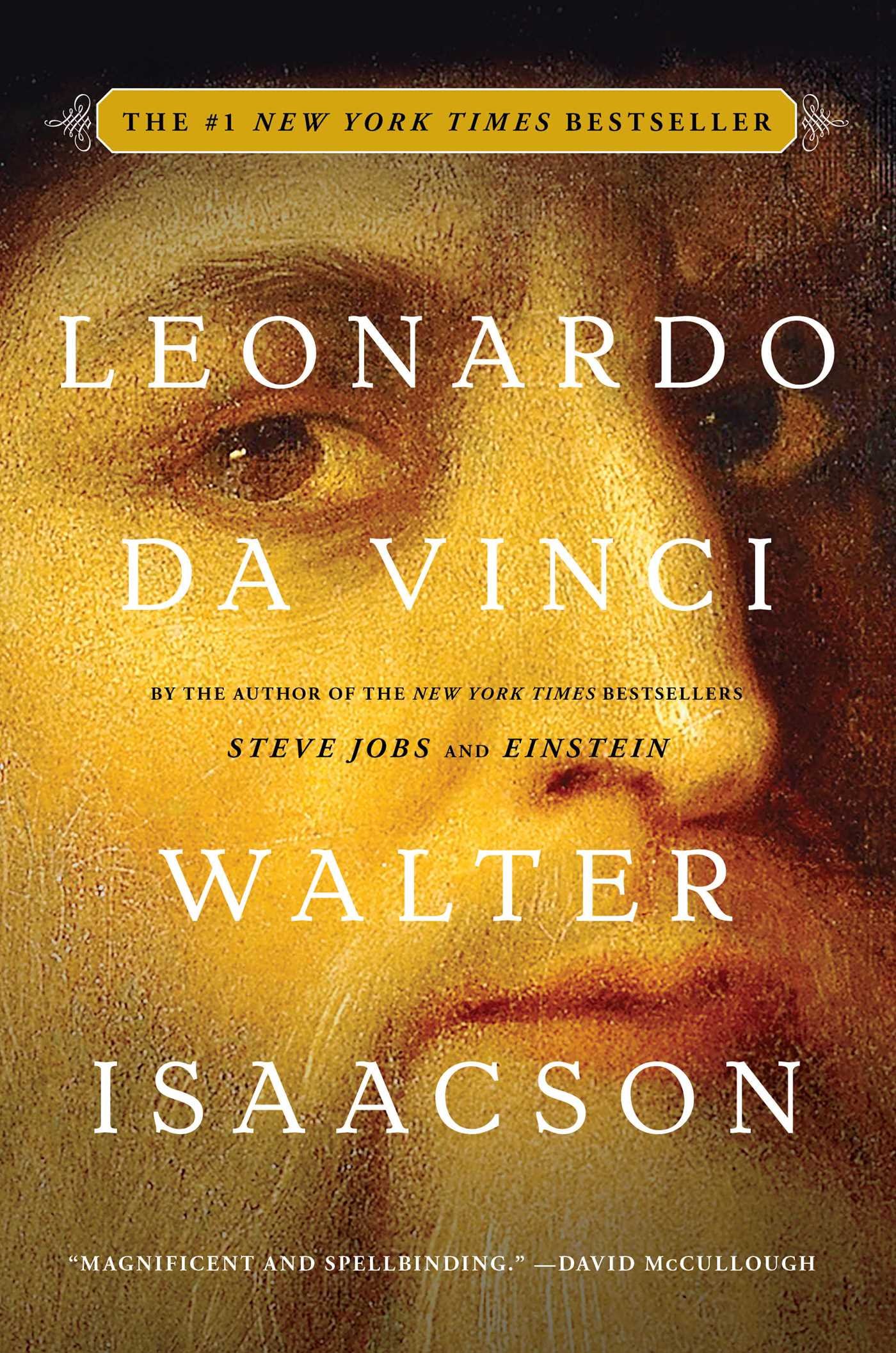
Book cover of Leonardo da Vinci

Leonardo da Vinci Summary

Humanity & Culture

By Walter Isaacson

Simon & Schuster · October 17, 2017

Summary

Walter Isaacson's "Leonardo da Vinci" is a captivating exploration of the life and mind of the iconic Renaissance polymath. Through meticulous research and engaging storytelling, Isaacson brings Leonardo to life, revealing the man behind the masterpieces. The book delves into Leonardo's childhood, his artistic apprenticeship, and his insatiable curiosity about the natural world. It details his numerous inventions, from flying machines to military contraptions, and his contributions to fields such as anatomy and engineering. Isaacson also explores Leonardo's relationships, including his interactions with other artists and thinkers of the time. By examining Leonardo's notebooks and works, the author provides a window into the creative process of one of history's greatest geniuses. Whether you're an art enthusiast, a history buff, or simply interested in the human capacity for innovation, this book offers a fascinating look at a man who changed the world.

About the Author

Walter Isaacson is a well-known biographer. He specializes in writing biographies of influential figures. His style is detailed, engaging, and presents complex lives in an accessible way, as seen in his work "Leonardo da Vinci".

Chapters

1

Introduction to Leonardo da Vinci

Leonardo da Vinci is one of the most well-known figures in history, a true Renaissance man. His influence spans multiple fields, including art, science, engineering, and anatomy. This book delves deep into his life, exploring the factors that shaped his genius. Leonardo was born in 1452 in Vinci, a small town in Tuscany, Italy. His illegitimate birth didn't stop him from achieving great things. From a young age, he showed a remarkable talent for drawing and observing the world around him.As a child, Leonardo was exposed to nature, which had a profound impact on his later work. He spent hours observing plants, animals, and the changing weather. This love for nature led him to study the natural world in great detail. His early apprenticeship in the workshop of Andrea del Verrocchio was a crucial step in his development. In Verrocchio's workshop, he learned the techniques of painting, sculpture, and metalworking. He also had the opportunity to work on large-scale projects, which honed his skills and gave him confidence.Leonardo's inquisitive mind was always seeking new knowledge. He was not satisfied with the traditional ways of thinking. He questioned everything and was determined to find answers through his own observations and experiments. This spirit of inquiry would become a defining characteristic of his work throughout his life.

2

Artistic Masterpieces

Leonardo's artistic works are some of the most famous in the world. The "Mona Lisa" is perhaps his most iconic painting. The enigmatic smile of the Mona Lisa has captivated viewers for centuries. Leonardo used a technique called sfumato, which creates a soft, hazy effect. This gives the painting a sense of depth and realism. The way he painted the Mona Lisa's hands, for example, is incredibly detailed, showing his mastery of anatomy and his ability to capture the subtleties of the human form.Another masterpiece is "The Last Supper." This large-scale mural depicts the moment when Jesus Christ announces that one of his disciples will betray him. Leonardo carefully arranged the figures to create a sense of drama and movement. Each disciple has a distinct expression, showing their emotions at this crucial moment. The use of perspective in "The Last Supper" is also remarkable. It makes the viewer feel as if they are part of the scene, sitting at the table with the disciples.Leonardo's art was not just about creating beautiful images. He used his paintings to convey deeper meanings. For example, in many of his works, he incorporated symbols and hidden messages. These symbols often related to his scientific and philosophical interests. His art was a way for him to express his ideas about the world, combining beauty with intellectual depth.

3

Scientific Exploration

Leonardo was also a pioneer in scientific exploration. He was interested in a wide range of scientific fields, including astronomy, geology, and hydraulics. In astronomy, he made observations of the moon and stars. He realized that the moon reflected sunlight and that the Earth was not the center of the universe, long before Galileo.In geology, Leonardo studied rocks and fossils. He hypothesized that the Earth was much older than previously thought. He also noticed that the layers of rock could tell a story about the Earth's history. His studies of fossils led him to conclude that they were the remains of ancient organisms, a revolutionary idea at the time.Hydraulics was another area of his interest. He designed various water-related inventions, such as canals, locks, and pumps. His designs were based on a deep understanding of the properties of water and how it flowed. He also studied the movement of water in rivers and the sea, which was important for improving navigation and water management.Leonardo's scientific work was often ahead of his time. He conducted experiments and made detailed observations, but he didn't always publish his findings. Many of his scientific notes were only discovered long after his death, which means that his contributions to science were not fully recognized during his lifetime.

4

Engineering Inventions

Leonardo was a brilliant engineer. He designed a wide range of inventions, some of which were far ahead of the technology of his time. One of his most famous inventions was the flying machine. He studied the flight of birds and designed a machine that he hoped would allow humans to fly. Although his flying machine was never built during his lifetime, it was a remarkable concept. His design included wings that were inspired by the shape of bird wings and a system for controlling the movement of the machine.He also designed military inventions. For example, he created plans for a tank, which was a revolutionary idea in the 15th century. The tank was designed to be a heavily armored vehicle that could move forward and fire cannons. Another military invention was the giant crossbow, which was much larger and more powerful than traditional crossbows.In addition to these, Leonardo designed various machines for construction and manufacturing. He came up with ideas for cranes, winches, and other tools that could make work more efficient. His engineering designs were based on a combination of his scientific knowledge and his artistic skills. He was able to visualize complex structures and create detailed plans for their construction.

5

Anatomy Studies

Leonardo's studies of anatomy were extremely important. He was one of the first people to conduct detailed dissections of human bodies. He did this to understand the structure and function of the human body. His dissections were not just for the sake of art, although they did help him to create more realistic paintings. He was genuinely interested in the scientific aspects of anatomy.He studied the muscles, bones, and organs of the human body. He made detailed drawings of the human skeleton, showing the different bones and how they were connected. His drawings of the muscles were also very accurate, showing how they worked together to produce movement. He even studied the internal organs, such as the heart and the lungs, trying to understand how they functioned.Leonardo's anatomical studies had a significant impact on both art and science. In art, his knowledge of anatomy allowed him to create more lifelike and accurate figures. In science, his work contributed to the understanding of the human body, which was still in its early stages during the Renaissance. His detailed drawings and observations were used by other scientists and artists for centuries to come.

5 more chapters available

Continue listening in the Spickor app — free download on the App Store.

Listen in App

Why Spickor?

At Spickor, we believe knowledge should have no paywalls. Every book summary can be unlocked for free by watching a short ad — or you can choose an ad-free subscription. Unlike other apps, there's no "1 book per day" free limit. Learn at your own pace, on your own terms.

FeatureSpickorBlinkistHeadway
Free accessAll books free via ad unlock1 book/day only1 book/day only
Book library2,200+ across 8 categories9,000+ (non-fiction only)2,000+ (personal growth focus)
Paid subscriptionNo forced subscription; ad-supportedRequired; from $99.99/yrRequired; from $89.99/yr
Audio for all summariesYesPremium onlyPremium only
Novels & fictionYesNoNo
PlatformsiOS (Android & Web in dev)iOS / Android / WebiOS / Android only

All Books, Truly Free

Unlock any book with a short ad. No daily limits, no hidden fees.

Listen for Free

Every summary includes high-quality audio. No "premium only" labels.

Beyond Self-Help

8 categories including business, technology, and novels.

Listen in App
13 m 00 s