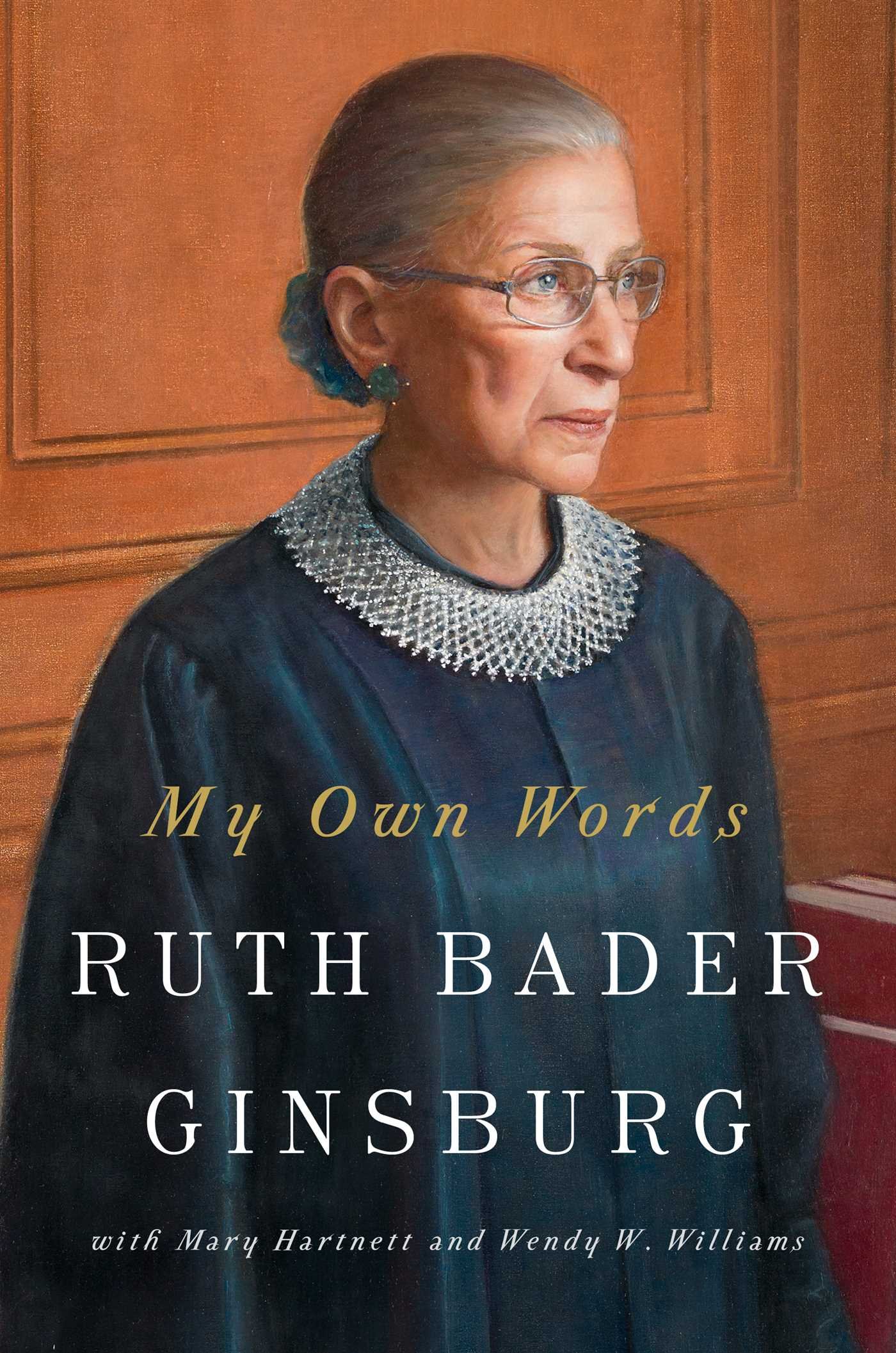
Book cover of My Own Words

My Own Words Summary

Humanity & Culture

By Ruth Bader Ginsburg

Simon & Schuster · October 4, 2016

Summary

"My Own Words" is a captivating compilation of the thoughts and insights of Ruth Bader Ginsburg, one of the most influential figures in American legal history. As a Supreme Court Justice, Ginsburg dedicated her life to advocating for gender equality and social justice. In this book, she shares her personal and professional journey, from her early days as a law student to her tenure on the highest court in the land. Through her speeches, writings, and interviews, readers get a rare glimpse into the mind of a legal giant. Her words are not only a testament to her legal acumen but also a source of inspiration for those who believe in the power of the law to bring about positive change. Whether you're interested in law, women's rights, or simply looking for an engaging read, "My Own Words" is a must-have. It offers a profound understanding of the legal battles that have shaped our society and the role that one person can play in making a difference.

About the Author

Ruth Bader Ginsburg was a renowned U.S. Supreme Court Justice. Her writing in "My Own Words" reflects her legal expertise. Her style is precise, rational, and deeply rooted in the pursuit of justice.

Chapters

1

Introduction to Ruth Bader Ginsburg

Ruth Bader Ginsburg was a remarkable figure in American legal history. She was a justice of the Supreme Court of the United States, known for her unwavering commitment to gender equality and civil rights. Her life and work have had a profound impact on the legal landscape of the United States.Ginsburg was born in Brooklyn, New York, in 1933. Growing up, she faced gender-based discrimination, which later became a driving force in her legal career. She graduated from Cornell University and then attended Harvard Law School, where she was one of only nine women in a class of about 500 students. Later, she transferred to Columbia Law School and graduated at the top of her class.Despite her outstanding academic achievements, Ginsburg faced difficulties in finding a job as a lawyer because of her gender. She worked as a law clerk, a professor, and a litigator before being appointed to the federal bench and eventually to the Supreme Court. Her journey from a young woman facing gender barriers to a powerful advocate for equality is an inspiring story.


2

Early Struggles and Education

Ginsburg's early life was marked by challenges. Her mother, Celia Bader, was a strong-willed woman who instilled in her a love for learning and a sense of justice. However, Celia passed away just before Ginsburg's high-school graduation. This loss was a significant blow, but Ginsburg persevered.At Cornell, she met her future husband, Martin Ginsburg. They had a supportive relationship, and Martin was always encouraging of her legal career. When she went to Harvard Law School, she faced a male-dominated environment. The male professors often ignored female students, and the overall atmosphere was not very welcoming.Ginsburg transferred to Columbia Law School, where she continued to excel. She was the first woman to be on the law reviews of both Harvard and Columbia. After graduation, she had a hard time getting a job. Law firms were reluctant to hire women, and she was turned down by many. Eventually, she got a clerkship with a federal judge, which was a crucial step in her legal career.

3

Legal Career Before the Supreme Court

Before joining the Supreme Court, Ginsburg had a long and successful legal career. She became a professor at Rutgers Law School, where she taught courses on gender discrimination and civil rights. She was an early advocate for women's rights, and she used the law as a tool to fight for equality.Ginsburg was also involved in litigation. She was the director of the Women's Rights Project at the American Civil Liberties Union (ACLU). During this time, she argued several important cases before the Supreme Court. One of the most famous cases was Reed v. Reed in 1971. In this case, the Supreme Court ruled that laws that discriminated based on gender were unconstitutional. This was a landmark decision that set the stage for future gender-equality cases.She also argued Frontiero v. Richardson in 1973. In this case, the court held that the military's different treatment of male and female service members was unconstitutional. These cases were part of a series of legal battles that Ginsburg led to challenge gender-based discrimination in various aspects of American life.

4

The Path to the Supreme Court

In 1980, President Jimmy Carter appointed Ginsburg to the United States Court of Appeals for the District of Columbia Circuit. She served on this court for 13 years, during which time she established herself as a thoughtful and fair-minded judge. Her decisions were often based on a careful analysis of the law and a commitment to justice.In 1993, President Bill Clinton nominated Ginsburg to the Supreme Court. Her confirmation process was relatively smooth, and she became the second woman to serve on the Supreme Court. Her presence on the court was significant, as it brought a new perspective on gender-related issues and civil rights.Once on the Supreme Court, Ginsburg continued to fight for equality. She wrote many important opinions, often dissenting when she believed the majority was wrong. Her dissents were powerful and well-reasoned, and they often influenced future legal decisions.

5

Gender Equality and Civil Rights on the Supreme Court

One of Ginsburg's main focuses on the Supreme Court was gender equality. She believed that women should have the same rights and opportunities as men in all areas of life, including education, employment, and family.In cases like United States v. Virginia, Ginsburg wrote the majority opinion. This case involved the Virginia Military Institute's male-only admissions policy. The court ruled that the policy was unconstitutional because it violated the Equal Protection Clause of the Fourteenth Amendment. This decision was a major victory for gender equality, as it opened the door for women to attend all-male institutions.Ginsburg also worked on other civil-rights issues, such as voting rights and LGBTQ+ rights. She was a strong advocate for the rights of marginalized groups, and she used her position on the Supreme Court to push for social change.

5 more chapters available

Continue listening in the Spickor app — free download on the App Store.

Listen in App

Why Spickor?

At Spickor, we believe knowledge should have no paywalls. Every book summary can be unlocked for free by watching a short ad — or you can choose an ad-free subscription. Unlike other apps, there's no "1 book per day" free limit. Learn at your own pace, on your own terms.

FeatureSpickorBlinkistHeadway
Free accessAll books free via ad unlock1 book/day only1 book/day only
Book library2,200+ across 8 categories9,000+ (non-fiction only)2,000+ (personal growth focus)
Paid subscriptionNo forced subscription; ad-supportedRequired; from $99.99/yrRequired; from $89.99/yr
Audio for all summariesYesPremium onlyPremium only
Novels & fictionYesNoNo
PlatformsiOS (Android & Web in dev)iOS / Android / WebiOS / Android only

All Books, Truly Free

Unlock any book with a short ad. No daily limits, no hidden fees.

Listen for Free

Every summary includes high-quality audio. No "premium only" labels.

Beyond Self-Help

8 categories including business, technology, and novels.

Listen in App
9 m 32 s