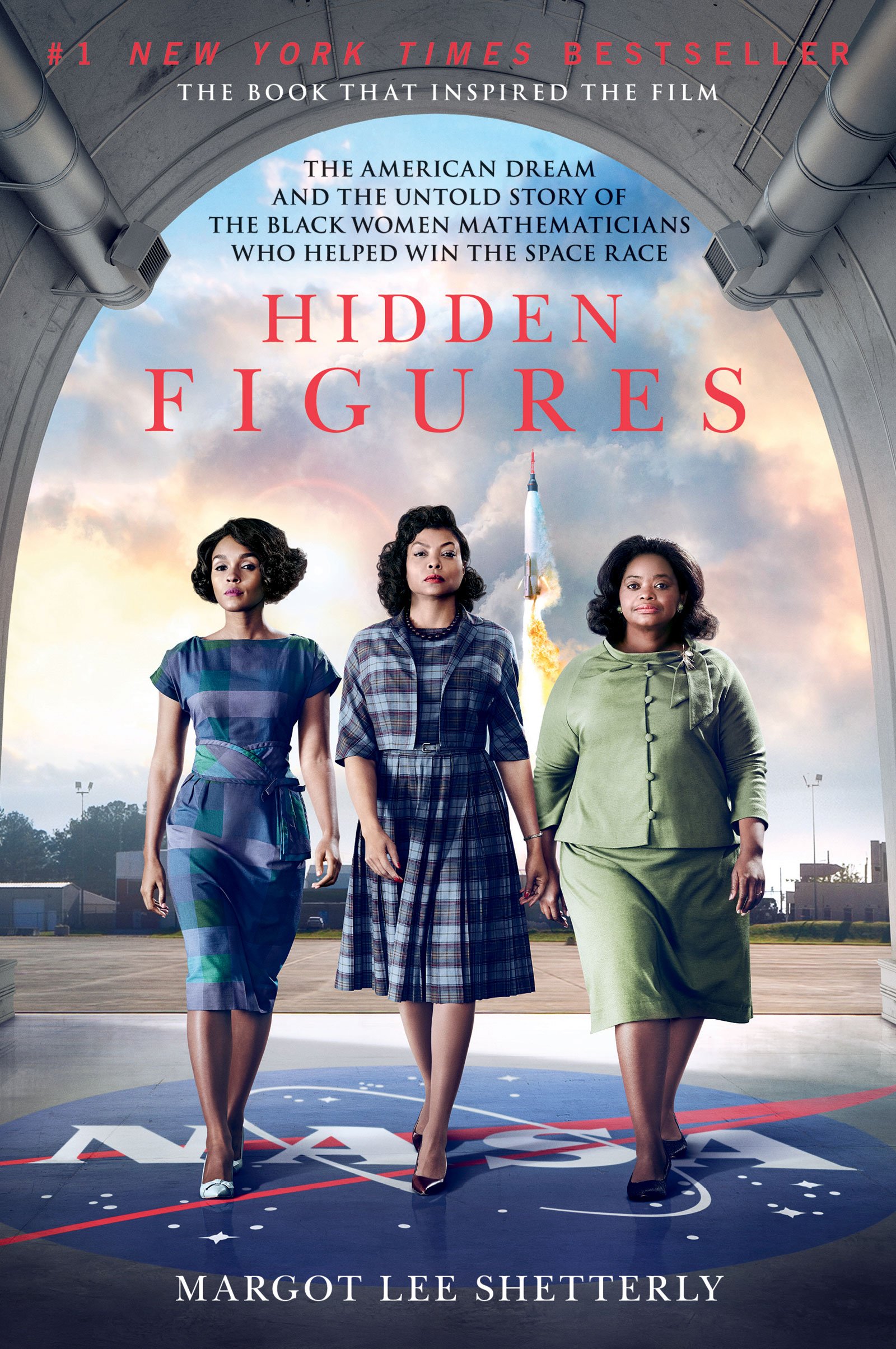
Book cover of Hidden Figures

Hidden Figures Summary

Humanity & Culture

By Margot Lee Shetterly

William Morrow · September 6, 2016

Summary

Hidden Figures, penned by Margot Lee Shetterly, is a captivating non-fiction book that shines a light on an often-forgotten chapter in American history. In the era of the space race, a group of African-American female mathematicians at NASA, known as "human computers," made significant contributions to the United States' space program. Despite facing racial and gender discrimination, these women used their exceptional mathematical skills to solve complex problems, from calculating rocket trajectories to ensuring the safety of astronauts. Shetterly's narrative is both engaging and informative, bringing these remarkable women to life. Through interviews and archival research, she details their struggles and triumphs, highlighting their resilience and determination. The book not only pays tribute to these unsung heroes but also serves as a reminder of the importance of diversity and inclusion in the fields of science, technology, engineering, and mathematics. It's a story that will inspire readers of all ages and backgrounds, showing that with talent and perseverance, one can overcome even the most challenging obstacles.

About the Author

Margot Lee Shetterly is a notable American author. Her writing focuses on historical narratives. She crafts vivid stories, blending research and compelling storytelling, as seen in "Hidden Figures".

Chapters

1

Introduction to Hidden Figures

Hidden Figures is a captivating book written by Margot Lee Shetterly. It tells the true-story of a group of African-American women who played a crucial role in NASA's space program during the mid-20th century. In an era marked by racial segregation and gender discrimination, these women defied the odds and made significant contributions to the United States' space race against the Soviet Union. Their stories not only showcase their individual brilliance but also highlight the broader social and historical context of the time.The book begins by setting the stage in the segregated South, where African-American women faced numerous barriers in education and employment. Despite these challenges, they managed to obtain high-level education in mathematics and related fields. These women, known as "human computers," were responsible for performing complex calculations that were essential for the success of NASA's space missions. Their work was often overlooked and uncredited, but their contributions were vital to the advancement of space technology.


2

The Segregated South and Education

In the segregated South of the 1930s and 1940s, African-American children had limited access to quality education. Schools for black students were underfunded, and the curriculum was often inferior to that of white schools. However, there were some exceptional institutions that provided a high-quality education for African-American students. One such institution was the Hampton Institute, which had a strong mathematics program.At Hampton, young African-American women like Katherine Johnson, Dorothy Vaughan, and Mary Jackson were exposed to rigorous academic training. They were taught advanced mathematics, including calculus and trigonometry, which would later prove invaluable in their work at NASA. These women were not only intelligent but also highly motivated to succeed in a field dominated by white men.Despite the challenges they faced, they persevered. They overcame racial and gender barriers to pursue their education. For example, Mary Jackson had to take special courses at a white-only school to meet the requirements for becoming an engineer. This shows the lengths to which these women were willing to go to achieve their goals.

3

The Early Days at NASA

When World War II broke out, the demand for mathematicians increased significantly. NASA, then known as the National Advisory Committee for Aeronautics (NACA), began hiring women to work as "human computers." African-American women were recruited to work in a segregated unit at Langley Research Center.The work of these women was crucial. They were responsible for calculating trajectories, analyzing data from wind tunnel experiments, and performing other complex mathematical tasks. Their calculations were used to design aircraft and later, spacecraft. Despite their important work, they faced discrimination at the workplace. They had to use separate bathrooms, dining facilities, and even work areas.However, their skills and dedication could not be ignored. As the space race heated up, their contributions became even more significant. They were involved in some of the most important projects at NASA, including the Mercury program, which aimed to send an American into space.

4

The Mercury Program

The Mercury program was a major milestone in the United States' space race. The goal was to send a human being into space and bring them back safely. The success of this program relied heavily on the work of the African-American women at NASA.Katherine Johnson, in particular, played a crucial role. She was responsible for calculating the trajectories for the Mercury missions. Her calculations were so accurate that she was often called upon to double-check the work of the newly developed computers. Her work was essential for the success of the first manned spaceflight by an American, Alan Shepard.The Mercury program also faced many challenges. There were technical difficulties, and there was a lot of pressure to beat the Soviet Union in the space race. The African-American women at NASA worked long hours to ensure that the missions were successful. Their work not only advanced space technology but also helped to break down racial and gender barriers in the scientific community.

5

The Gemini and Apollo Programs

After the success of the Mercury program, NASA moved on to the Gemini and Apollo programs. The Gemini program aimed to develop the technology and techniques necessary for a lunar landing. The Apollo program, of course, had the ultimate goal of landing a man on the moon.The African-American women continued to play important roles in these programs. Dorothy Vaughan, for example, became an expert in programming the new electronic computers that were being used at NASA. She trained other women in programming, which was a new and emerging field at the time.Mary Jackson became the first African-American female engineer at NASA. She worked on aeronautics research and was involved in the design of new aircraft and spacecraft. Her work helped to improve the performance and safety of these vehicles.The Gemini and Apollo programs were complex and required a high level of technical expertise. The African-American women at NASA were able to contribute their skills and knowledge, despite the ongoing discrimination they faced. Their work was essential for the success of these ambitious space missions.

5 more chapters available

Continue listening in the Spickor app — free download on the App Store.

Listen in App

Why Spickor?

At Spickor, we believe knowledge should have no paywalls. Every book summary can be unlocked for free by watching a short ad — or you can choose an ad-free subscription. Unlike other apps, there's no "1 book per day" free limit. Learn at your own pace, on your own terms.

FeatureSpickorBlinkistHeadway
Free accessAll books free via ad unlock1 book/day only1 book/day only
Book library2,200+ across 8 categories9,000+ (non-fiction only)2,000+ (personal growth focus)
Paid subscriptionNo forced subscription; ad-supportedRequired; from $99.99/yrRequired; from $89.99/yr
Audio for all summariesYesPremium onlyPremium only
Novels & fictionYesNoNo
PlatformsiOS (Android & Web in dev)iOS / Android / WebiOS / Android only

All Books, Truly Free

Unlock any book with a short ad. No daily limits, no hidden fees.

Listen for Free

Every summary includes high-quality audio. No "premium only" labels.

Beyond Self-Help

8 categories including business, technology, and novels.

Listen in App
10 m 26 s