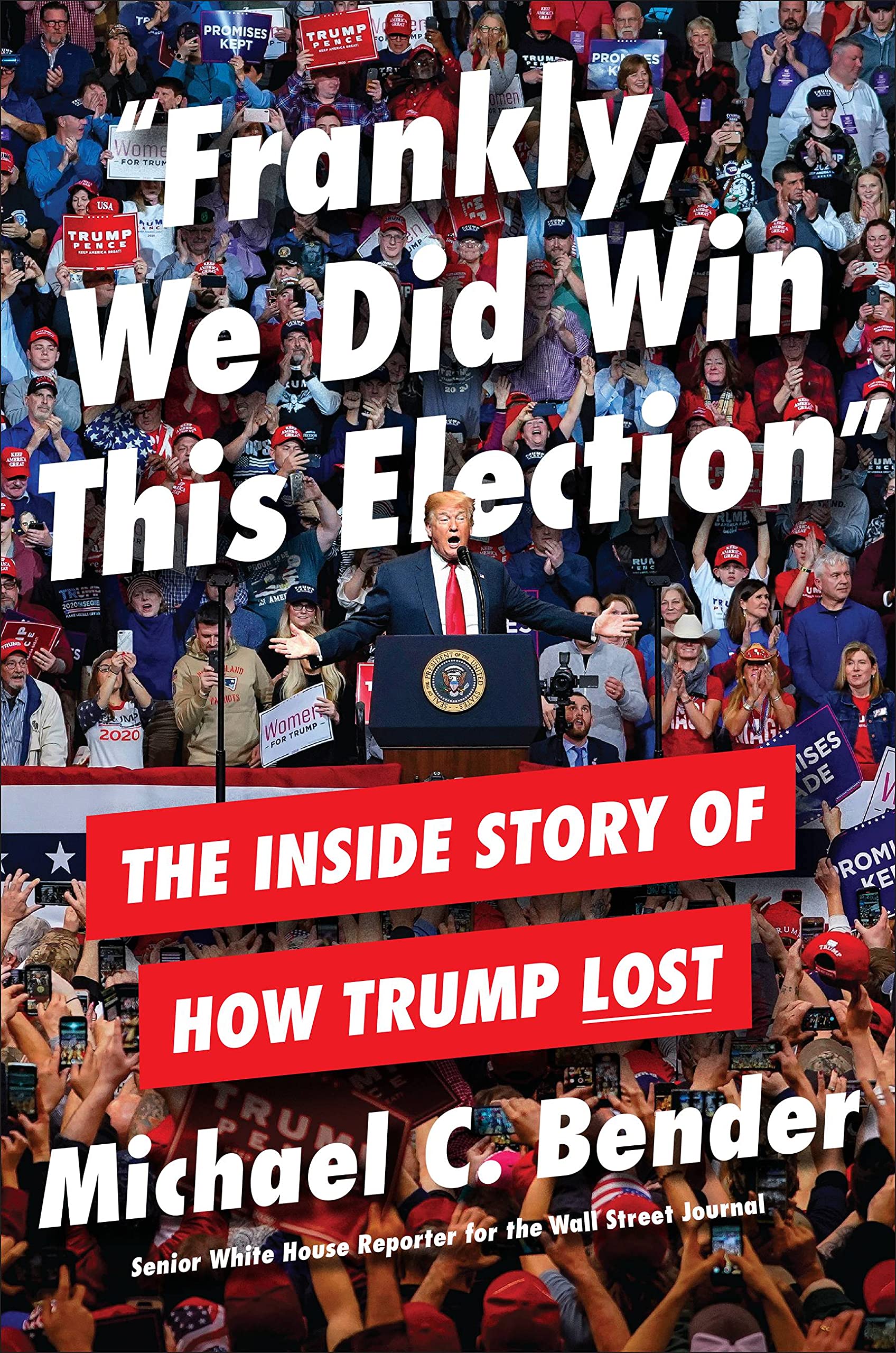
Book cover of Frankly,We Did Win This Election

Frankly,We Did Win This Election Summary

Humanity & Culture

By Michael C. Bender

Twelve · July 13, 2021

Summary

"Frankly, We Did Win This Election" by Michael C. Bender is a captivating exploration of a crucial election. Bender, with his in-depth research and access to inside sources, provides a window into the political arena. The book details the strategies, the power struggles, and the decision-making processes that took place during the election. It shows how different political forces interacted and how the outcome was shaped. Readers will be able to understand the complex web of relationships and interests at play. Whether it's the backroom deals or the public statements, Bender presents a comprehensive view of the election. This isn't just a book about politics; it's a story about power, ambition, and the fight for victory. It offers a fresh look at an event that had a profound impact on the political landscape.

About the Author

Michael C. Bender is a journalist and author. He specializes in political writing. In his work like *Frankly, We Did Win This Election*, his style is straightforward, presenting facts with a clear-cut narrative.

Chapters

1

Introduction

"Frankly, We Did Win This Election" by Michael C. Bender delves deep into the tumultuous 2020 U.S. presidential election and its aftermath. The book offers a detailed account of the events that transpired during and after the election, shedding light on the political strategies, power plays, and the intense battle for the presidency. It provides a behind-the-scenes look at how the Trump administration and its allies dealt with the election results, and the far-reaching implications of their actions.The 2020 U.S. presidential election was one of the most closely watched and controversial elections in American history. Joe Biden emerged as the winner, but the Trump campaign refused to accept the results. This led to a series of legal battles, political maneuvering, and a significant amount of public unrest. Bender's book aims to present a comprehensive and objective view of this complex situation, exploring the motives, actions, and consequences of the key players involved.In the following chapters, we will explore different aspects of the book, including the election campaign itself, the post-election challenges, the role of the media, and the long-term impact on American democracy.

2

The Election Campaign

The 2020 U.S. presidential election campaign was a highly charged and divisive event. Donald Trump, the incumbent president, was seeking re-election against Joe Biden, a former vice-president. The campaign was marked by a series of debates, rallies, and intense media coverage.Trump's campaign focused on issues such as the economy, immigration, and law and order. He promised to continue his policies of deregulation and tax cuts, and to build a wall along the U.S. - Mexico border. His rallies were large and enthusiastic, attracting supporters from across the country.On the other hand, Biden's campaign centered around themes of unity, healthcare, and climate change. He promised to bring the country together after a divisive four-year term under Trump. Biden also emphasized the importance of expanding access to healthcare and taking action on climate change.The campaign was also affected by the COVID-19 pandemic. Trump downplayed the severity of the virus, while Biden called for a more coordinated national response. The pandemic led to changes in the way the campaign was conducted, with many events being held virtually.As the election day approached, polls showed a close race. However, on election night, it became clear that Biden was leading in several key states. The Trump campaign quickly challenged the results, alleging voter fraud and irregularities.

3

Post-Election Challenges

After the election, the Trump campaign launched a series of legal challenges in an attempt to overturn the results. They filed lawsuits in several states, alleging issues such as improper ballot counting, lack of access for poll watchers, and voter fraud.The legal battles were complex and drawn-out. Many of the lawsuits were based on unsubstantiated claims and were quickly dismissed by the courts. Judges across the country found no evidence of widespread voter fraud that could have affected the outcome of the election.Despite the lack of evidence, the Trump campaign continued to push the narrative of a stolen election. This led to a significant amount of public confusion and division. Supporters of Trump were encouraged to believe that the election had been rigged, which further eroded trust in the democratic process.In addition to the legal challenges, there were also efforts to pressure state officials to overturn the election results. Some Trump allies tried to convince state legislators to appoint alternative electors who would vote for Trump instead of Biden. These efforts were largely unsuccessful, as most state officials remained committed to following the law and certifying the results.The post-election period was also marked by a growing sense of unrest. There were protests both for and against the election results, and tensions ran high. The events leading up to the January 6th insurrection at the U.S. Capitol were a culmination of the post-election chaos.

4

The Role of the Media

The media played a crucial role in the 2020 election and its aftermath. During the campaign, different media outlets had different approaches to covering the candidates. Some media organizations were more favorable to Trump, while others were more supportive of Biden.The 24-hour news cycle and the rise of social media also contributed to the spread of misinformation. False claims about voter fraud and other election-related issues were widely shared on social media platforms, which further polarized the public.Media coverage of the post-election legal challenges was also intense. Many media outlets reported on the lawsuits filed by the Trump campaign, but also pointed out the lack of evidence for the claims. However, some segments of the media continued to give a platform to the false narrative of a stolen election, which contributed to the public's confusion.The media also had a role in covering the January 6th insurrection. The event was widely broadcast, and it brought to light the deep divisions in American society. Media coverage helped to hold those responsible for the insurrection accountable and to inform the public about the events that took place.

5

The January 6th Insurrection

The January 6th insurrection at the U.S. Capitol was a turning point in the post-election period. It was a violent event in which a mob of Trump supporters stormed the Capitol building in an attempt to stop the certification of the election results.The insurrection was the result of months of false claims about a stolen election. Trump had repeatedly told his supporters that the election had been rigged, and on January 6th, he encouraged them to march on the Capitol. The mob broke into the building, causing damage and disrupting the democratic process.The insurrection led to the deaths of several people, including a police officer. It also had a significant impact on the political landscape. Many Republicans who had previously supported Trump's claims of a stolen election began to distance themselves from him. The event also led to calls for greater accountability and reform of the election process.In the aftermath of the insurrection, there were investigations into the events that led up to it. Law enforcement agencies worked to identify and arrest those involved in the violence. The insurrection also led to a renewed focus on the importance of protecting democratic institutions.

5 more chapters available

Continue listening in the Spickor app — free download on the App Store.

Listen in App

Why Spickor?

At Spickor, we believe knowledge should have no paywalls. Every book summary can be unlocked for free by watching a short ad — or you can choose an ad-free subscription. Unlike other apps, there's no "1 book per day" free limit. Learn at your own pace, on your own terms.

FeatureSpickorBlinkistHeadway
Free accessAll books free via ad unlock1 book/day only1 book/day only
Book library2,200+ across 8 categories9,000+ (non-fiction only)2,000+ (personal growth focus)
Paid subscriptionNo forced subscription; ad-supportedRequired; from $99.99/yrRequired; from $89.99/yr
Audio for all summariesYesPremium onlyPremium only
Novels & fictionYesNoNo
PlatformsiOS (Android & Web in dev)iOS / Android / WebiOS / Android only

All Books, Truly Free

Unlock any book with a short ad. No daily limits, no hidden fees.

Listen for Free

Every summary includes high-quality audio. No "premium only" labels.

Beyond Self-Help

8 categories including business, technology, and novels.

Listen in App
12 m 20 s