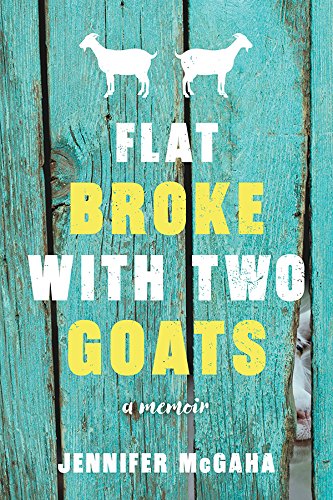
Book cover of Flat Broke with Two Goats

Flat Broke with Two Goats Summary

Humanity & Culture

By Jennifer McGaha

Sourcebooks · January 23, 2018

Summary

Flat Broke with Two Goats, penned by Jennifer McGaha, is a remarkable narrative that delves into the author's real-life experiences. When she found herself in a state of financial ruin, the only companions she had were two goats. Through the pages of this book, we accompany McGaha on her arduous journey. She shares the daily struggles of making ends meet, the comical moments with the goats, and the emotional rollercoaster of hope and despair. The book is not just about poverty; it's about the human spirit. It shows how, even in the most dire circumstances, one can find the strength to persevere. McGaha's writing is engaging and relatable, making it easy for readers to connect with her story. Whether it's the challenges of rural living or the simple joys of animal companionship, this book offers a rich and immersive experience. It's a story that will leave you inspired and with a newfound appreciation for life's little moments.

About the Author

Jennifer McGaha is an author known for her book "Flat Broke with Two Goats". She specializes in humorous and relatable rural-themed writing, presenting real-life stories in an engaging and accessible style.

Chapters

1

Introduction

"Flat Broke with Two Goats" is a captivating and inspiring memoir written by Jennifer McGaha. The book follows McGaha's journey from a state of financial ruin to building a successful homesteading business. It offers a unique perspective on self-sufficiency, entrepreneurship, and the power of determination. McGaha's story is both relatable and motivating, as she shares the challenges and triumphs of starting over with very little.In the beginning, McGaha found herself in a dire financial situation. She had lost her job, was in debt, and had few resources. However, instead of succumbing to despair, she decided to take a leap of faith and start a new life on a small piece of land with two goats. This decision marked the beginning of a remarkable transformation.The book not only details her practical experiences in homesteading, such as raising livestock, growing vegetables, and making artisanal products, but also delves into the emotional and psychological aspects of rebuilding her life. It shows how she overcame self-doubt, learned new skills, and built a community around her homesteading venture.

2

The Descent into Financial Ruin

Jennifer McGaha's life took a turn for the worse when she faced a series of unfortunate events that led to her financial downfall. She lost her stable job in a corporate environment, which was her main source of income. This loss was a major blow, as she suddenly found herself without a regular paycheck to cover her bills.To make matters worse, she had accumulated a significant amount of debt. Credit card bills, student loans, and mortgage payments were piling up, and she had no clear way to pay them off. The stress of financial instability began to take a toll on her mental and emotional well-being.She tried various ways to make ends meet. She took on part-time jobs, but the income from these was not enough to cover her debts. She also faced the pressure of maintaining a certain lifestyle that she was accustomed to, which made it even more difficult to cut back on expenses.As her financial situation deteriorated, she started to feel trapped. The weight of debt was like a heavy burden on her shoulders, and she was constantly worried about how she would survive. Her relationships also suffered, as the stress of money problems caused tension with her family and friends.However, amidst this chaos, McGaha began to see a glimmer of hope. She realized that she needed to make a drastic change in her life, and that's when the idea of homesteading with two goats came to her.

3

The Decision to Homestead

The decision to start homesteading was not an easy one for McGaha. It required a complete shift in her mindset and lifestyle. She had to let go of the conventional idea of a 9-to-5 job and embrace a more self-sufficient way of living.She was drawn to the idea of homesteading because it offered a sense of independence and a connection to the land. She saw it as an opportunity to grow her own food, raise animals, and create a sustainable lifestyle. The thought of being able to provide for herself and her family in a more natural and self-reliant way was appealing.McGaha did a lot of research before taking the plunge. She read books about homesteading, talked to experienced homesteaders, and learned about the different aspects of raising livestock and growing crops. She also had to consider the practicalities, such as finding a suitable piece of land and the initial investment required.She decided to start small with two goats. Goats are relatively easy to care for and can provide milk, meat, and fiber. This was a manageable starting point for her, as she was new to homesteading.Taking this step was a huge risk. She was leaving behind the security of a regular job and venturing into the unknown. But she was determined to make it work. She believed that homesteading could be a way to not only improve her financial situation but also to find a deeper sense of purpose and fulfillment in life.

4

Starting with Two Goats

When McGaha first got her two goats, she had a lot to learn. She had to understand the basic needs of the goats, such as proper nutrition, shelter, and medical care. She quickly realized that goats are social animals and need companionship.She built a simple shelter for the goats using materials she could find around her property. The shelter provided protection from the elements and a safe place for the goats to rest. She also had to learn how to feed the goats. She started by growing some of their food, such as hay and grains, and supplemented it with store-bought feed.Milking the goats was another new skill for her. At first, it was a bit challenging, but with practice, she got better at it. The milk from the goats was not only a source of food for her but also a product that she could sell. She started making cheese and other dairy products from the goat milk.As she got more comfortable with taking care of the goats, she began to expand her homesteading activities. She planted a small garden to grow vegetables for her own consumption and to sell at the local farmers' market. The goats also helped with the garden by providing manure, which was a natural fertilizer.However, there were also challenges. The goats sometimes got sick, and she had to learn how to diagnose and treat common goat ailments. There were also predators in the area that she had to protect the goats from. But through it all, she persevered and continued to learn and grow as a homesteader.

5

Expanding the Homestead

As McGaha became more experienced in homesteading, she decided to expand her operation. She added more livestock to her farm, including chickens and pigs. The chickens provided eggs, which were another source of income and food. The pigs were raised for meat, and she learned how to process them in a humane and sustainable way.She also expanded her garden. She increased the variety of vegetables she grew and started using more advanced gardening techniques, such as companion planting and raised beds. This allowed her to produce more food and have a longer growing season.To manage the increased workload, she hired some part-time help. She also started to build relationships with other homesteaders in the area. They shared knowledge and resources, which was beneficial for everyone. For example, they would trade excess produce and livestock products.She began to develop a brand for her homestead products. She made high-quality artisanal products, such as goat milk soap and honey from her beehives. These products were sold at local markets and online, which helped to increase her income.However, expanding the homestead also brought new challenges. She had to deal with more complex regulatory requirements, such as obtaining permits for selling food products. She also had to manage the increased costs associated with a larger operation, such as buying more feed and equipment.

5 more chapters available

Continue listening in the Spickor app — free download on the App Store.

Listen in App

Why Spickor?

At Spickor, we believe knowledge should have no paywalls. Every book summary can be unlocked for free by watching a short ad — or you can choose an ad-free subscription. Unlike other apps, there's no "1 book per day" free limit. Learn at your own pace, on your own terms.

FeatureSpickorBlinkistHeadway
Free accessAll books free via ad unlock1 book/day only1 book/day only
Book library2,200+ across 8 categories9,000+ (non-fiction only)2,000+ (personal growth focus)
Paid subscriptionNo forced subscription; ad-supportedRequired; from $99.99/yrRequired; from $89.99/yr
Audio for all summariesYesPremium onlyPremium only
Novels & fictionYesNoNo
PlatformsiOS (Android & Web in dev)iOS / Android / WebiOS / Android only

All Books, Truly Free

Unlock any book with a short ad. No daily limits, no hidden fees.

Listen for Free

Every summary includes high-quality audio. No "premium only" labels.

Beyond Self-Help

8 categories including business, technology, and novels.

Listen in App
13 m 34 s