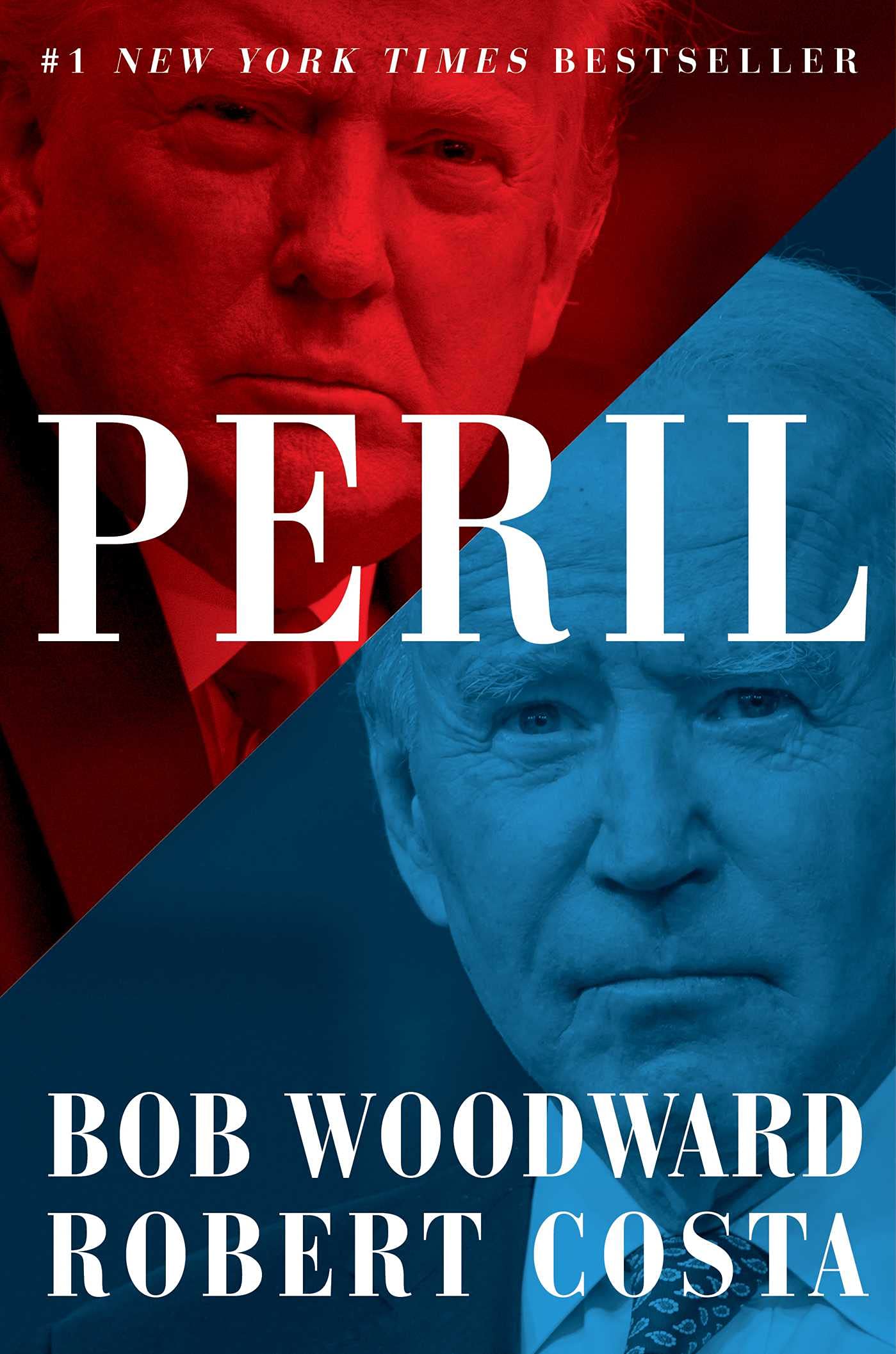
Book cover of Peril

Peril Summary

Humanity & Culture

By Robert Costa

Simon & Schuster · September 21, 2021

Summary

Peril, penned by the renowned journalists BOB WOODWARD and ROBERT COSTA, is a captivating exploration of the political arena. The book takes readers into the heart of some of the most critical moments in recent political history. With their unparalleled access and investigative skills, the authors provide a detailed and nuanced view of the decision-making processes, power struggles, and high-stakes negotiations. They paint a vivid picture of the political figures involved, their motivations, and the challenges they face. Whether it's the behind-the-scenes maneuvering or the public confrontations, Peril offers a comprehensive look at how politics truly works. It's not just a book about politics; it's a window into the complex and often unpredictable world of power and influence. This is a must-read for anyone interested in understanding the inner workings of the political system.

About the Author

Bob Woodward and Robert Costa are renowned journalists. They focus on political non-fiction. Their writing in "Peril" is detailed and fact-based, presenting in-depth political insights with a straightforward style.

Chapters

1

Introduction to the Political Turmoil

The book "Peril" by Bob Woodward and Robert Costa delves deep into the tumultuous political events in the United States, especially during the transition period between administrations. It offers a behind-the-scenes look at the power struggles, high-stakes decision-making, and the intense emotions that characterized this critical time.The story begins with the backdrop of a highly contested presidential election. The nation was divided, and the political atmosphere was charged with tension. The outcome of the election was not just a matter of who would occupy the White House but also had far-reaching implications for the future of American politics and society.We see how the different political figures, from the sitting president to the incoming one, were grappling with the situation. There were concerns about the stability of the democratic process, as well as the potential for unrest and chaos. The book sets the stage for a detailed exploration of the events that followed the election results.


2

The Aftermath of the Election

After the election, the country was in a state of limbo. The sitting president was reluctant to accept the results, which led to a series of legal battles and political maneuvers. His team launched a campaign to challenge the outcome in several key states, alleging voter fraud and irregularities.This campaign, however, lacked substantial evidence. It was more of a political strategy to try and overturn the will of the voters. The legal challenges faced numerous setbacks in the courts, as judges across the country dismissed the claims due to a lack of proof.Meanwhile, the incoming administration was trying to prepare for the transfer of power. They were dealing with the uncertainty created by the sitting president's refusal to concede. There were concerns about national security briefings, access to government resources, and the smooth transition of key government functions.The media played a significant role in this period. The coverage of the election aftermath was polarized, with different outlets presenting different narratives. This further contributed to the division among the American people, as citizens were exposed to conflicting information.

3

The Inner Workings of the White House

Inside the White House, there was a sense of chaos and confusion. The sitting president was surrounded by a group of advisors with varying degrees of influence. Some advisors were trying to convince the president to accept the election results and focus on a peaceful transition. Others, however, were fueling his refusal to concede, encouraging him to continue the fight.The president's behavior during this time was erratic. He was known to be easily influenced by those around him, and his decision-making process seemed to be driven by his emotions rather than rationality. There were reports of outbursts and tantrums in the Oval Office, which created a tense working environment for the White House staff.The White House staff, on the other hand, was struggling to maintain a sense of order. They were dealing with a president who seemed to be more interested in his own ego and political survival than in the well-being of the nation. The staff had to balance their loyalty to the president with their responsibility to the country.

4

The Military and National Security Concerns

The military and national security apparatus of the United States was also deeply affected by the political turmoil. The Joint Chiefs of Staff were worried about the potential for a breakdown in the chain of command. They were concerned that the sitting president's erratic behavior could lead to a military confrontation or a misuse of military power.There were discussions within the military about the need to ensure that the president's orders were legal and in the best interests of the nation. The military leaders were acutely aware of their responsibility to protect the country's democratic institutions and the rule of law.In addition, the national security agencies were dealing with the challenges of a potential transition of power. They had to ensure that the incoming administration was fully briefed on the country's security situation, including ongoing threats and intelligence operations. There were concerns about the security of classified information during this period of uncertainty.

5

The Capitol Riot

One of the most significant events in the book is the Capitol riot on January 6th. The sitting president had been encouraging his supporters to protest the certification of the election results. He had made several public statements that were seen as inciting violence, calling on his followers to "fight like hell."A large crowd of the president's supporters gathered in Washington D.C. and marched towards the Capitol building. They were angry and frustrated, believing the false claims of voter fraud. The protesters breached the Capitol building, causing chaos and destruction inside.The Capitol Police were overwhelmed by the sheer number of protesters. There were scenes of violence and mayhem as the protesters clashed with the police, broke into offices, and disrupted the certification process of the election results. Several people lost their lives during the riot, and it was a dark day in American history.The riot had far-reaching consequences. It led to a national outcry and a call for accountability. It also highlighted the deep divisions within the country and the fragility of American democracy.

5 more chapters available

Continue listening in the Spickor app — free download on the App Store.

Listen in App

Why Spickor?

At Spickor, we believe knowledge should have no paywalls. Every book summary can be unlocked for free by watching a short ad — or you can choose an ad-free subscription. Unlike other apps, there's no "1 book per day" free limit. Learn at your own pace, on your own terms.

FeatureSpickorBlinkistHeadway
Free accessAll books free via ad unlock1 book/day only1 book/day only
Book library2,200+ across 8 categories9,000+ (non-fiction only)2,000+ (personal growth focus)
Paid subscriptionNo forced subscription; ad-supportedRequired; from $99.99/yrRequired; from $89.99/yr
Audio for all summariesYesPremium onlyPremium only
Novels & fictionYesNoNo
PlatformsiOS (Android & Web in dev)iOS / Android / WebiOS / Android only

All Books, Truly Free

Unlock any book with a short ad. No daily limits, no hidden fees.

Listen for Free

Every summary includes high-quality audio. No "premium only" labels.

Beyond Self-Help

8 categories including business, technology, and novels.

Listen in App
9 m 40 s