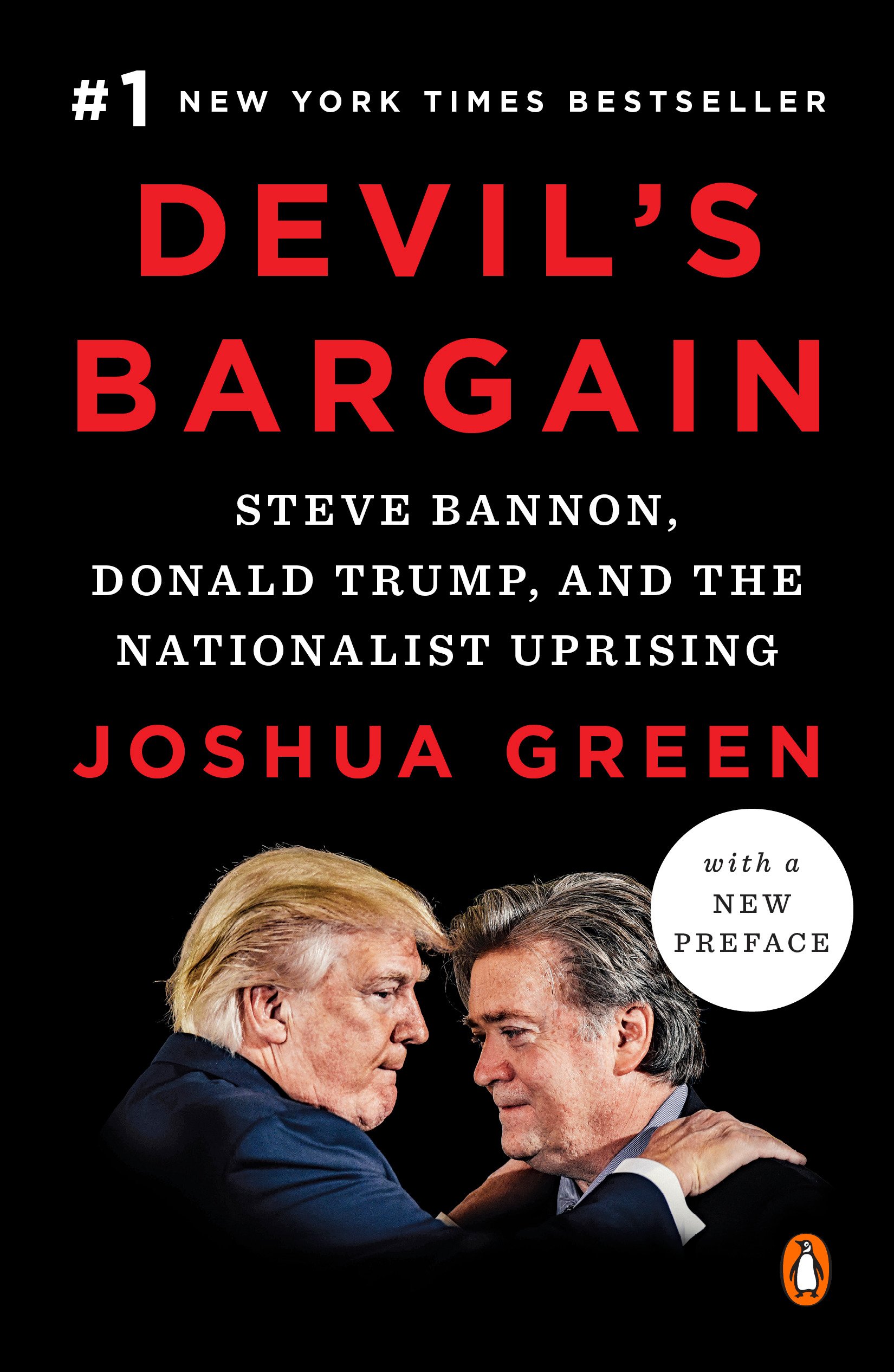
Book cover of Devil's Bargain

Devil's Bargain Summary

Humanity & Culture

By Joshua Green

Penguin Books · July 18, 2017

Summary

Devil's Bargain, written by Joshua Green, is a captivating exploration of the political landscape. The book takes you deep into the heart of political power, showing the intricate web of relationships and negotiations. Green's in-depth research reveals the often-hidden agreements and compromises that occur in the corridors of power. He portrays the characters involved, from influential politicians to power-brokers, and how they interact to achieve their goals. This isn't just a dry account of politics; it's a vivid narrative that brings the political world to life. Whether it's the backroom deals or the public posturing, Devil's Bargain offers a comprehensive view of the political game. It's a book that will keep you engaged from start to finish as you learn about the forces at work in the political sphere.

About the Author

Joshua Green is a well-known journalist. He specializes in political writing. His work, like "Devil's Bargain", features in-depth analysis and a vivid narrative style, offering incisive insights into political affairs.

Chapters

1

Introduction to the Political Landscape

In the book "Devil's Bargain" by Joshua Green, we are introduced to a complex and often controversial political landscape. The story unfolds against the backdrop of the 2016 US presidential election, a time when the political world was on the verge of a major upheaval. This election was not just about choosing a leader; it was a battle between different ideologies, political strategies, and power plays.The political environment at that time was highly polarized. There were deep-seated divisions among the American public, with different groups having vastly different views on issues such as immigration, economic policies, and social justice. The traditional political establishment was facing challenges from both the left and the right. On one hand, there were progressive movements demanding more social equality and environmental protection. On the other hand, there was a growing populist sentiment that was skeptical of the political elite and globalist policies.This setting provides the stage for the main characters and events that will shape the narrative of the book. It sets the tone for understanding the high-stakes game of politics and the lengths to which people are willing to go to gain and maintain power.

2

The Rise of Steve Bannon

Steve Bannon is a central figure in the book. He emerged from relative obscurity to become a powerful force in American politics. Bannon had a background in finance, but his true passion was politics. He was a conservative with a strong sense of nationalism and a deep-seated belief in the need to "drain the swamp" in Washington.Bannon's journey into the political arena was marked by his association with Breitbart News. Breitbart was known for its right-wing, populist, and often controversial content. Bannon used this platform to spread his ideas and build a following. He was able to tap into the frustrations of many Americans who felt left behind by the political establishment.His influence grew as he became involved with the Trump campaign. Bannon saw in Donald Trump an opportunity to bring about a political revolution. He believed that Trump could disrupt the traditional political order and implement policies that would benefit the working class. Bannon's strategic thinking and his ability to connect with the disenfranchised voters played a crucial role in Trump's rise to power.

3

The Trump Campaign Strategy

The 2016 Trump campaign was unlike any other in recent history. It was characterized by a bold and unorthodox approach. Instead of following the traditional playbook of political campaigns, Trump and his team, including Bannon, took a more aggressive and populist stance.One of the key elements of the campaign strategy was to focus on issues that resonated with the working-class voters. Trump promised to bring back jobs, build a wall along the Mexican border, and renegotiate trade deals. These promises struck a chord with many Americans who were concerned about economic insecurity and immigration.The campaign also made extensive use of social media. Trump was a master at using platforms like Twitter to communicate directly with his supporters. This allowed him to bypass the mainstream media and control his own narrative. The use of social media also helped the campaign to target specific demographics and mobilize voters.Another important aspect of the strategy was the use of negative campaigning. Trump and his team were not afraid to attack their opponents, often using harsh and unfiltered language. This approach was both polarizing and effective, as it helped to energize his base and draw attention to the campaign.

4

The Role of the Media

The media played a complex and multi-faceted role in the 2016 election. On one hand, the mainstream media was often critical of Trump and his campaign. They reported on his controversial statements and actions, which sometimes led to a negative perception of him among certain segments of the population.However, the media also inadvertently contributed to Trump's success. The constant coverage of his campaign, even if it was often negative, kept him in the public eye. Trump was a master at getting media attention, and he used this to his advantage. The media's focus on the drama and spectacle of the campaign helped to increase public interest and engagement.At the same time, there was a growing divide between the mainstream media and the alternative media. Breitbart News and other right-wing media outlets provided a different perspective, one that was more sympathetic to Trump and his policies. This alternative media helped to shape the narrative for a significant portion of the population, creating an echo chamber that reinforced certain beliefs and values.

5

The Electoral College and the Election Outcome

The 2016 election was decided by the Electoral College, a system that has been a subject of much debate in American politics. Trump won the election by securing enough electoral votes, even though he lost the popular vote.The Electoral College system is designed to give smaller states a voice in the election process. However, it can sometimes lead to a situation where the candidate who wins the popular vote does not win the presidency. In 2016, Trump's victory in key swing states, such as Michigan, Pennsylvania, and Wisconsin, was crucial in securing his electoral victory.The election outcome was a shock to many. It revealed deep-seated divisions in American society and raised questions about the future of the political system. The result also had a significant impact on the global political landscape, as the United States is a major world power.

5 more chapters available

Continue listening in the Spickor app — free download on the App Store.

Listen in App

Why Spickor?

At Spickor, we believe knowledge should have no paywalls. Every book summary can be unlocked for free by watching a short ad — or you can choose an ad-free subscription. Unlike other apps, there's no "1 book per day" free limit. Learn at your own pace, on your own terms.

FeatureSpickorBlinkistHeadway
Free accessAll books free via ad unlock1 book/day only1 book/day only
Book library2,200+ across 8 categories9,000+ (non-fiction only)2,000+ (personal growth focus)
Paid subscriptionNo forced subscription; ad-supportedRequired; from $99.99/yrRequired; from $89.99/yr
Audio for all summariesYesPremium onlyPremium only
Novels & fictionYesNoNo
PlatformsiOS (Android & Web in dev)iOS / Android / WebiOS / Android only

All Books, Truly Free

Unlock any book with a short ad. No daily limits, no hidden fees.

Listen for Free

Every summary includes high-quality audio. No "premium only" labels.

Beyond Self-Help

8 categories including business, technology, and novels.

Listen in App
10 m 26 s