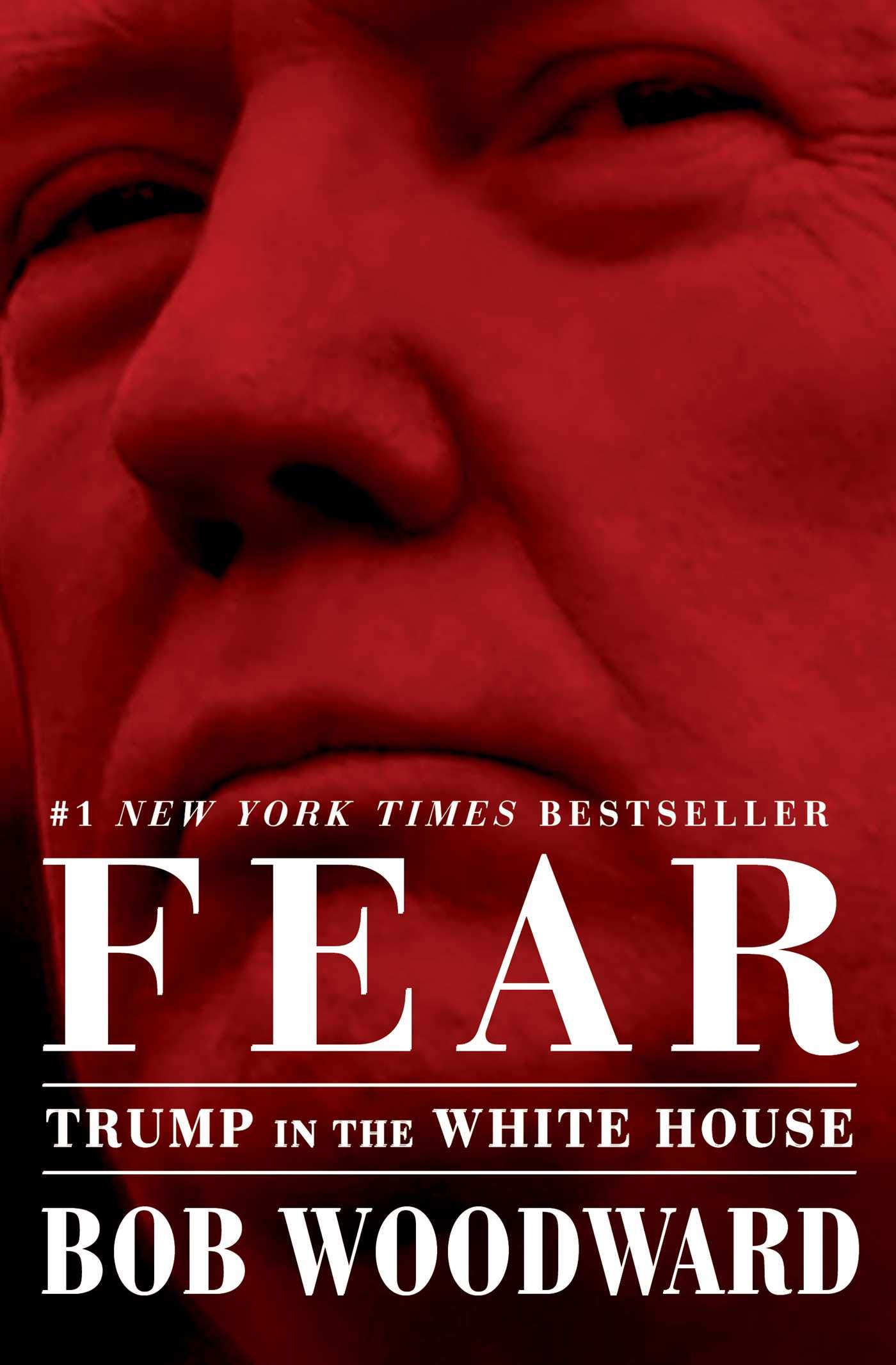
Book cover of Fear

Fear Summary

Humanity & Culture

By Bob Woodward

Simon & Schuster · September 11, 2018

Summary

Bob Woodward, a renowned journalist, presents "Fear", a compelling account of the political dynamics within the White House. Through interviews with key insiders, Woodward peels back the curtain on the power plays and high-stakes decision-making that occur at the highest levels of government. The book takes readers on a journey through the complex relationships between the president, his advisors, and other political figures. It showcases the challenges, conflicts, and strategic maneuvers that shape national policies. Woodward's meticulous research and engaging storytelling style bring to life the intense atmosphere of the political arena. Whether you're a political enthusiast or just curious about how the government functions, "Fear" offers valuable insights into the heart of American politics. It's a book that will keep you engrossed from start to finish, as you discover the hidden truths and power dynamics that drive the nation's leadership.

About the Author

Bob Woodward is a renowned American journalist and author. He specializes in political non-fiction. His writing is characterized by in-depth research and detailed, fact-based storytelling, as seen in his work "Fear".

Chapters

1

The Political Landscape in the Context of Fear

In the political arena described in "Fear," the United States is in a complex and tense situation. The political system is facing multiple challenges, both internally and externally. Internally, there are deep-seated divisions among different political factions. Republicans and Democrats are constantly at odds on a variety of issues, from healthcare to immigration. The polarization has reached a point where it's difficult to find common ground. On the international front, the US is re-evaluating its global position. There are ongoing trade disputes with major economic powers, which have far-reaching impacts on the global economy. For example, the trade war with China has disrupted supply chains and affected businesses in both countries. The traditional alliances that the US has maintained for decades are also being tested. The relationship with NATO members has faced strains, as the US questions the level of commitment and burden-sharing within the alliance. In this context, fear plays a significant role. Politicians are often driven by the fear of losing power, the fear of not living up to their constituents' expectations, and the fear of being on the wrong side of public opinion. This fear can lead to hasty decisions, short-term thinking, and a lack of long-term strategic planning. For instance, in the face of public outcry over certain issues, politicians may push for populist policies that might not be in the best long-term interests of the country. The political environment is also highly volatile. Social media has amplified the spread of information, both accurate and false. This has created a situation where public opinion can be easily swayed, and politicians have to constantly navigate through the storm of public sentiment. The 24-hour news cycle further exacerbates this, as every political move is scrutinized and analyzed in real-time. The fear of negative media coverage can force politicians into defensive postures, rather than taking bold and necessary actions.

2

The Trump Administration's Leadership Style

The leadership style of the Trump administration is characterized by unpredictability. President Trump often makes decisions on the spur of the moment, without extensive consultation with his advisors. This has led to a sense of chaos within the administration. For example, in matters of foreign policy, statements and actions can change rapidly, leaving both domestic and international audiences confused. Trump's communication style is also a defining feature. He uses Twitter as a major platform to express his opinions and make policy announcements. This direct form of communication bypasses traditional media channels and allows him to connect directly with his base. However, it also creates a lot of uncertainty, as his tweets can sometimes be contradictory or misinterpreted. There is a significant power struggle within the administration. Different factions are vying for influence, and the lines of authority are often blurred. This makes it difficult for the administration to implement a cohesive policy agenda. Some advisors may have different views on key issues, and without a clear chain of command, decisions can be delayed or watered down. The administration's approach to governance is often seen as confrontational. It has clashed with the media, the judiciary, and even some elements within its own party. This confrontational stance has both its supporters and detractors. Supporters believe that it shows strength and a willingness to challenge the status quo, while detractors argue that it undermines the institutions of democracy. In addition, the Trump administration has a strong focus on economic nationalism. Policies such as tariffs and immigration restrictions are aimed at protecting American jobs and industries. However, these policies have also had unintended consequences, such as higher prices for consumers and a slowdown in international trade.

3

Key Advisors and Their Influence

Within the Trump administration, there are several key advisors who have had a significant impact on policy-making. John Kelly, for example, served as the White House Chief of Staff. His role was to bring order to the chaotic environment of the White House. He tried to impose a more traditional management style, setting up strict protocols and procedures. However, he faced challenges in curbing Trump's impulsive decision-making. H.R. McMaster was the National Security Advisor for a period. He was known for his military background and strategic thinking. McMaster tried to bring a more rational approach to foreign policy, emphasizing the importance of long-term planning and maintaining alliances. His influence was limited, though, as Trump often preferred a more transactional approach to foreign relations. Steven Mnuchin, the Treasury Secretary, played a crucial role in economic policy. He was involved in the implementation of tax cuts and the management of the national debt. His approach was often influenced by Wall Street's perspective, with a focus on promoting business growth. However, there were concerns about the long-term impact of the tax cuts on the budget deficit. Jared Kushner, Trump's son-in-law, had a wide-ranging portfolio within the administration. He was involved in issues such as Middle East peace negotiations and criminal justice reform. His influence was both due to his family relationship with Trump and his own perceived business acumen. However, his efforts in these areas faced many obstacles, and progress was slow. The influence of these advisors was also affected by their relationships with each other. There were often rivalries and power struggles, which could lead to internal conflicts and a lack of coordinated action within the administration.

4

National Security and Foreign Policy Challenges

The United States faces numerous national security and foreign policy challenges. One of the major issues is the threat of terrorism. Despite significant efforts to combat terrorist organizations, new threats continue to emerge. For example, the Islamic State (ISIS) may have lost much of its territorial control, but it still has the ability to carry out attacks around the world through its affiliated groups. The relationship with Russia is another complex issue. There are ongoing investigations into Russian interference in the US elections. At the same time, the two countries have different interests in various regions, such as the Middle East. The US is concerned about Russia's influence in Syria, where Russia has supported the Assad regime. North Korea's nuclear program remains a pressing concern. Diplomatic efforts have been made to denuclearize the Korean Peninsula, but progress has been slow and unpredictable. There have been summit meetings between the US and North Korea, but reaching a concrete and verifiable agreement on denuclearization has proven difficult. In the Middle East, the US is involved in multiple conflicts. The situation in Syria is particularly complex, with the US supporting rebel groups against the Assad regime while also fighting against ISIS. The presence of other countries, such as Russia and Iran, further complicates the situation. The US also has to deal with the rise of China as a global power. China's economic growth and increasing military capabilities pose a challenge to the US's traditional dominance in the international arena. There are trade disputes, as well as concerns about China's territorial claims in the South China Sea.

5

Economic Policies and Their Consequences

The Trump administration's economic policies have had far-reaching consequences. One of the most significant policies was the tax cuts implemented in 2017. The tax cuts were designed to stimulate economic growth by reducing the tax burden on businesses and individuals. Proponents argued that it would lead to increased investment and job creation. In the short term, there was some positive impact. Businesses saw an increase in their after-tax profits, and there was a boost in consumer spending. However, the long-term effects are more complex. The tax cuts also led to a significant increase in the budget deficit. The government had to borrow more money to cover the shortfall, which could potentially lead to higher interest rates in the future. The administration's trade policies, particularly the use of tariffs, have had a major impact on the global economy. Tariffs on Chinese goods, for example, were intended to protect American industries from what was seen as unfair competition. However, it has led to retaliatory tariffs from China, which has hurt American farmers and manufacturers that rely on exports. The labor market has also been affected. While the unemployment rate has remained low, there are concerns about the quality of jobs. Many new jobs are in the service sector, which often offer lower wages and less job security. There is also a skills gap, where employers are having difficulty finding workers with the right skills for available jobs. In the financial sector, the relaxation of some regulations has led to concerns about financial stability. Banks and other financial institutions may take on more risks, which could potentially lead to another financial crisis in the future.

4 more chapters available

Continue listening in the Spickor app — free download on the App Store.

Listen in App

Why Spickor?

At Spickor, we believe knowledge should have no paywalls. Every book summary can be unlocked for free by watching a short ad — or you can choose an ad-free subscription. Unlike other apps, there's no "1 book per day" free limit. Learn at your own pace, on your own terms.

FeatureSpickorBlinkistHeadway
Free accessAll books free via ad unlock1 book/day only1 book/day only
Book library2,200+ across 8 categories9,000+ (non-fiction only)2,000+ (personal growth focus)
Paid subscriptionNo forced subscription; ad-supportedRequired; from $99.99/yrRequired; from $89.99/yr
Audio for all summariesYesPremium onlyPremium only
Novels & fictionYesNoNo
PlatformsiOS (Android & Web in dev)iOS / Android / WebiOS / Android only

All Books, Truly Free

Unlock any book with a short ad. No daily limits, no hidden fees.

Listen for Free

Every summary includes high-quality audio. No "premium only" labels.

Beyond Self-Help

8 categories including business, technology, and novels.

Listen in App
16 m 33 s