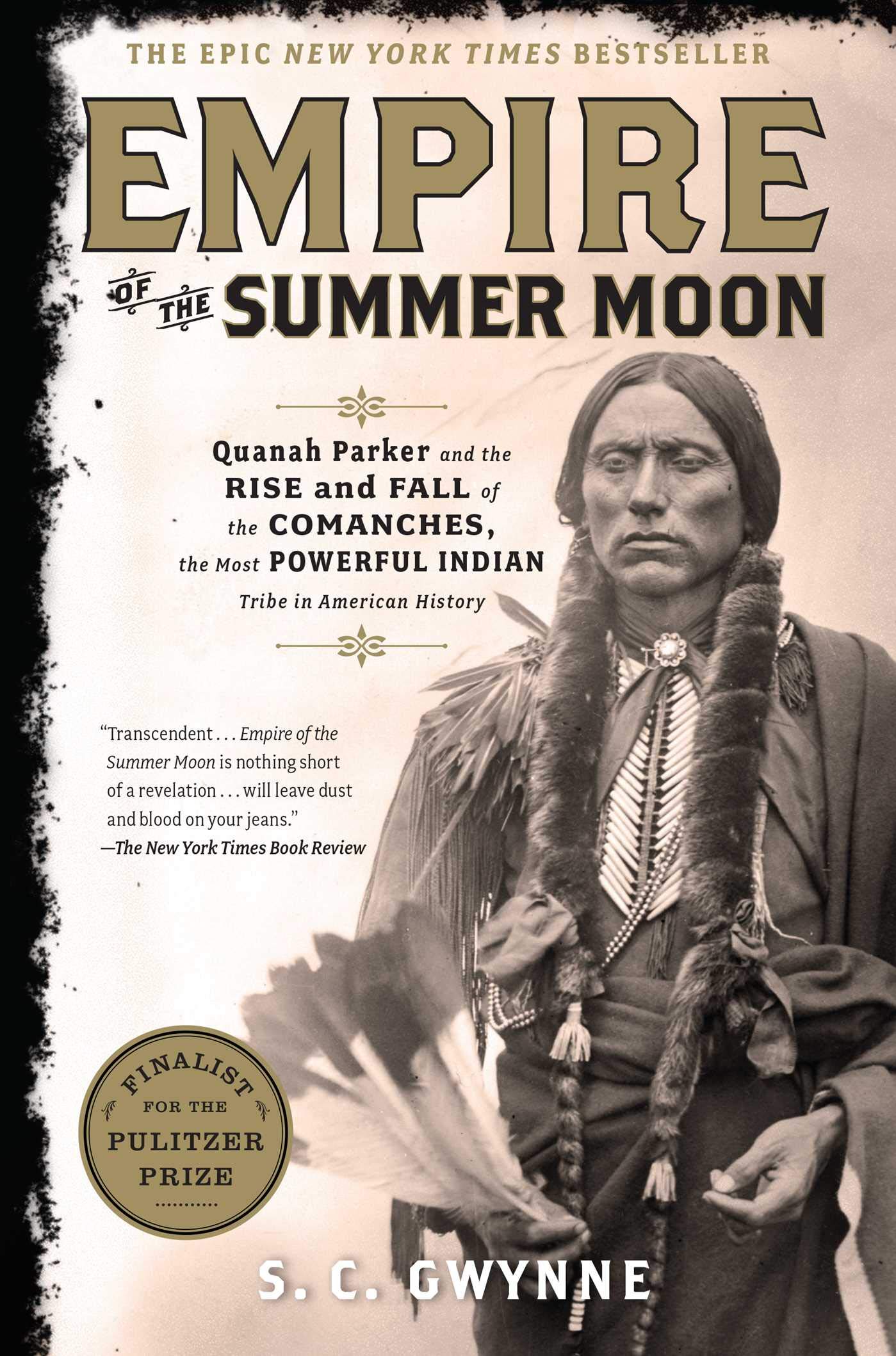
Book cover of Empire of the Summer Moon

Empire of the Summer Moon Summary

Humanity & Culture

By S. C. Gwynne

Scribner · May 5, 2010

Summary

"Empire of the Summer Moon" by S. C. Gwynne is a captivating exploration of a significant chapter in American history. The book centers around a powerful Native-American tribe that once held sway over a vast territory. Gwynne masterfully weaves together historical facts and engaging narratives, bringing to life the customs, battles, and daily life of this tribe. The author's research is extensive, and his writing style is both accessible and immersive. As you read, you'll be transported to a time when the tribe's influence was at its peak, facing challenges from settlers and the changing world around them. It's not just a history book; it's a journey through time, offering insights into a culture that has often been overlooked. Whether you're a history buff or simply enjoy a good story, this book is sure to keep you engaged from start to finish.

About the Author

S. C. Gwynne is a well-known author. He specializes in historical non-fiction. In "Empire of the Summer Moon", his writing combines detailed research with vivid storytelling, presenting history in an engaging way.

Chapters

1

Introduction to the Comanche Empire

The Comanche people once dominated a vast expanse of North America, known as the Comancheria. This region stretched from present-day Kansas to Texas and from the Rocky Mountains to the Texas Hill Country. The Comanche were a nomadic tribe, highly skilled in horsemanship and warfare. They were so powerful that they created an empire of their own, which lasted for over a century.The Comanche's rise to power was closely tied to their mastery of the horse. After acquiring horses from the Spanish in the 1700s, they quickly became expert riders. This gave them a significant military advantage over other tribes and European settlers. They could cover long distances in a short time, raid settlements easily, and engage in battles with great mobility.The Comanche society was organized around kinship and warrior-oriented values. Men were expected to be brave and skilled in combat, while women played important roles in the family and tribe, such as taking care of the camp and raising children. Their culture was also rich in traditions, including elaborate ceremonies and a strong oral history.

2

The Comanche's Early Encounters with Europeans

The first Europeans to encounter the Comanche were the Spanish. The Spanish were initially interested in establishing trade and converting the Comanche to Christianity. However, the Comanche had their own ideas. They saw the Spanish as a source of valuable goods, such as horses, guns, and metal tools.The Comanche-Spanish relationship was complex. There were periods of trade and cooperation, but also frequent conflicts. The Comanche often raided Spanish settlements for horses and other resources. The Spanish, in turn, tried to control the Comanche through military expeditions and diplomatic efforts, but they were largely unsuccessful.As the French and later the Americans entered the region, the Comanche's interactions became even more complicated. The French traded with the Comanche, but the Americans had a more expansionist agenda. The Americans wanted to settle the land that the Comanche considered their own, which led to increasing tensions between the two groups.

3

The Comanche's Military Prowess

The Comanche were one of the most feared military forces in North America. Their warriors were incredibly skilled in horseback riding and warfare. They used a variety of weapons, including bows and arrows, lances, and later, guns.In battle, the Comanche employed hit-and-run tactics. They would swoop down on their enemies, attack quickly, and then retreat before the enemy could mount a proper defense. This made them very difficult to defeat. They also had a deep understanding of the terrain, which they used to their advantage in battles.The Comanche's military success was not only due to their individual skills but also their strong sense of unity. They fought together as a tribe, with each warrior having a specific role. This cohesion made them a formidable force against both other tribes and European settlers.

4

The Comanche's Economic System

The Comanche's economy was based on a combination of hunting, raiding, and trade. They were excellent buffalo hunters. The buffalo provided them with food, clothing, and shelter. They used every part of the buffalo, making it a vital resource for their survival.Raiding was also an important part of their economy. They raided other tribes and European settlements for horses, cattle, and other valuable goods. These raids not only provided them with resources but also helped to establish their dominance in the region.Trade was another key aspect of the Comanche economy. They traded with other tribes, as well as with the Spanish, French, and later the Americans. They traded buffalo hides, horses, and captives for goods such as guns, metal tools, and textiles. This trade network allowed them to access a wider range of resources and maintain their way of life.

5

The Comanche's Social Structure

The Comanche society was divided into bands, which were made up of extended families. Each band had its own leader, who was usually a respected warrior. The band leaders had significant influence within the band, but decisions were often made through a process of consensus.There was also a hierarchical structure within the Comanche society. At the top were the powerful war chiefs, who were respected for their military skills and leadership. Below them were the ordinary warriors and then the women and children. Women had important roles in the family, such as taking care of the home and raising children, but they also had some influence in the tribe, especially in matters related to the family and social life.The Comanche also had a system of social norms and taboos. These rules governed behavior within the tribe, including marriage, inheritance, and warfare. Violators of these norms were often punished, but the punishment was usually carried out in a way that maintained the unity of the tribe.

5 more chapters available

Continue listening in the Spickor app — free download on the App Store.

Listen in App

Why Spickor?

At Spickor, we believe knowledge should have no paywalls. Every book summary can be unlocked for free by watching a short ad — or you can choose an ad-free subscription. Unlike other apps, there's no "1 book per day" free limit. Learn at your own pace, on your own terms.

FeatureSpickorBlinkistHeadway
Free accessAll books free via ad unlock1 book/day only1 book/day only
Book library2,200+ across 8 categories9,000+ (non-fiction only)2,000+ (personal growth focus)
Paid subscriptionNo forced subscription; ad-supportedRequired; from $99.99/yrRequired; from $89.99/yr
Audio for all summariesYesPremium onlyPremium only
Novels & fictionYesNoNo
PlatformsiOS (Android & Web in dev)iOS / Android / WebiOS / Android only

All Books, Truly Free

Unlock any book with a short ad. No daily limits, no hidden fees.

Listen for Free

Every summary includes high-quality audio. No "premium only" labels.

Beyond Self-Help

8 categories including business, technology, and novels.

Listen in App
10 m 17 s