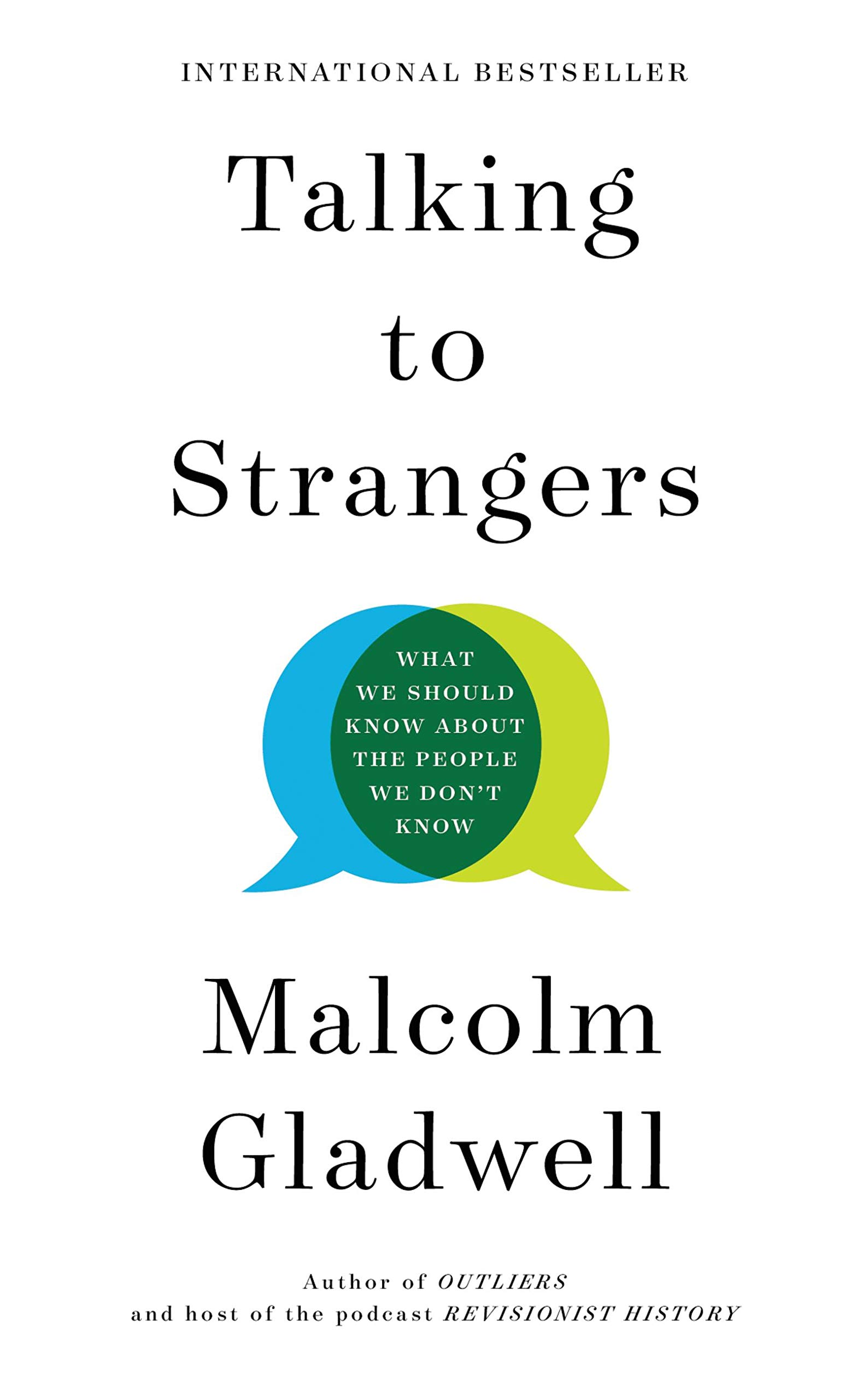
Book cover of Talking to Strangers

Talking to Strangers Summary

Personal Growth

By Malcolm Gladwell

Little, Brown and Company · September 10, 2019

Summary

In the book "Talking to Strangers", Malcolm Gladwell takes readers on a fascinating journey into the world of human interaction with strangers. We all talk to strangers every day, whether it's a brief exchange at the coffee shop or a more in-depth conversation. But how well do we really understand these interactions? Gladwell uses a wealth of real-world examples, from historical events to modern-day cases, to illustrate the many ways we misjudge strangers. He explores concepts like the "default to truth", where we tend to assume that people are being honest. Through his analysis, he shows how this assumption can lead to misunderstandings and sometimes even dangerous situations. The book also delves into the role of context and how it can significantly impact our perception of strangers. It's not just about the words we say but also the unspoken cues and social norms. Gladwell's writing is engaging and accessible, making complex psychological and social concepts easy for the average reader to understand. Whether you're interested in human behavior, social science, or just want to improve your communication skills, this book offers valuable lessons and a fresh perspective on an everyday experience.

About the Author

Malcolm Gladwell is a renowned author. He specializes in non-fiction, delving into social and psychological phenomena. His writing is engaging, blending research with real-life stories, as seen in "Talking to Strangers".

Chapters

1

Introduction: The Enigma of Stranger Interactions

Interacting with strangers is a daily occurrence in our lives, yet it remains one of the most complex and misunderstood aspects of human communication. We often make snap judgments about strangers based on limited information, and these judgments can have far-reaching consequences. This book delves into the intricacies of talking to strangers, challenging our assumptions and providing insights into why we so often misjudge those we don't know.In our society, we are taught certain rules and norms when it comes to interacting with strangers. We are expected to be polite, to give others the benefit of the doubt, and to assume that they are honest. However, these assumptions can sometimes lead us astray. We may fail to recognize warning signs or misinterpret the intentions of strangers. For example, we might trust someone who seems friendly and charming, only to later discover that they have ulterior motives.The book aims to help us become more aware of these pitfalls and to develop better strategies for interacting with strangers. By understanding the factors that influence our judgments and the common mistakes we make, we can improve our ability to communicate effectively and make more informed decisions when dealing with people we don't know.


2

The Default to Truth

One of the fundamental principles in our interactions with strangers is the default to truth. We tend to assume that what others tell us is true, even when there is little evidence to support it. This default is deeply ingrained in our social fabric and has evolutionary roots. In a cooperative society, it is generally beneficial to trust others, as it allows for smooth social interactions.However, this default can also be exploited. Con artists, for instance, rely on our tendency to believe them. They use charm, persuasion, and false stories to gain our trust and manipulate us. We often fail to question the authenticity of their claims because we are programmed to assume that they are being honest.To illustrate this point, consider the case of Bernie Madoff. He was able to run a massive Ponzi scheme for years, defrauding thousands of investors. His victims trusted him because he presented himself as a successful and trustworthy financial advisor. They defaulted to truth, and as a result, they lost a great deal of money.We need to be more cautious and learn to balance our default to truth with a healthy dose of skepticism. This doesn't mean that we should be paranoid and mistrust everyone, but rather that we should be more aware of the potential for deception and take steps to verify information.

3

Transparency and the Illusion of Readability

We often believe that we can easily read the emotions and intentions of strangers. We think that facial expressions, body language, and tone of voice are clear indicators of what someone is thinking and feeling. However, this is often an illusion.In reality, many people are very good at hiding their true emotions and intentions. They can put on a false front, making it difficult for us to accurately assess their character. For example, a person who is lying may appear calm and confident, while someone who is telling the truth may seem nervous or hesitant.This illusion of readability can lead to serious misjudgments. We may think that we know someone well based on a brief interaction, when in fact we have only scratched the surface. We might assume that a person is trustworthy because they seem friendly, without realizing that they could be hiding something.To overcome this illusion, we need to be more aware of the limitations of our ability to read others. We should not rely solely on non-verbal cues but also consider other factors, such as the context of the interaction and the person's past behavior.

4

The Impact of Context

The context in which we interact with strangers plays a crucial role in how we perceive them and how the interaction unfolds. Different situations can lead to very different outcomes, even when dealing with the same person.For example, a person who seems friendly and approachable in a social setting may appear cold and distant in a professional environment. The context can change our expectations and the way we interpret the other person's behavior.In addition, the context can also influence the behavior of the stranger. A person may act differently depending on whether they are in a familiar or unfamiliar environment, or whether they are under stress. For instance, someone who is normally calm and composed may become agitated if they are in a crowded and noisy place.We need to take the context into account when interacting with strangers. By understanding the situation and the factors that may be influencing the other person's behavior, we can have more accurate perceptions and better interactions.

5

The Role of Power Dynamics

Power dynamics often play a significant role in our interactions with strangers. When there is an imbalance of power, it can affect the way we communicate and the decisions we make.In a situation where one person has more power, such as in a boss-employee relationship or a police-civilian encounter, the person with less power may feel intimidated or pressured. They may be less likely to speak up or to challenge the other person's authority.On the other hand, the person with more power may be more likely to make assumptions and to act without fully considering the other person's perspective. This can lead to misunderstandings and unfair treatment.For example, in a police-civilian encounter, if the police officer has a preconceived notion about the civilian based on their appearance or background, it can lead to a biased interaction. The civilian may feel that their rights are being violated, while the police officer may believe that they are acting in the best interest of public safety.We need to be aware of power dynamics in our interactions with strangers and strive to create more equal and fair communication. This may involve being more empathetic, listening to the other person's point of view, and challenging our own assumptions.

4 more chapters available

Continue listening in the Spickor app — free download on the App Store.

Listen in App

Why Spickor?

At Spickor, we believe knowledge should have no paywalls. Every book summary can be unlocked for free by watching a short ad — or you can choose an ad-free subscription. Unlike other apps, there's no "1 book per day" free limit. Learn at your own pace, on your own terms.

FeatureSpickorBlinkistHeadway
Free accessAll books free via ad unlock1 book/day only1 book/day only
Book library2,200+ across 8 categories9,000+ (non-fiction only)2,000+ (personal growth focus)
Paid subscriptionNo forced subscription; ad-supportedRequired; from $99.99/yrRequired; from $89.99/yr
Audio for all summariesYesPremium onlyPremium only
Novels & fictionYesNoNo
PlatformsiOS (Android & Web in dev)iOS / Android / WebiOS / Android only

All Books, Truly Free

Unlock any book with a short ad. No daily limits, no hidden fees.

Listen for Free

Every summary includes high-quality audio. No "premium only" labels.

Beyond Self-Help

8 categories including business, technology, and novels.

Listen in App
10 m 21 s