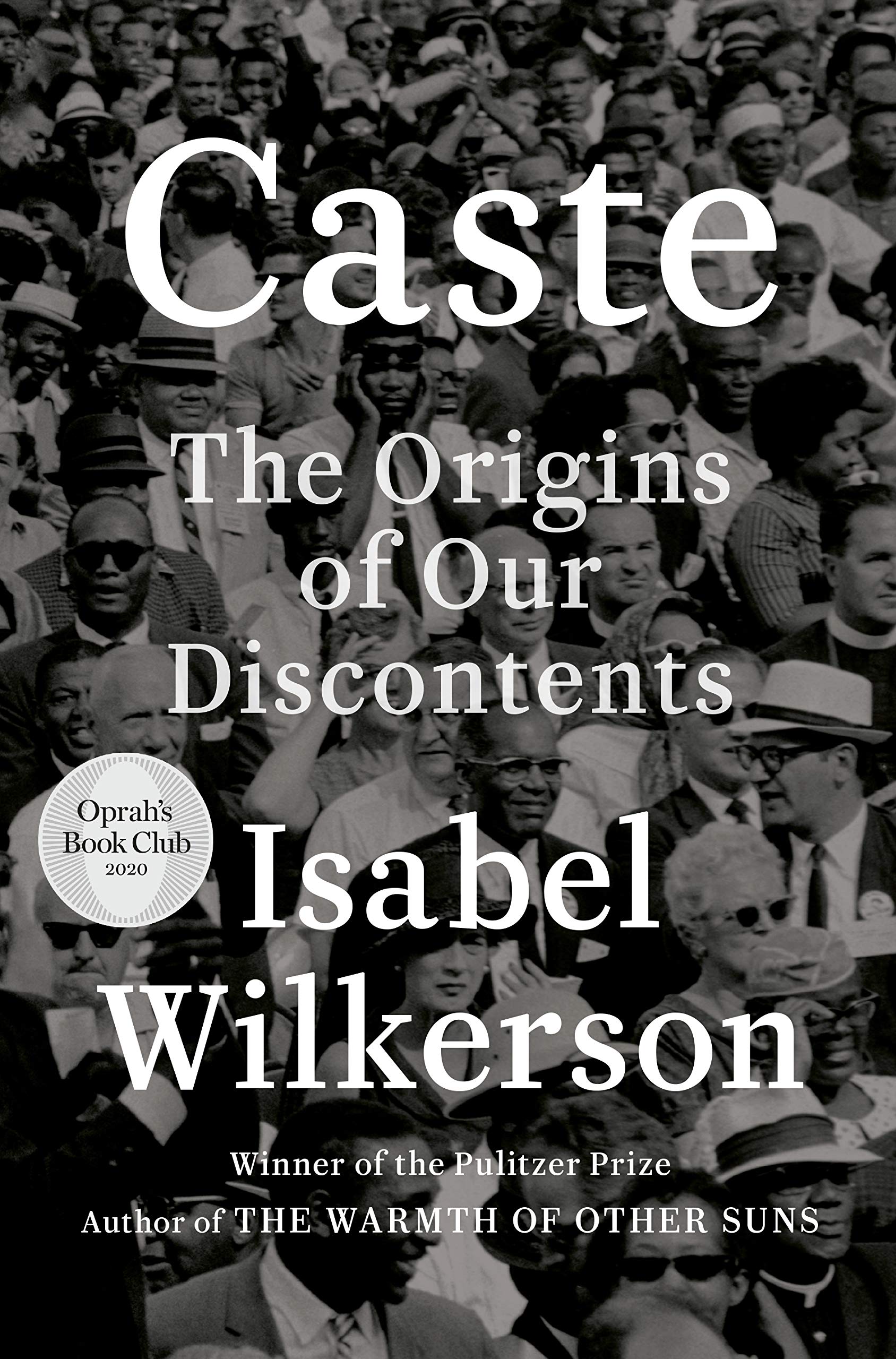
Book cover of Caste

Caste Summary

Humanity & Culture

By Isabel Wilkerson

Random House · August 4, 2020

Summary

Caste, written by Isabel Wilkerson, is a profound exploration of the often-overlooked social hierarchy that exists in various societies. The book draws parallels between different caste systems around the world, including those in India, the United States, and Nazi Germany. Wilkerson uses a wealth of historical data, personal accounts, and interviews to illustrate how caste operates on both a macro and micro level. It affects not only individual lives but also the overall fabric of society. By examining the rules, rituals, and behaviors associated with caste, the author makes readers aware of the deep-seated prejudices and inequalities that persist. This book is not just an academic study; it's a call to action, encouraging readers to confront and change the systems that perpetuate caste-based discrimination. It offers a fresh perspective on social justice and the need for a more inclusive society.

About the Author

Isabel Wilkerson is a Pulitzer-winning journalist. Her writing focuses on race and social structure. In "Caste", she uses in-depth research and vivid storytelling, presenting complex social issues clearly and powerfully.

Chapters

1

Introduction to Caste System

Caste is a concept that has far-reaching implications in various societies around the world. It's not just a social construct but a powerful force that shapes people's lives from birth to death. At its core, the caste system is a hierarchical structure that divides people into different groups based on certain characteristics, such as birth, occupation, or social status.In many cultures, the caste system has been deeply ingrained for centuries. It dictates who can marry whom, what kind of jobs people can have, and even where they can live. For example, in some traditional societies, certain castes are considered "untouchable," and they face severe discrimination in all aspects of life. They are often excluded from religious ceremonies, denied access to education and healthcare, and forced to take on the most menial and degrading jobs.The caste system also has a significant impact on social mobility. Once a person is born into a particular caste, it can be extremely difficult, if not impossible, to move up the social ladder. This lack of mobility can lead to a perpetuation of poverty and inequality within a society. It creates a cycle where the upper-caste individuals maintain their power and privilege, while the lower-caste individuals are trapped in a cycle of disadvantage.Moreover, the caste system is not limited to a single country or region. It can be found in different forms in various parts of the world, including India, the United States, and parts of Europe. In each case, the caste system has unique characteristics, but the underlying principle of hierarchical division remains the same.


2

Origins of the Caste System

The origins of the caste system are complex and can be traced back to different historical, cultural, and economic factors. In India, the caste system has its roots in ancient Hindu scriptures. The Vedas, one of the oldest religious texts in Hinduism, describe a social structure based on four main varnas: Brahmins (priests and scholars), Kshatriyas (warriors and rulers), Vaishyas (merchants and farmers), and Shudras (laborers).Over time, these varnas became more rigid, and thousands of sub-castes, known as jatis, emerged. The jatis were often based on occupation, and people were expected to follow the same profession as their ancestors. This system was further reinforced by religious beliefs and social norms, which made it difficult for individuals to break free from their caste-based roles.In the United States, the caste system has its origins in slavery and racial segregation. African-Americans were brought to the country as slaves and were considered inferior to white people. Even after the abolition of slavery, racial discrimination continued in the form of Jim Crow laws, which restricted the rights of African-Americans in areas such as education, housing, and employment. This created a de facto caste system, where white people held the highest position, and African-Americans were at the bottom.In Europe, the feudal system can be seen as a form of caste system. The feudal society was divided into different classes, such as nobles, clergy, and peasants. The nobles held the most power and land, while the peasants were bound to the land and had few rights. This hierarchical structure persisted for centuries and had a profound impact on European society.

3

Caste and Social Inequality

Caste is a major contributor to social inequality in many societies. In a caste-based society, individuals from lower castes face numerous forms of discrimination. They are often denied equal access to education, which limits their opportunities for personal and professional growth. For example, in some areas, schools may be segregated based on caste, and lower-caste children may receive a substandard education.Employment is another area where caste-based discrimination is prevalent. Lower-caste individuals are often restricted to low-paying, menial jobs, while higher-caste individuals have access to better-paying and more prestigious positions. This not only affects their economic well-being but also their social status and self-esteem.Housing is also a significant issue. Lower-caste individuals may be excluded from certain neighborhoods or forced to live in substandard housing conditions. This can lead to a lack of access to basic amenities such as clean water, sanitation, and healthcare.In addition to these material inequalities, caste also affects social relationships. People from different castes may be discouraged from interacting with each other, and there may be strict rules regarding marriage and social mixing. This can lead to a fragmented society, where people are divided along caste lines and have limited opportunities for social integration.

4

Caste and Health

The caste system has a profound impact on the health of individuals. Lower-caste individuals often face a higher burden of disease due to a combination of factors. Firstly, they have limited access to healthcare services. In many areas, healthcare facilities are concentrated in areas where higher-caste individuals live, and lower-caste individuals may have to travel long distances to access medical care.Secondly, lower-caste individuals are more likely to live in poor environmental conditions. They may be exposed to pollution, lack of clean water, and poor sanitation, which can increase their risk of contracting diseases such as diarrhea, malaria, and respiratory infections.Mental health is also affected by the caste system. Lower-caste individuals may experience chronic stress, anxiety, and depression due to the discrimination and social exclusion they face. The constant pressure to conform to caste-based norms and the lack of opportunities for self-expression can take a toll on their mental well-being.Moreover, the caste system can also influence the way healthcare is provided. In some cases, healthcare providers may have biases against lower-caste patients, which can lead to suboptimal treatment. This can further exacerbate the health disparities between different castes.

5

Caste and Education

Education is a powerful tool for social mobility, but in a caste-based society, it is often used to maintain the existing social hierarchy. Lower-caste children face numerous barriers to education. They may be denied admission to schools, especially those that are considered prestigious or have better resources.In addition, the curriculum in many schools may be biased towards the values and interests of the higher castes. This can make it difficult for lower-caste children to relate to the material being taught and can lead to a lack of motivation and engagement.Teachers may also have unconscious biases against lower-caste students. They may expect less from these students and may not provide them with the same level of support and encouragement as higher-caste students. This can result in lower academic performance and fewer opportunities for further education.However, there are also efforts to break down these barriers. Some organizations are working to provide equal educational opportunities for all children, regardless of their caste. They are setting up schools in rural areas, providing scholarships to lower-caste students, and training teachers to be more inclusive.

5 more chapters available

Continue listening in the Spickor app — free download on the App Store.

Listen in App

Why Spickor?

At Spickor, we believe knowledge should have no paywalls. Every book summary can be unlocked for free by watching a short ad — or you can choose an ad-free subscription. Unlike other apps, there's no "1 book per day" free limit. Learn at your own pace, on your own terms.

FeatureSpickorBlinkistHeadway
Free accessAll books free via ad unlock1 book/day only1 book/day only
Book library2,200+ across 8 categories9,000+ (non-fiction only)2,000+ (personal growth focus)
Paid subscriptionNo forced subscription; ad-supportedRequired; from $99.99/yrRequired; from $89.99/yr
Audio for all summariesYesPremium onlyPremium only
Novels & fictionYesNoNo
PlatformsiOS (Android & Web in dev)iOS / Android / WebiOS / Android only

All Books, Truly Free

Unlock any book with a short ad. No daily limits, no hidden fees.

Listen for Free

Every summary includes high-quality audio. No "premium only" labels.

Beyond Self-Help

8 categories including business, technology, and novels.

Listen in App
13 m 24 s