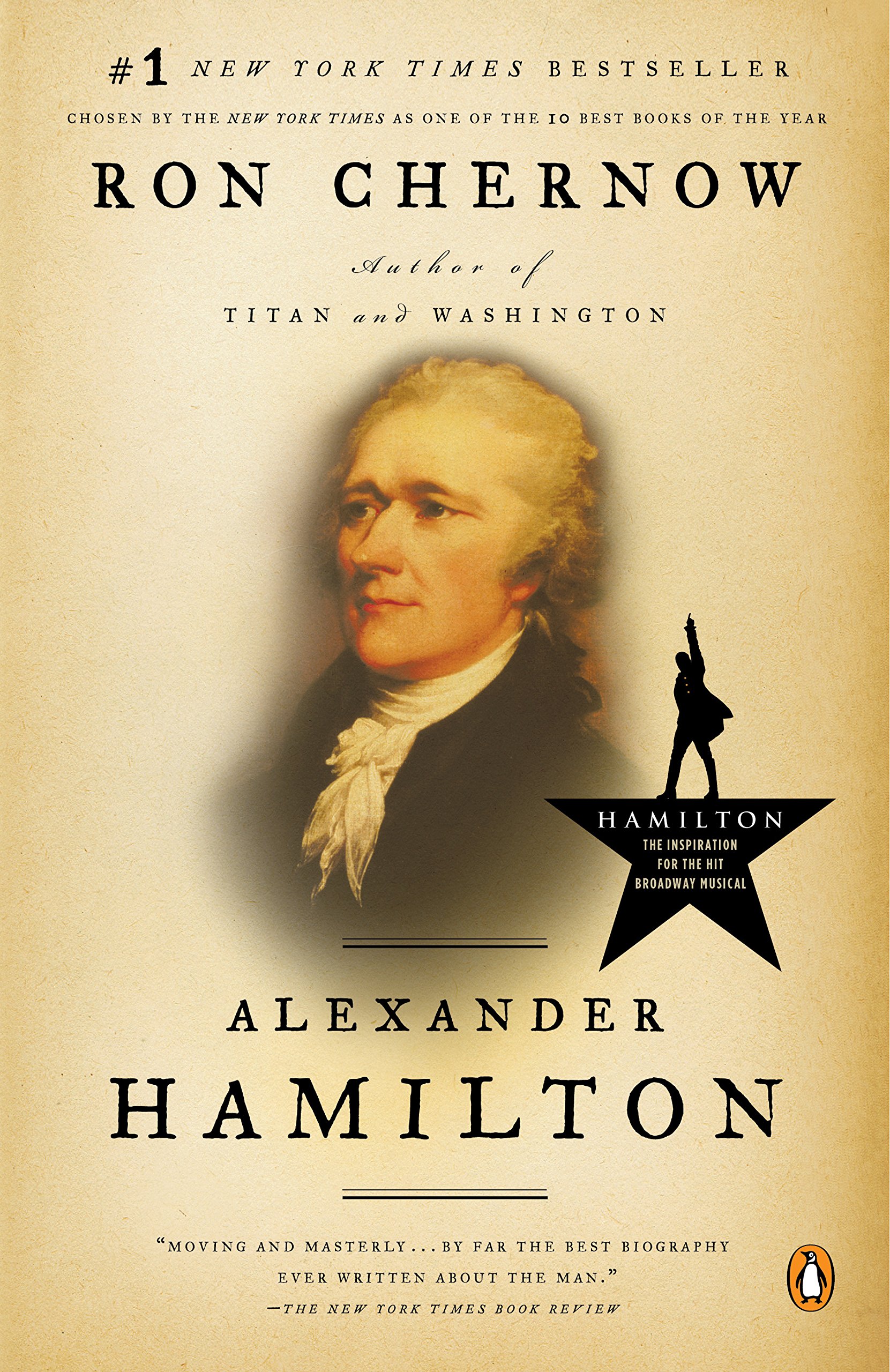
Book cover of Alexander Hamilton

Alexander Hamilton Summary

Humanity & Culture

By Ron Chernow

Penguin Books · March 29, 2005

Summary

Alexander Hamilton, written by Ron Chernow, is a remarkable biography that brings to life the extraordinary story of one of America's most significant founding fathers. Hamilton's life was a saga of rags-to-riches, from his difficult childhood in the Caribbean to his rise as a central figure in the early days of the United States. Chernow painstakingly researches and presents Hamilton's role in establishing the nation's financial system, his contributions to the Federalist Papers, and his complex relationships with other founding fathers. The book not only details Hamilton's political and economic achievements but also delves into his personal life, including his passionate love affairs and his tragic end. It provides a comprehensive view of a man whose influence on the United States cannot be overstated. Through Chernow's vivid storytelling, readers can gain a deeper understanding of the early days of America and the individuals who shaped its destiny.

About the Author

Ron Chernow is a renowned American historian and biographer. He specializes in writing historical biographies. His works, like "Alexander Hamilton", are well-researched, with a detailed and engaging style.

Chapters

1

Introduction to Alexander Hamilton

Alexander Hamilton is a remarkable figure in American history, and Ron Chernow's book delves deep into his life, achievements, and influence. Hamilton was born into humble beginnings in the Caribbean. His early life was marked by hardship and struggle. He lost his father at a young age, and his mother passed away when he was just a teenager. Despite these challenges, Hamilton showed great intelligence and ambition from an early age.He caught the attention of local merchants with his writing skills and was sent to America for an education. In America, Hamilton quickly made a name for himself. He became involved in the revolutionary cause and played a crucial role in the American War of Independence. He served as an aide-de-camp to George Washington, which gave him valuable experience and exposure to the highest levels of military and political decision-making.Hamilton's early experiences in the Caribbean shaped his character. The harsh environment and the need to fend for himself instilled in him a strong work ethic and a determination to succeed. His move to America was a turning point in his life, opening up new opportunities for him to pursue his dreams and make a significant impact on the nation.

2

Hamilton in the Revolutionary War

During the American Revolutionary War, Hamilton was a key figure. He was passionate about the cause of American independence and was eager to fight for it. He joined the Continental Army and quickly rose through the ranks. His military skills and strategic thinking were highly regarded.Hamilton was involved in many important battles. One of his most notable contributions was at the Battle of Yorktown. He led a daring charge that helped turn the tide of the battle. His actions at Yorktown were instrumental in the American victory, which ultimately led to the recognition of American independence.As an aide-de-camp to George Washington, Hamilton had access to the inner workings of the military. He was involved in planning military campaigns, writing important dispatches, and providing advice to Washington. His close relationship with Washington not only enhanced his own reputation but also gave him a platform to influence the course of the war.Hamilton's experiences in the war also taught him valuable lessons about leadership, discipline, and the importance of a strong military. These lessons would later shape his views on national security and the role of the military in the new nation.

3

Hamilton's Role in Shaping the New Nation

After the war, Hamilton played a central role in shaping the new United States. He was a strong advocate for a strong central government. He believed that a weak central government would lead to chaos and instability.Hamilton was one of the main architects of the United States financial system. He proposed a series of economic policies that were designed to strengthen the nation's economy. His plan included the establishment of a national bank, the assumption of state debts by the federal government, and the promotion of manufacturing.The national bank was a controversial but crucial part of Hamilton's economic plan. It was intended to provide a stable currency, manage the nation's finances, and promote economic growth. The assumption of state debts helped to unify the nation financially and reduce the burden on individual states.Hamilton also recognized the importance of manufacturing in the nation's development. He believed that the United States needed to become self-sufficient in manufacturing to compete with other nations. His policies aimed to encourage the growth of domestic industries through tariffs and subsidies.

4

Hamilton and the Federalist Papers

The Federalist Papers were a series of essays written by Alexander Hamilton, James Madison, and John Jay. These essays were written to promote the ratification of the United States Constitution. Hamilton was the primary author of many of the papers.The Federalist Papers were a powerful argument for a strong central government. They explained the principles and structure of the proposed Constitution and addressed the concerns of those who were opposed to it. Hamilton used his writing skills to make complex political and constitutional concepts accessible to the general public.The essays covered a wide range of topics, including the separation of powers, the role of the judiciary, and the need for a strong executive. Hamilton's arguments in the Federalist Papers helped to shape public opinion and played a significant role in the ratification of the Constitution.The Federalist Papers also had a lasting impact on American political thought. They are still studied today as a key source of understanding the founding principles of the United States.

5

Hamilton's Political Rivalries

Hamilton had many political rivalries during his career. One of his most well-known rivalries was with Thomas Jefferson. Jefferson and Hamilton had very different views on the role of government and the economy.Jefferson was a proponent of a more agrarian society and a limited central government. He believed that the power should be in the hands of the states and the people. Hamilton, on the other hand, believed in a strong central government and a more industrialized economy.Their differences led to intense political debates and conflicts. These rivalries often played out in the political arena, with each side trying to promote their own policies and ideas. The political battles between Hamilton and Jefferson had a significant impact on the early development of the United States.Another rival was Aaron Burr. Their feud eventually led to a fatal duel. Burr was a political opponent who felt that Hamilton had damaged his political career. The duel between them was a tragic end to a long-standing conflict.

5 more chapters available

Continue listening in the Spickor app — free download on the App Store.

Listen in App

Why Spickor?

At Spickor, we believe knowledge should have no paywalls. Every book summary can be unlocked for free by watching a short ad — or you can choose an ad-free subscription. Unlike other apps, there's no "1 book per day" free limit. Learn at your own pace, on your own terms.

FeatureSpickorBlinkistHeadway
Free accessAll books free via ad unlock1 book/day only1 book/day only
Book library2,200+ across 8 categories9,000+ (non-fiction only)2,000+ (personal growth focus)
Paid subscriptionNo forced subscription; ad-supportedRequired; from $99.99/yrRequired; from $89.99/yr
Audio for all summariesYesPremium onlyPremium only
Novels & fictionYesNoNo
PlatformsiOS (Android & Web in dev)iOS / Android / WebiOS / Android only

All Books, Truly Free

Unlock any book with a short ad. No daily limits, no hidden fees.

Listen for Free

Every summary includes high-quality audio. No "premium only" labels.

Beyond Self-Help

8 categories including business, technology, and novels.

Listen in App
10 m 47 s