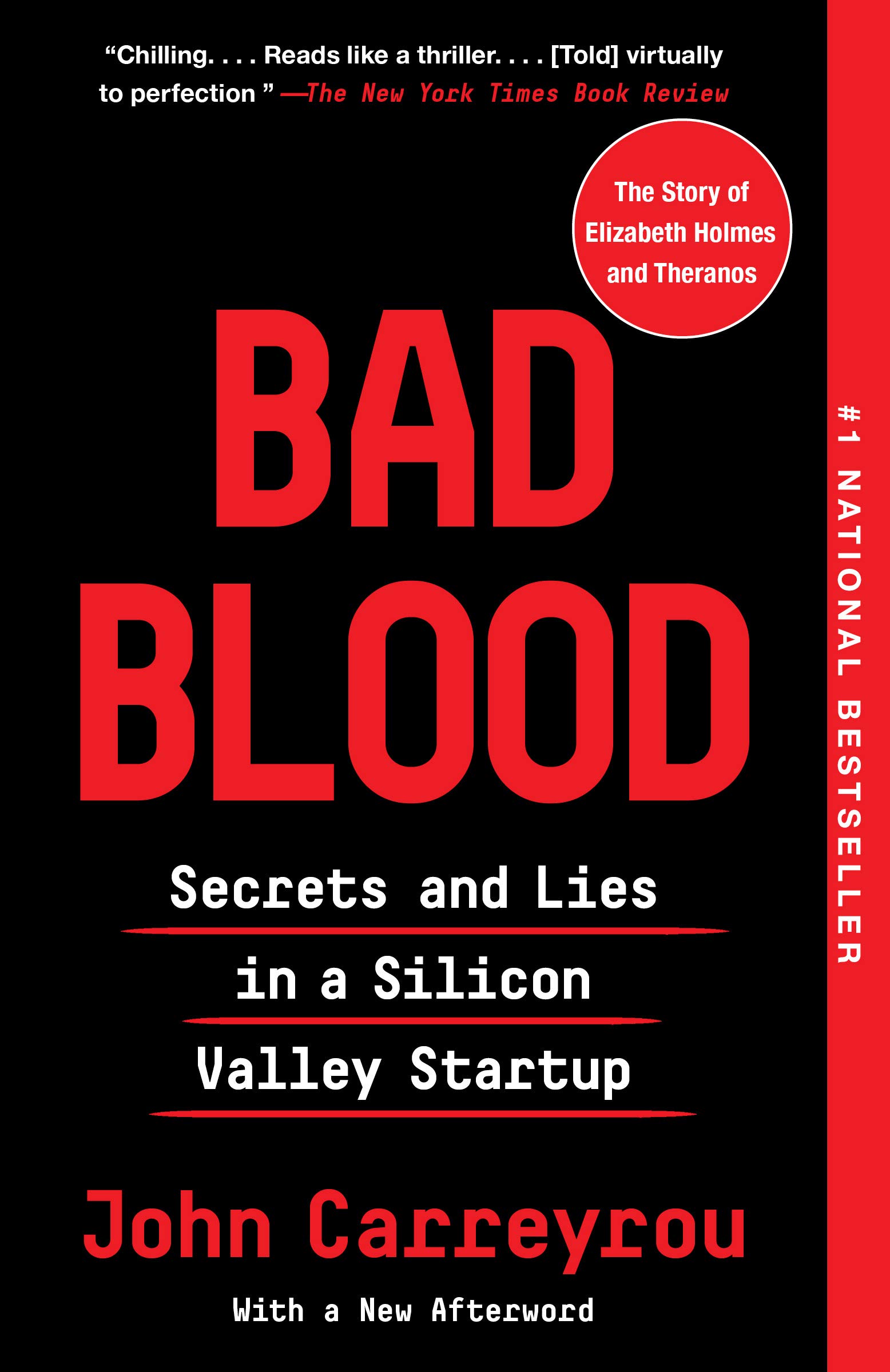
Book cover of Bad Blood

Bad Blood Summary

Humanity & Culture

By John Carreyrou

Vintage · May 21, 2018

Summary

Bad Blood, written by John Carreyrou, is a captivating non-fiction work that takes readers on a wild ride through the world of Silicon Valley. The book centers around Theranos, a startup that claimed to have developed a revolutionary blood-testing technology. Theranos promised to change the medical industry with its painless, quick, and inexpensive blood tests. However, as Carreyrou's in-depth investigation reveals, the company was built on a foundation of lies and deception. Through extensive interviews and access to internal documents, Carreyrou pieces together the story of how Theranos managed to fool investors, the media, and the public for so long. The book not only exposes the unethical practices of Theranos but also raises important questions about the nature of innovation, the power of hype, and the role of the media in holding companies accountable. It's a thrilling read that combines elements of a detective story with a cautionary tale about the dangers of unchecked ambition.

About the Author

John Carreyrou is an investigative journalist. He specializes in business and corporate fraud stories. His writing in "Bad Blood" is detailed and fact-based, presenting complex issues clearly.

Chapters

1

Introduction to Theranos

Theranos was a once-promising startup founded by Elizabeth Holmes in 2003. Holmes dropped out of Stanford University at the age of 19 with a vision to revolutionize the medical testing industry. She aimed to develop a technology that could perform a wide range of blood tests using just a few drops of blood from a finger prick, eliminating the need for traditional venipuncture with large needles. This innovation was supposed to make blood testing more convenient, less painful, and more accessible, especially in remote areas.Theranos quickly gained significant attention and investment. Holmes presented herself as a visionary entrepreneur, dressing in a black turtleneck similar to Steve Jobs, which added to her allure. The company's technology was seen as a game-changer, and it attracted high-profile investors, including Rupert Murdoch and Larry Ellison. It also formed partnerships with major companies like Walgreens, which planned to offer Theranos' blood-testing services in its stores.

2

The Technology's Promises and Reality

The core of Theranos' claim was its Edison device, which was supposed to be able to conduct hundreds of different blood tests with just a tiny amount of blood. However, behind the scenes, the technology was far from what was promised.Internal employees soon discovered that the Edison device was unreliable. Many of the tests it performed were inaccurate, and it often failed to produce consistent results. In some cases, the device couldn't even perform the tests it was supposed to. To meet the demands of its partners and customers, Theranos often resorted to using traditional blood-testing machines from other manufacturers for the majority of its tests, while still claiming that the results were from its own Edison device.The company also had a culture of secrecy. Employees were discouraged from sharing information about the technology's flaws, and there were strict non-disclosure agreements in place. This made it difficult for outsiders to learn the truth about the state of Theranos' technology.

3

The Rise of Suspicion

As Theranos continued to operate, a few journalists and industry experts began to raise questions. John Carreyrou, a reporter for The Wall Street Journal, was one of the first to dig deeper into the company. He started receiving tips from former Theranos employees who were concerned about the company's practices.Carreyrou's investigation revealed a series of red flags. For example, he found that Theranos had failed to pass inspections by regulatory agencies. The company was also facing issues with its partnerships. Walgreens, which had initially been excited about the partnership, started to have doubts as it learned more about the technology's problems.The company's response to the growing suspicion was to try to silence its critics. Theranos sent legal threats to Carreyrou and The Wall Street Journal, claiming that their reporting was false and damaging to the company's reputation. However, Carreyrou and his team continued their investigation, determined to uncover the truth.

4

Regulatory Scrutiny

As the media attention grew, regulatory agencies began to take notice. The Centers for Medicare and Medicaid Services (CMS) launched an investigation into Theranos. The agency found numerous violations at Theranos' laboratory in Newark, California.CMS cited Theranos for issues such as improper handling of specimens, inaccurate test results, and a lack of proper quality control. These findings were a major blow to Theranos, as they indicated that the company was not operating its laboratory in a safe and reliable manner.The regulatory scrutiny also led to the revocation of Theranos' license to operate its laboratory in Newark. This was a significant setback for the company, as it relied on its laboratory to conduct blood tests for its customers.

5

The Unraveling of the Company

With the regulatory issues piling up and the negative media coverage, Theranos started to unravel. Partners began to distance themselves from the company. Walgreens terminated its partnership with Theranos, and other potential partners also backed away.The company's financial situation deteriorated rapidly. It had spent a large amount of money on research and development, marketing, and legal battles. As investors started to realize the true state of the company, they began to pull out their funds.Theranos also faced a series of lawsuits from investors, customers, and employees. These legal battles further drained the company's resources and damaged its reputation.

5 more chapters available

Continue listening in the Spickor app — free download on the App Store.

Listen in App

Why Spickor?

At Spickor, we believe knowledge should have no paywalls. Every book summary can be unlocked for free by watching a short ad — or you can choose an ad-free subscription. Unlike other apps, there's no "1 book per day" free limit. Learn at your own pace, on your own terms.

FeatureSpickorBlinkistHeadway
Free accessAll books free via ad unlock1 book/day only1 book/day only
Book library2,200+ across 8 categories9,000+ (non-fiction only)2,000+ (personal growth focus)
Paid subscriptionNo forced subscription; ad-supportedRequired; from $99.99/yrRequired; from $89.99/yr
Audio for all summariesYesPremium onlyPremium only
Novels & fictionYesNoNo
PlatformsiOS (Android & Web in dev)iOS / Android / WebiOS / Android only

All Books, Truly Free

Unlock any book with a short ad. No daily limits, no hidden fees.

Listen for Free

Every summary includes high-quality audio. No "premium only" labels.

Beyond Self-Help

8 categories including business, technology, and novels.

Listen in App
8 m 23 s