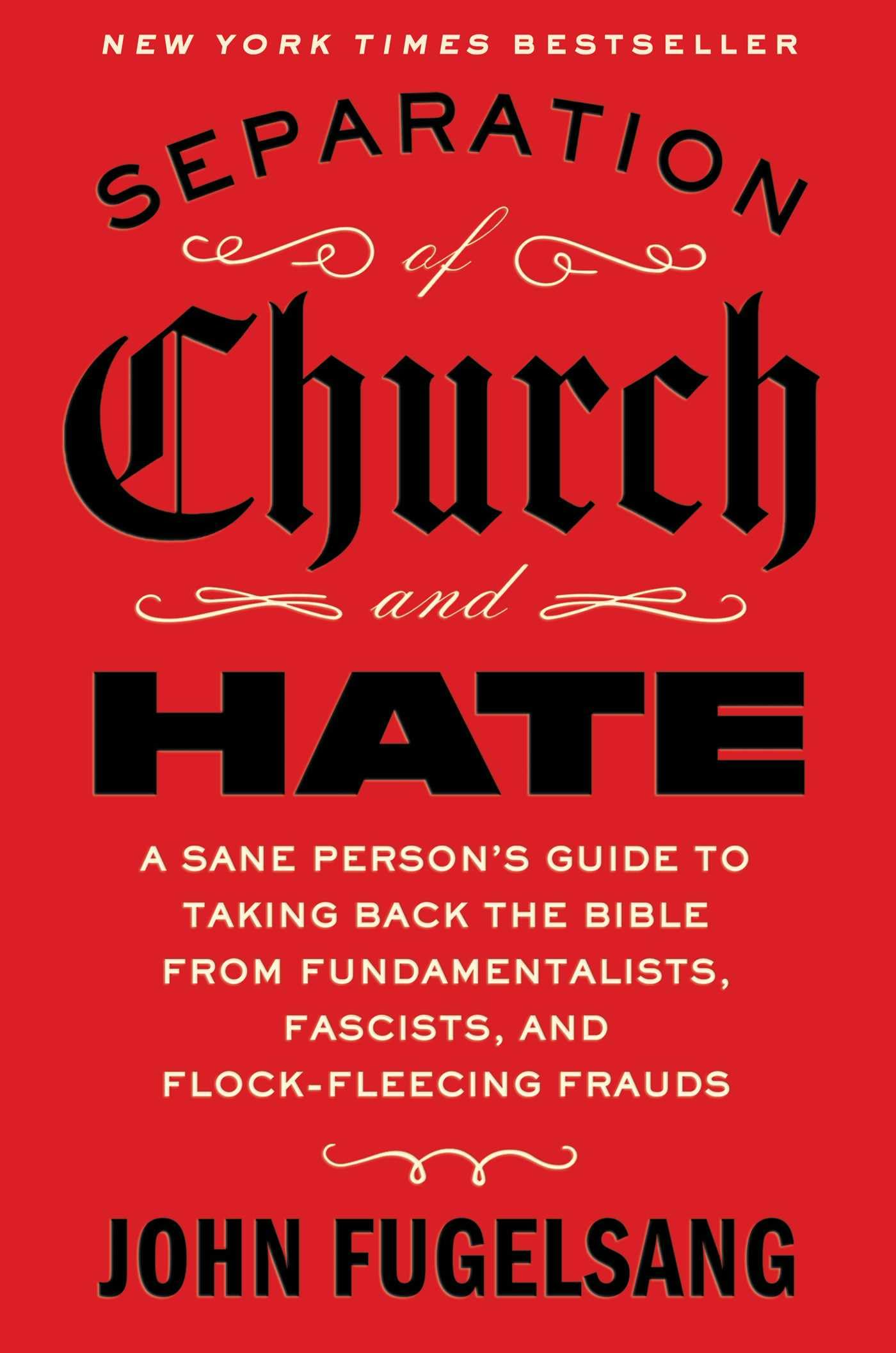
Book cover of Separation of Church and Hate

Separation of Church and Hate Summary

Humanity & Culture

By John Fugelsang

Avid Reader Press / Simon & Schuster · September 9, 2025

Summary

In 'Separation of Church and Hate', author John Fugelsang takes on the challenging task of examining the often-blurred line between the institution of the church and the presence of hate in society. He delves into the historical, social, and cultural contexts that have allowed hate to find a foothold within religious communities. Through in-depth research and real-life examples, Fugelsang shows how the principles of love and acceptance at the core of most religions have been distorted. He offers a fresh perspective on how to re-establish the true essence of faith and promote a more inclusive and loving society. This book is not just a critique but also a call to action, encouraging readers to take a stand against the co-existence of church and hate. It's a must-read for anyone who wants to understand the deeper issues at play and contribute to positive change.

About the Author

John Fugelsang is an author who focuses on social and political topics. His work, Separation of Church and Hate, showcases a sharp-witted and incisive writing style, offering thought-provoking perspectives.

Chapters

1

Introduction: The Concept of Separation

The book "Separation of Church and Hate" delves into the crucial topic of the separation between religious institutions and the spread of hate. In modern society, the influence of the church can be far-reaching, and when it is misused to promote hate, it can cause significant harm. This concept of separation is not just about a legal or institutional divide but also about the moral and ethical boundaries that should exist.Religion has always played a vital role in people's lives, providing comfort, guidance, and a sense of community. However, when certain religious groups start to use their platforms to spread messages of hate, it goes against the very essence of what most religions stand for. The idea of separating the church from hate is to ensure that religious institutions can focus on their positive aspects, such as love, compassion, and charity, rather than being a source of division and animosity.


2

The History of Church-Hate Link

Throughout history, there have been numerous instances where the church has been associated with hate. In the past, religious institutions were sometimes used to justify wars, discrimination, and persecution. For example, during the Crusades, the church played a significant role in inciting violence against non-Christians. The idea was to "convert" or eliminate those who did not follow the same religious beliefs.In more recent times, some religious groups have used their influence to spread hate against certain ethnic groups, sexual minorities, and other marginalized communities. This has led to social unrest, discrimination, and even acts of violence. The history of this link between the church and hate shows that it is a long-standing problem that needs to be addressed.

3

The Impact of Church-Sponsored Hate

When the church is involved in spreading hate, it has a profound impact on society. Firstly, it undermines the values of tolerance and acceptance. People who are targeted by church-sponsored hate often face discrimination in various aspects of their lives, such as employment, housing, and social interactions. This can lead to a sense of isolation and marginalization among these groups.Secondly, it can cause social division. Communities become polarized, and trust between different groups is eroded. This can lead to increased conflicts and a breakdown in social cohesion. Moreover, the spread of hate can also have a negative impact on mental health, as those who are targeted may experience stress, anxiety, and depression.

4

The Role of Religious Leaders

Religious leaders play a crucial role in either promoting or preventing the spread of hate. They have the power to influence the beliefs and actions of their followers. When religious leaders use their platforms to spread messages of love, peace, and understanding, they can have a positive impact on society. They can encourage their followers to be more inclusive and accepting of others.On the other hand, if religious leaders spread hate, it can have a far-reaching and dangerous effect. Their words can incite violence and discrimination. Therefore, it is essential for religious leaders to take responsibility for the messages they convey and to use their influence for the betterment of society.

5

Legal and Ethical Considerations

There are both legal and ethical aspects to the separation of church and hate. Legally, in many countries, there are laws that protect against hate speech and discrimination. These laws apply to religious institutions as well. If a religious group is found to be spreading hate, they can be held accountable under the law.Ethically, the separation of church and hate is based on the principles of respect for human rights and dignity. Religious institutions should uphold these values and ensure that their teachings do not promote hate. They have an ethical obligation to use their influence in a positive way and to contribute to a more just and inclusive society.

5 more chapters available

Continue listening in the Spickor app — free download on the App Store.

Listen in App

Why Spickor?

At Spickor, we believe knowledge should have no paywalls. Every book summary can be unlocked for free by watching a short ad — or you can choose an ad-free subscription. Unlike other apps, there's no "1 book per day" free limit. Learn at your own pace, on your own terms.

FeatureSpickorBlinkistHeadway
Free accessAll books free via ad unlock1 book/day only1 book/day only
Book library2,200+ across 8 categories9,000+ (non-fiction only)2,000+ (personal growth focus)
Paid subscriptionNo forced subscription; ad-supportedRequired; from $99.99/yrRequired; from $89.99/yr
Audio for all summariesYesPremium onlyPremium only
Novels & fictionYesNoNo
PlatformsiOS (Android & Web in dev)iOS / Android / WebiOS / Android only

All Books, Truly Free

Unlock any book with a short ad. No daily limits, no hidden fees.

Listen for Free

Every summary includes high-quality audio. No "premium only" labels.

Beyond Self-Help

8 categories including business, technology, and novels.

Listen in App
7 m 28 s