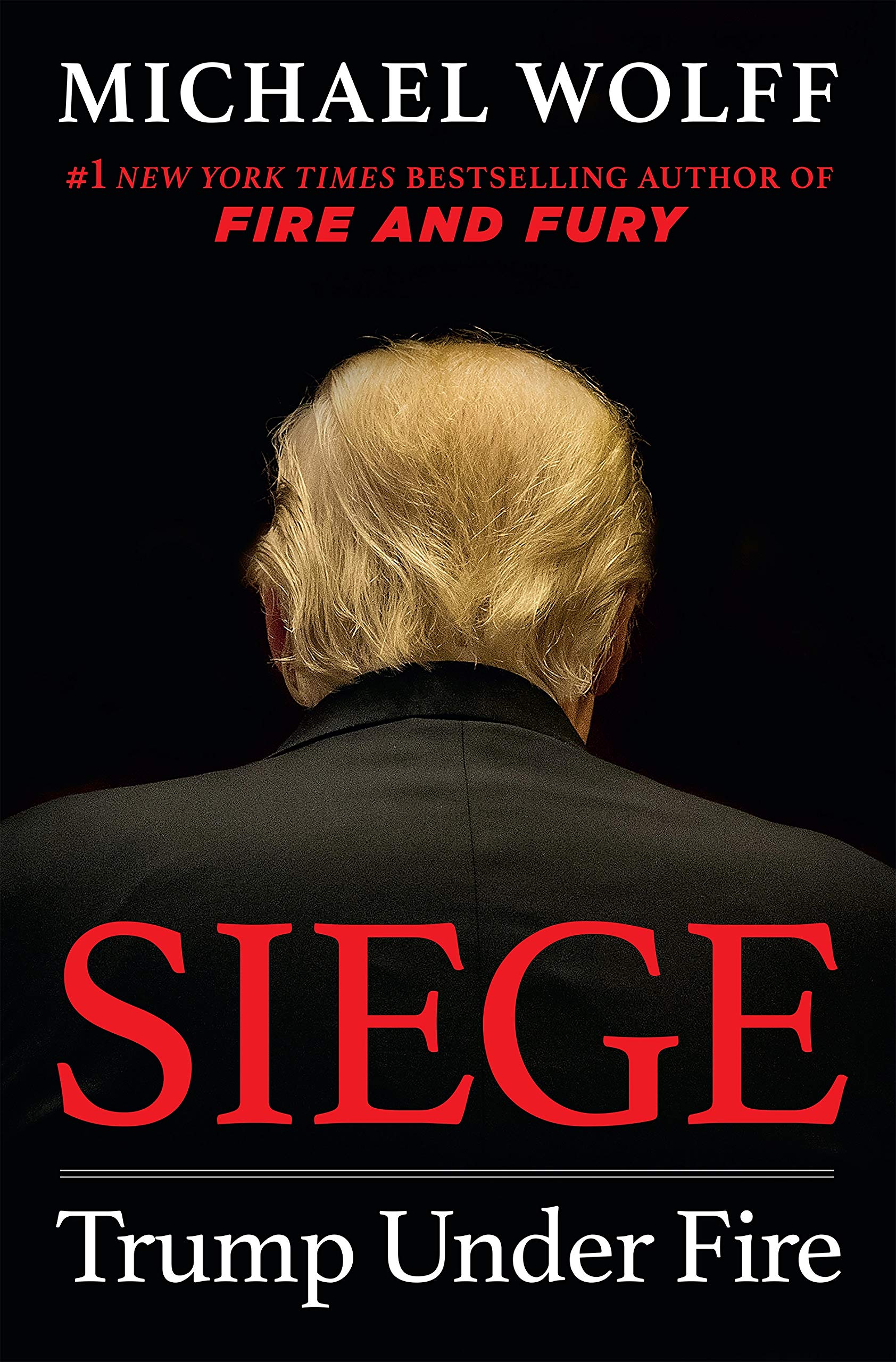
Book cover of Siege

Siege Summary

Humanity & Culture

By Michael Wolff

Henry Holt and Co. · June 4, 2019

Summary

Siege, penned by the well-known author Michael Wolff, is a remarkable work that brings the political landscape to life. In this book, Wolff takes the readers into the heart of the political battlefield. He presents a vivid picture of the power dynamics, the decision-making processes, and the hidden agendas that play out in the political sphere. Through his in-depth research and engaging storytelling, Wolff offers a fresh and often surprising look at how politics really works. Whether it's the backroom deals or the public power plays, Siege uncovers the layers of the political world. This book is not just a simple account; it's a deep exploration that will keep readers engaged from start to finish. It's a must-read for those interested in understanding the inner workings of politics.

About the Author

Michael Wolff is a well-known journalist and author. He specializes in political and media-related writing. His style in "Siege" is direct, revealing, and full of in-depth insights, offering a sharp perspective on current affairs.

Chapters

1

Introduction to the Political Landscape

The book "Siege" by Michael Wolff delves deep into the high-stakes political arena, specifically focusing on the Trump administration. It sets the stage by presenting the chaotic and often unpredictable nature of the political environment in the United States during this time. The political landscape was like a battlefield, with various power players vying for influence and control.The Trump administration was under constant scrutiny from the media, opposition parties, and even some members within its own ranks. There were numerous policy battles, both domestic and international, that were taking place simultaneously. For example, issues such as immigration, trade policies, and healthcare reform were at the forefront of the political discourse. The administration's approach to these issues often caused a stir, leading to intense debates and conflicts.The public was also highly divided. Supporters of the administration believed in its promises of economic growth, job creation, and a more secure nation. On the other hand, opponents criticized the administration's methods, its handling of social issues, and its relationship with foreign powers. This division was not only evident in the general public but also within the political establishment, creating a tense and volatile atmosphere.


2

The Inner Workings of the Trump White House

Inside the Trump White House, there was a complex web of power dynamics. Different advisors and officials had their own agendas and were constantly jockeying for the president's ear. The decision-making process was often chaotic, with multiple voices competing to influence the president.Some advisors were more hawkish, advocating for aggressive policies in areas such as foreign relations and immigration. Others were more moderate, trying to temper the administration's more extreme stances. For instance, in matters of trade, there were those who pushed for protectionist measures to safeguard American industries, while others argued for a more open-market approach.The president himself was known for his impulsive decision-making style. He often made announcements on social media without consulting his advisors fully, which could cause confusion and disrupt the normal functioning of the government. This led to a situation where the White House staff had to scramble to deal with the consequences of these sudden decisions.

3

Media and the Trump Administration

The relationship between the media and the Trump administration was extremely strained. The president frequently attacked the media, labeling them as "fake news." He believed that the media was biased against him and his administration, and he used his platform to discredit their reporting.The media, in turn, was highly critical of the administration's actions. They reported on the administration's controversial policies, its handling of various crises, and the internal power struggles within the White House. This led to a constant back-and-forth between the two, with each side accusing the other of unethical behavior.The media's coverage also had a significant impact on public perception. It influenced how the public viewed the administration's policies and actions. For example, negative media coverage of immigration policies could lead to increased public opposition, while positive coverage of economic achievements could boost the administration's popularity.

4

Policy Battles and Their Consequences

The Trump administration faced numerous policy battles, both at home and abroad. In the domestic arena, healthcare reform was a major point of contention. The administration tried to repeal and replace the Affordable Care Act, but faced strong opposition from Democrats and some moderate Republicans. This led to a long-drawn-out battle in Congress, with multiple attempts to pass a new healthcare bill.On the international front, trade policies were a major focus. The administration imposed tariffs on various countries, which led to retaliatory measures from those countries. This trade war had a significant impact on the global economy, affecting industries such as agriculture, manufacturing, and technology.The consequences of these policy battles were far-reaching. Domestically, the healthcare debate left many Americans uncertain about their healthcare coverage. Internationally, the trade war disrupted global supply chains and led to increased prices for consumers.

5

Power Struggles Among Advisors

There were intense power struggles among the advisors in the Trump administration. Different advisors had different visions for the administration's policies and were constantly trying to gain more influence over the president.Some advisors were more loyal to the president's original campaign promises, while others were more concerned with the long-term stability and success of the administration. For example, in matters of foreign policy, there were those who advocated for a more isolationist approach, while others believed in a more engaged role on the global stage.These power struggles often led to internal conflicts within the administration. Advisors would undermine each other's efforts, leak information to the media, and try to gain the upper hand in the decision-making process. This internal turmoil could sometimes paralyze the administration's ability to make effective decisions.

5 more chapters available

Continue listening in the Spickor app — free download on the App Store.

Listen in App

Why Spickor?

At Spickor, we believe knowledge should have no paywalls. Every book summary can be unlocked for free by watching a short ad — or you can choose an ad-free subscription. Unlike other apps, there's no "1 book per day" free limit. Learn at your own pace, on your own terms.

FeatureSpickorBlinkistHeadway
Free accessAll books free via ad unlock1 book/day only1 book/day only
Book library2,200+ across 8 categories9,000+ (non-fiction only)2,000+ (personal growth focus)
Paid subscriptionNo forced subscription; ad-supportedRequired; from $99.99/yrRequired; from $89.99/yr
Audio for all summariesYesPremium onlyPremium only
Novels & fictionYesNoNo
PlatformsiOS (Android & Web in dev)iOS / Android / WebiOS / Android only

All Books, Truly Free

Unlock any book with a short ad. No daily limits, no hidden fees.

Listen for Free

Every summary includes high-quality audio. No "premium only" labels.

Beyond Self-Help

8 categories including business, technology, and novels.

Listen in App
9 m 39 s