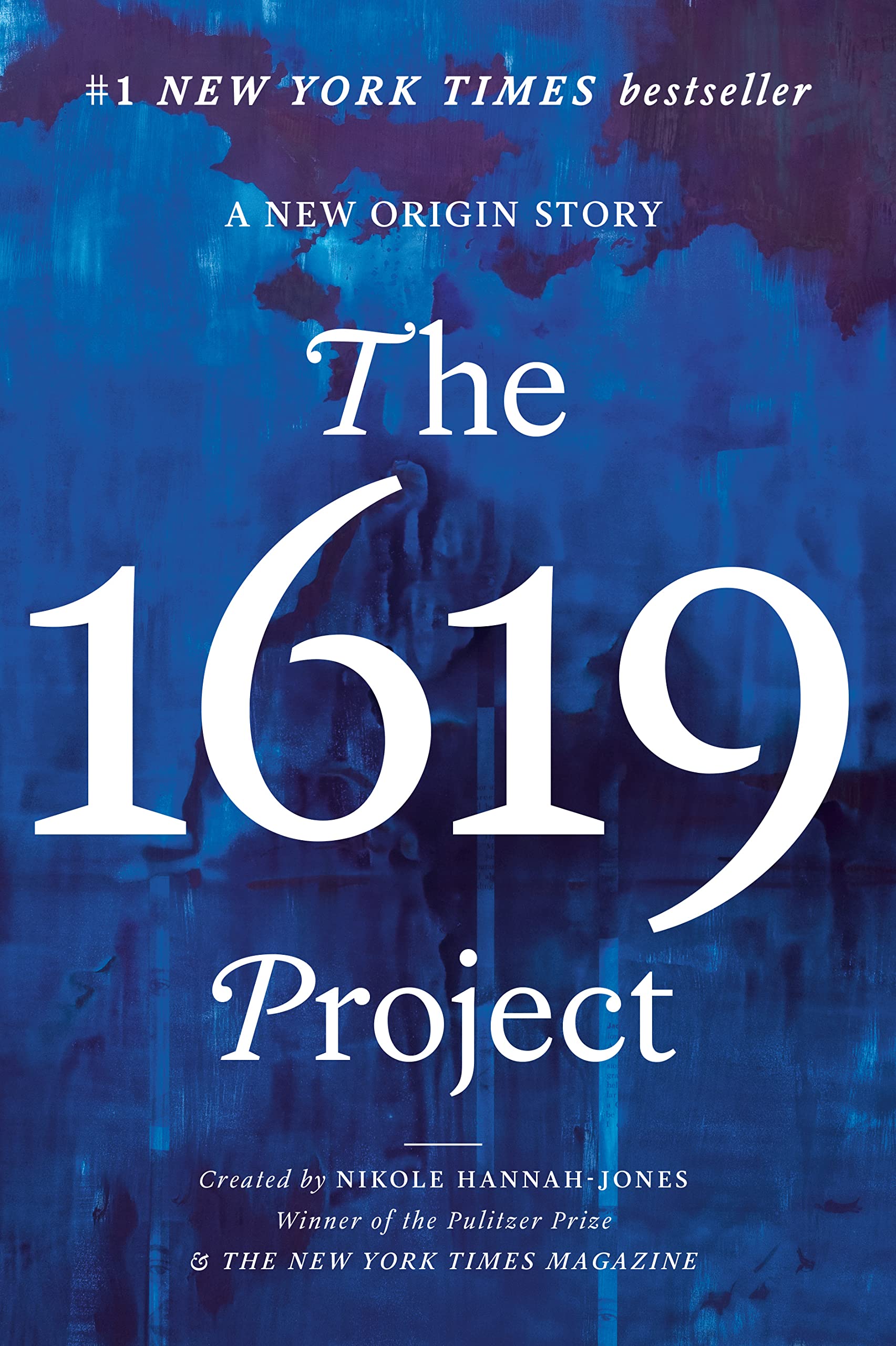
Book cover of The 1619 Project

The 1619 Project Summary

Humanity & Culture

By Nikole Hannah-Jones

One World · November 16, 2021

Summary

The 1619 Project is a remarkable work by Nikole Hannah-Jones in collaboration with The New York Times Magazine. This project takes a bold step in re-evaluating American history. It starts from the year 1619, when the first enslaved Africans arrived in Virginia. By doing so, it places the institution of slavery at the very core of America's story. The book features a series of well-crafted essays that cover various aspects of American life, from politics and economics to culture and social justice. It challenges long-held beliefs and encourages readers to think critically about the nation's foundation and development. Through this project, Hannah-Jones and The New York Times Magazine hope to provide a more comprehensive and accurate understanding of the United States, one that acknowledges the role of slavery in shaping the nation. It's not just a history book; it's a call to action for a more inclusive and just society.

About the Author

Nikole Hannah-Jones is a journalist at The New York Times Magazine. She's known for "The 1619 Project". Her writing delves into history and race, presenting complex issues with depth and clarity.

Chapters

1

Introduction to The 1619 Project

The 1619 Project is a significant work by Nikole Hannah-Jones and The New York Times Magazine. It aims to reframe American history by placing the consequences of slavery and the contributions of Black Americans at the very center of the nation's narrative. The project was launched in 2019 to mark the 400th anniversary of the arrival of the first enslaved Africans in Virginia.

2

The Arrival of Enslaved Africans in 1619

In 1619, a Dutch ship brought about 20 enslaved Africans to Point Comfort in the English colony of Virginia. This event was a turning point in American history. These Africans were the first of millions who would be forcibly brought to the Americas to work on plantations. Their arrival set in motion a system of slavery that would shape the economic, social, and political landscape of the United States. Slavery became the backbone of the Southern economy, with large-scale plantations relying on the labor of enslaved people to grow crops like tobacco, cotton, and sugar.

3

Slavery and the American Economy

Slavery was deeply intertwined with the American economy. The labor of enslaved Africans was crucial for the success of the plantation system. Their work led to the accumulation of vast wealth for plantation owners. The cotton gin, invented in 1793, increased the demand for enslaved labor as it made cotton production more efficient. This led to an expansion of slavery across the South. The profits from the slave-based economy also contributed to the growth of Northern industries. Textile mills in the North relied on Southern cotton, and banks provided loans to support plantation operations.

4

The Struggle for Freedom

Enslaved Africans and their descendants fought tirelessly for their freedom. There were numerous slave revolts throughout American history. One of the most well-known is the Nat Turner Rebellion in 1831. Nat Turner, an enslaved preacher, led a group of rebels in a violent uprising against slaveholders in Virginia. Although the rebellion was ultimately suppressed, it sent shockwaves through the South and increased the fear of future uprisings. African Americans also used other means to resist slavery, such as running away to the North via the Underground Railroad, a network of secret routes and safe houses.

5

The Civil War and Emancipation

The issue of slavery was a major cause of the American Civil War. The North and the South had different economic and social systems, with the South relying on slavery and the North moving towards industrialization. The election of Abraham Lincoln in 1860 was a catalyst for secession, as Southern states feared that he would take steps to limit or abolish slavery. The Civil War began in 1861 and lasted until 1865. In 1863, Lincoln issued the Emancipation Proclamation, which declared that all enslaved people in Confederate-held territory were to be set free. This was a significant step towards the abolition of slavery, although it did not immediately free all enslaved people.

5 more chapters available

Continue listening in the Spickor app — free download on the App Store.

Listen in App

Why Spickor?

At Spickor, we believe knowledge should have no paywalls. Every book summary can be unlocked for free by watching a short ad — or you can choose an ad-free subscription. Unlike other apps, there's no "1 book per day" free limit. Learn at your own pace, on your own terms.

FeatureSpickorBlinkistHeadway
Free accessAll books free via ad unlock1 book/day only1 book/day only
Book library2,200+ across 8 categories9,000+ (non-fiction only)2,000+ (personal growth focus)
Paid subscriptionNo forced subscription; ad-supportedRequired; from $99.99/yrRequired; from $89.99/yr
Audio for all summariesYesPremium onlyPremium only
Novels & fictionYesNoNo
PlatformsiOS (Android & Web in dev)iOS / Android / WebiOS / Android only

All Books, Truly Free

Unlock any book with a short ad. No daily limits, no hidden fees.

Listen for Free

Every summary includes high-quality audio. No "premium only" labels.

Beyond Self-Help

8 categories including business, technology, and novels.

Listen in App
7 m 38 s