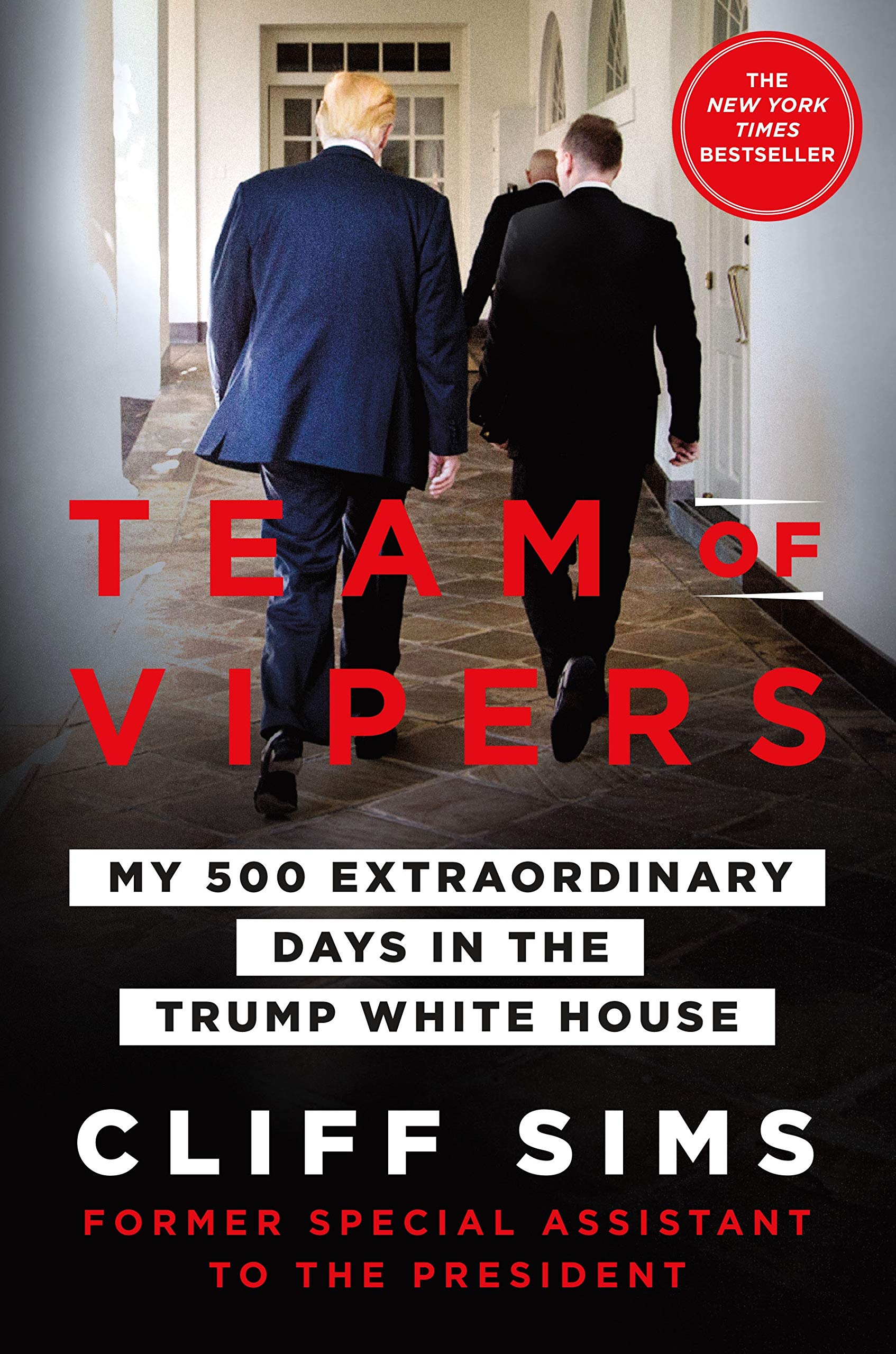
Book cover of Team of Vipers

Team of Vipers Summary

Humanity & Culture

By Cliff Sims

Thomas Dunne Books · January 29, 2019

Summary

'Team of Vipers' by Cliff Sims is a riveting account that delves deep into the often-hidden corridors of political power. Sims, with his firsthand experiences, provides a unique perspective on the political landscape. The book portrays the cut-throat nature of politics, where allegiances shift and power is constantly in flux. As readers turn the pages, they will be drawn into a world filled with backroom deals, power plays, and the constant jockeying for position. Sims' writing style is engaging, making complex political concepts accessible to the general public. Whether it's the strategic maneuvering or the interpersonal dynamics, 'Team of Vipers' offers a comprehensive view of what goes on behind the closed doors of political institutions. It's not just a book about politics; it's a window into the human nature at play in the pursuit of power.

About the Author

Cliff Sims is a political writer. He is known for his book *Team of Vipers*. His writing style is detailed and incisive, offering in-depth insights into political affairs.

Chapters

1

Introduction to the Political Landscape

In "Team of Vipers," the book delves deep into the high-stakes world of political power and intrigue. The story is set against the backdrop of the Trump administration, a time of great political upheaval in the United States. The author, Cliff Sims, was once part of this administration, which gives him a unique insider's perspective.The political landscape during this period was highly polarized. There were two main camps: those who strongly supported the Trump administration and its policies, and those who vehemently opposed them. This division was not just limited to the general public but also existed within the administration itself. Different factions within the White House had their own agendas, and these agendas often clashed. The book starts by painting a vivid picture of the chaos and complexity that characterized the political environment. It shows how decisions were made in a high-pressure situation, where every move could have far-reaching consequences. The author also touches on the media's role in this landscape. The media was both a tool and an obstacle for the administration. On one hand, it could be used to spread the administration's message, but on the other hand, it often reported on the internal strife and controversies within the White House.


2

The Inner Workings of the White House

The inner workings of the White House during the Trump administration were a complex web of power plays and competing interests. There were multiple power centers within the administration. For example, there were the advisors who were close to the President, and they had significant influence over policy decisions. Then there were the career civil servants who had their own institutional knowledge and agendas.Meetings in the White House were often chaotic. There was no clear structure in many cases, and different people would voice their opinions loudly and sometimes without much regard for protocol. This lack of structure could lead to confusion and inefficiency. However, it also allowed for a wide range of ideas to be presented. The decision-making process was also convoluted. Many decisions were made on the fly, based on the President's immediate reactions and the influence of those around him at the moment. There was often a lack of long-term planning, and short-term political gains seemed to take precedence over more strategic considerations.

3

Key Players and Their Personalities

There were several key players in the Trump administration, each with their own distinct personalities. The President himself was known for his brash and unfiltered style. He was not afraid to speak his mind, which often led to both strong support and intense criticism. His leadership style was very hands-on in some areas, while in others, he seemed to delegate a lot of power.Steve Bannon was another important figure. He was a controversial advisor with a strong ideological stance. He was known for his populist and nationalist views and was a driving force behind many of the administration's more radical policies. His influence was significant, but he also faced a lot of opposition within and outside the administration.Reince Priebus was the White House Chief of Staff at the beginning. He was more of an establishment figure, trying to bring some order to the chaotic environment. However, he faced many challenges in this role, as different factions within the administration often clashed with his attempts at organization.

4

Policy Initiatives and Their Impact

The Trump administration launched several major policy initiatives during its tenure. One of the most prominent was immigration policy. The administration tried to implement strict border control measures, including building a wall along the U.S. - Mexico border. This policy was highly controversial. On one hand, it was seen by some as a necessary measure to protect national security and control illegal immigration. On the other hand, it was criticized by many for being inhumane and for not addressing the root causes of immigration.Another important policy area was economic policy. The administration implemented tax cuts, which were intended to stimulate economic growth. The idea was that by reducing the tax burden on businesses and individuals, more investment and spending would occur. However, the long-term impact of these tax cuts was debated. Some economists argued that they would lead to increased deficits, while others believed that they would indeed boost the economy.In the area of foreign policy, the administration took a more isolationist approach in some ways. It renegotiated trade deals, such as NAFTA, which was replaced by the USMCA. This was an attempt to protect American industries and jobs. However, it also led to trade tensions with other countries, which had an impact on global trade relations.

5

Media and Public Perception

The media played a crucial role in shaping public perception of the Trump administration. There was a constant battle between the administration and the media. The administration often accused the media of being fake news, especially when the media reported on negative aspects of the administration.The media, on the other hand, had a responsibility to report the truth. However, different media outlets had different biases. Some were more supportive of the administration, while others were more critical. This led to a fragmented public perception. Some people only consumed news from media sources that aligned with their own views, which further polarized the public.The administration tried to control the narrative through various means. It held press conferences and used social media, especially Twitter, to communicate directly with the public. However, these efforts were often met with mixed results. Sometimes, the President's tweets would cause more controversy and confusion rather than clarifying the administration's position.

5 more chapters available

Continue listening in the Spickor app — free download on the App Store.

Listen in App

Why Spickor?

At Spickor, we believe knowledge should have no paywalls. Every book summary can be unlocked for free by watching a short ad — or you can choose an ad-free subscription. Unlike other apps, there's no "1 book per day" free limit. Learn at your own pace, on your own terms.

FeatureSpickorBlinkistHeadway
Free accessAll books free via ad unlock1 book/day only1 book/day only
Book library2,200+ across 8 categories9,000+ (non-fiction only)2,000+ (personal growth focus)
Paid subscriptionNo forced subscription; ad-supportedRequired; from $99.99/yrRequired; from $89.99/yr
Audio for all summariesYesPremium onlyPremium only
Novels & fictionYesNoNo
PlatformsiOS (Android & Web in dev)iOS / Android / WebiOS / Android only

All Books, Truly Free

Unlock any book with a short ad. No daily limits, no hidden fees.

Listen for Free

Every summary includes high-quality audio. No "premium only" labels.

Beyond Self-Help

8 categories including business, technology, and novels.

Listen in App
10 m 57 s